-
A sign reads NO TURNS. At this intersection you may:
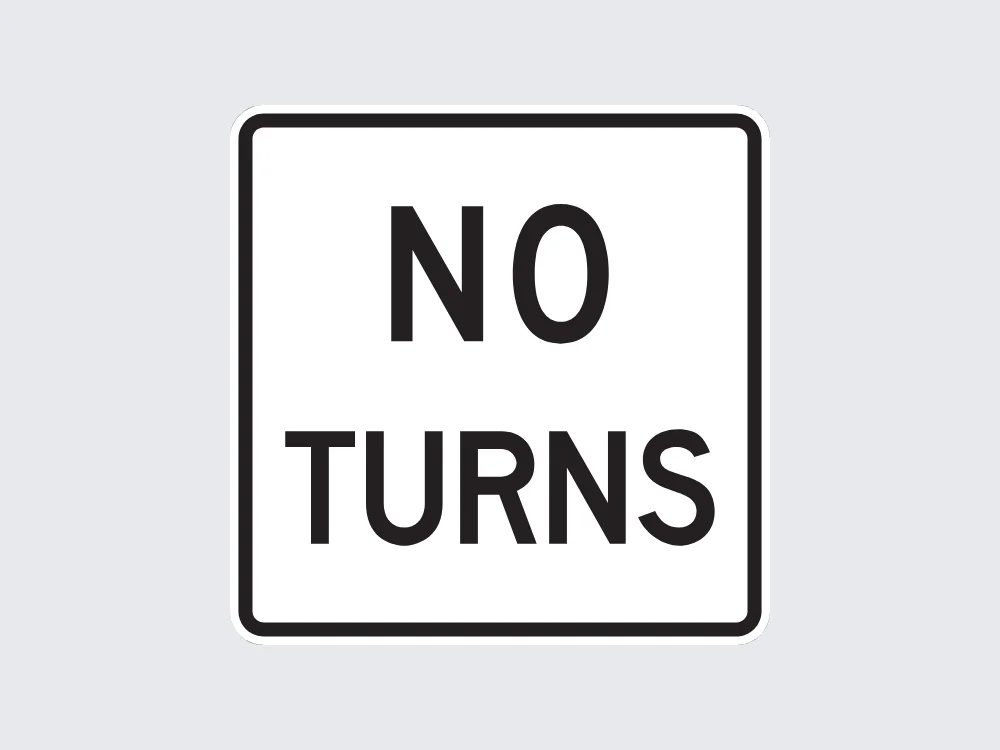
Correct answer: Only go straight
NO TURNS forbids both left and right turns, so the only allowed movement is straight ahead.
-
This sign is posted over your lane. What must you do?
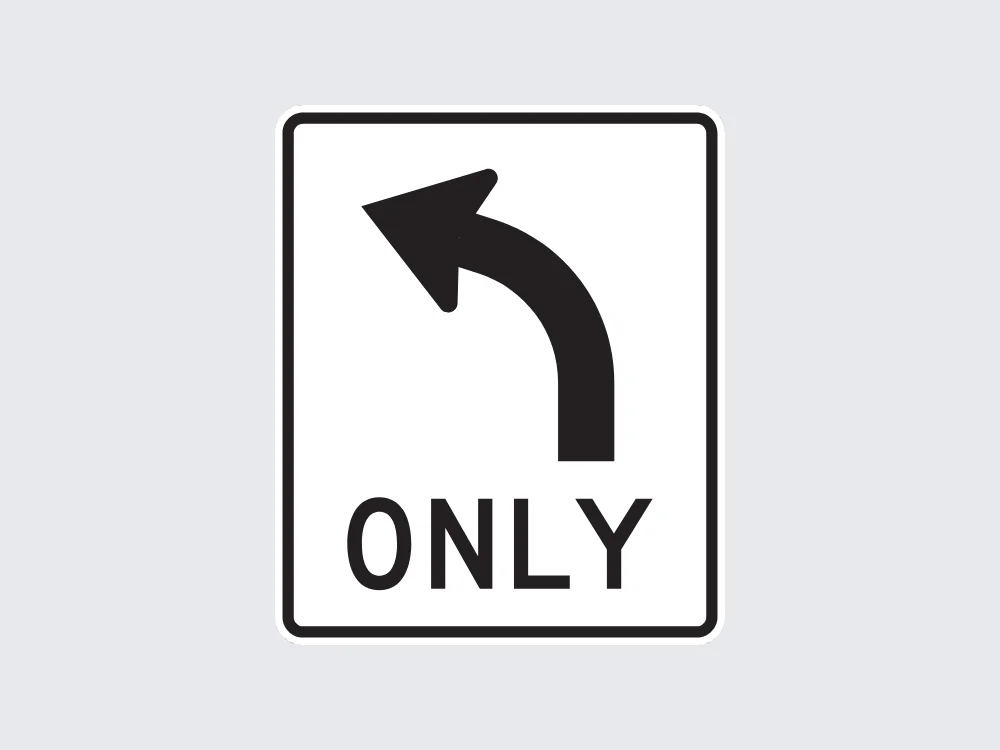
Correct answer: Turn left; going straight from this lane is not allowed
A curved arrow with the word ONLY makes that turn mandatory for the lane. Change lanes before you reach the solid line if you want to go another way.
-
At a STOP sign there is no clear traffic. Is slowing down to a crawl without stopping enough?
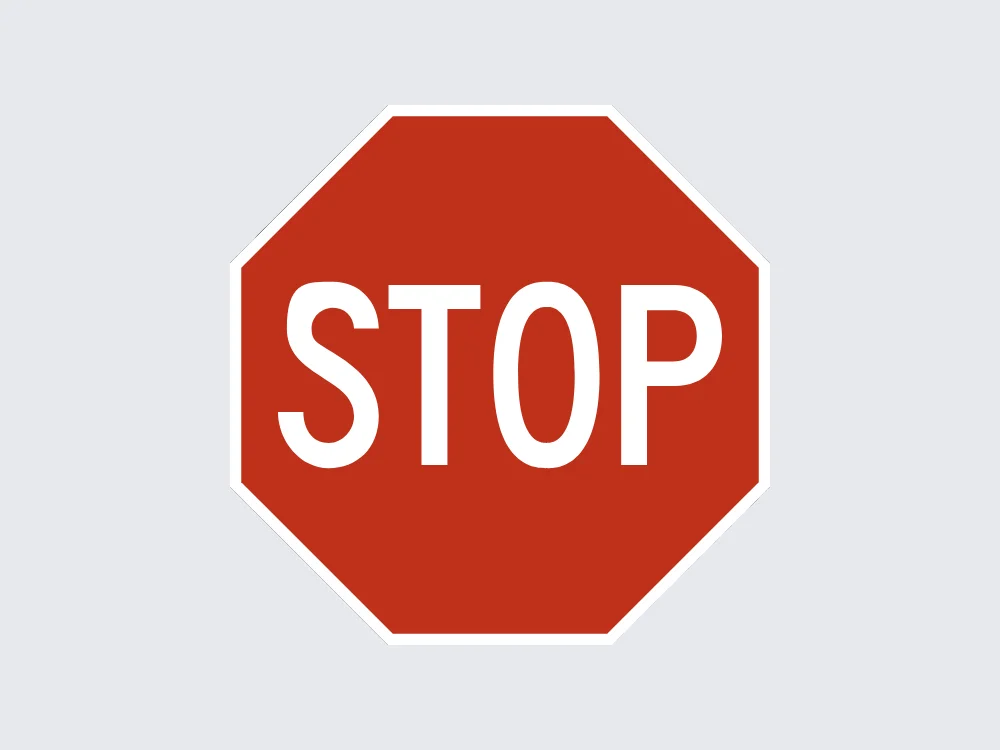
Correct answer: No, you must come to a complete stop every time
The rule applies to every vehicle that reaches the sign, whether or not traffic is present. Only a full stop meets it.
-
What does this sign require?
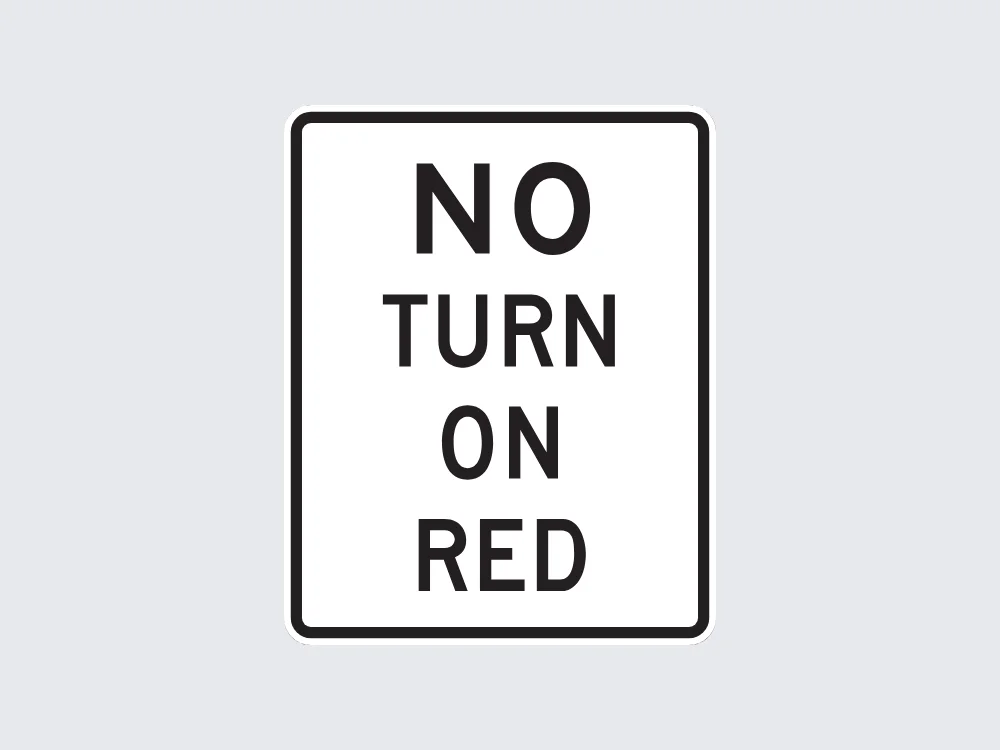
Correct answer: While the light is red, you may not turn; wait for green
NO TURN ON RED removes any permission to turn during the red phase. You may turn once the signal turns green.
-
Are you legally required to obey regulatory signs?
Correct answer: Yes, they carry the force of traffic law
Regulatory signs state traffic laws. Ignoring them is a violation, whether or not an officer sees it.
-
At a STOP sign there is no limit line and no crosswalk. Where do you stop?
Correct answer: Before entering the intersection, where you can see cross traffic
If nothing is painted, stop before the intersection itself, at a point where you have a view of the crossing road.
-
On traffic signs, the color red is generally used for:
Correct answer: Stop, yield and prohibitions
Red appears on STOP, YIELD, DO NOT ENTER, WRONG WAY and the slash of prohibition signs.
-
Signs that tell you about laws you must obey, such as speed and turn rules, are usually:
Correct answer: White rectangles with black or red lettering
Regulatory signs are mostly white rectangles. Yellow diamonds warn, green signs guide and orange signs mark work zones.
-
A round yellow sign with a black X and two letters R warns you that:
Correct answer: A railroad crossing is ahead; look, listen and be ready to stop
The round shape is used for advance warning of a railroad crossing. Slow down and be prepared to let any train pass.
-
What is the safest way to drive after seeing this sign?
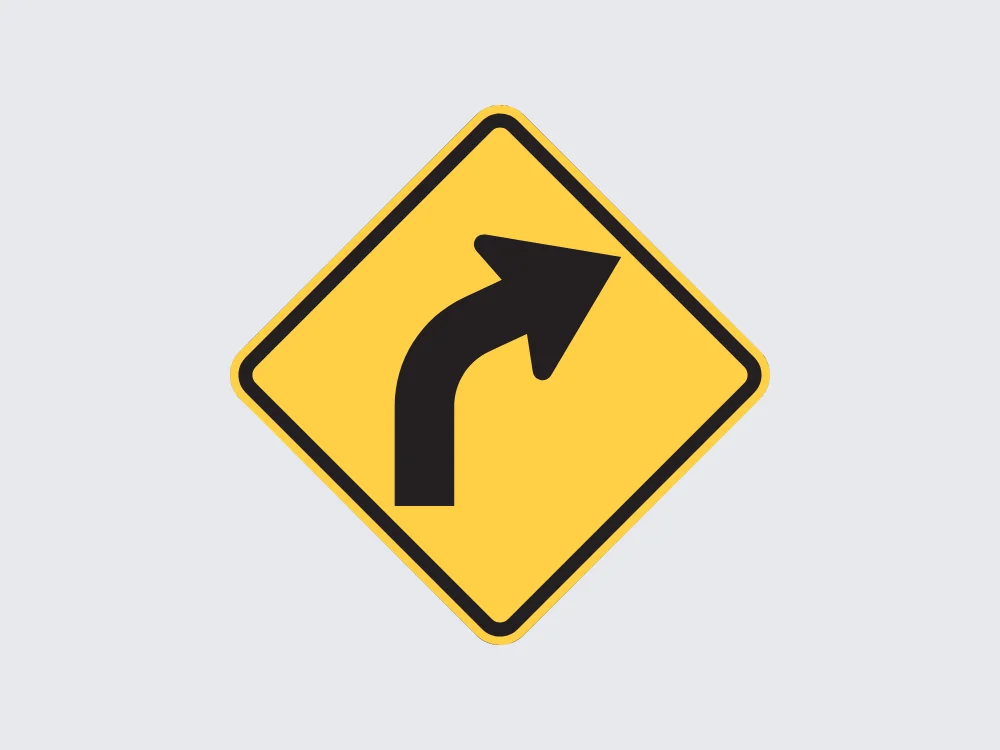
Correct answer: Slow down before the curve, keep right and do not pass
The sign shows the road curving in the direction of the arrow. Slow down before entering it, stay in your lane on the right, and do not pass.
-
What does this sign tell you about the road ahead?
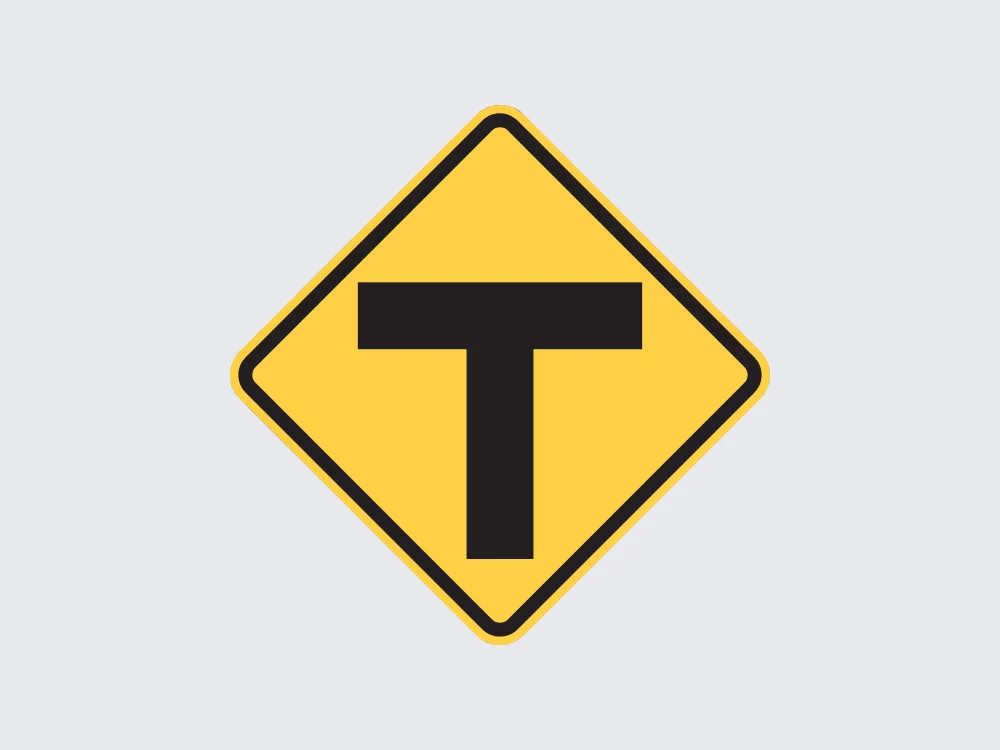
Correct answer: It ends at a T intersection; you will have to turn left or right
The T shape shows that your road meets a crossing road and does not continue. Slow down and be ready to yield before turning.
-
Most general warning signs use which colors?
Correct answer: Black on yellow
General warning signs are yellow with black symbols or words. Green guides, blue shows services and red-and-white signs regulate.
-
What does this sign tell you?
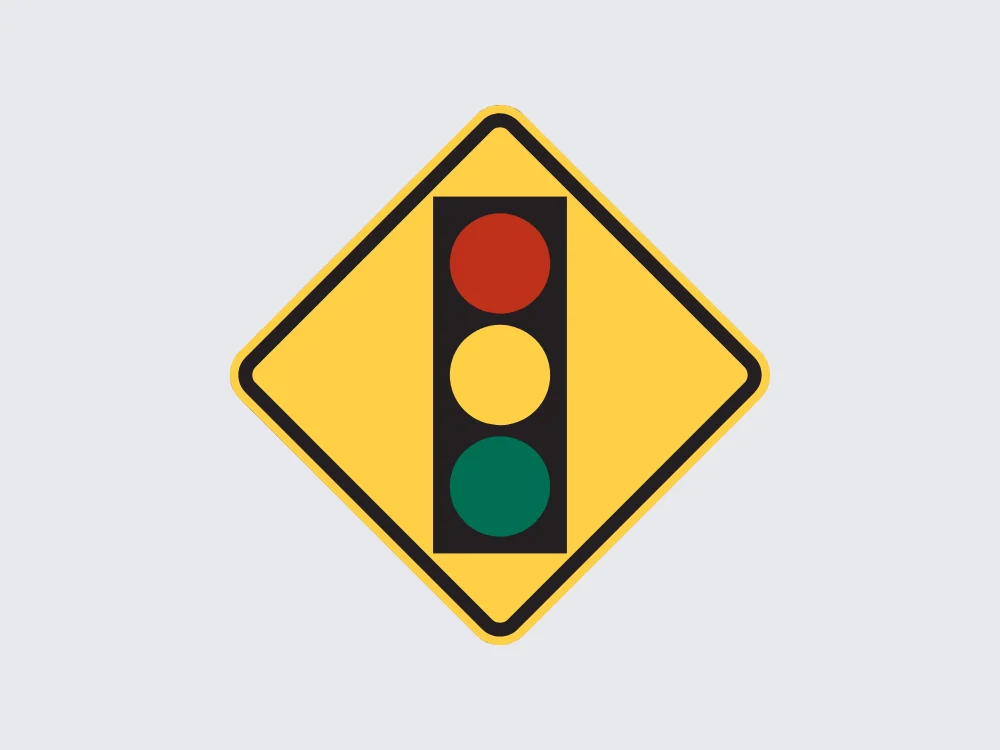
Correct answer: There is a traffic signal ahead; be prepared to stop
This sign gives advance notice of a signal you may not see yet, often past a curve or hill. Slow down so you can stop if the light is red.
-
A brown sign shows a skier. What is it telling you?
Correct answer: How to reach a recreation area, in this case a ski area
Brown signs guide you to recreation and scenic places. A warning about people crossing would be a yellow diamond.
-
Guide signs that show route directions and distances are usually shaped like:
Correct answer: Horizontal rectangles
Most guide signs are horizontal rectangles. Diamonds are for warnings, the octagon is for STOP and the pentagon is for schools.
-
What shape is a North Carolina state route marker?
Correct answer: Diamond
N.C. route markers are diamond-shaped; U.S. routes use a shield, interstates a red, white and blue shield, and secondary roads rectangular signs.
North Carolina Driver Handbook, p. 87 -
What is the first thing to do after passing this sign?
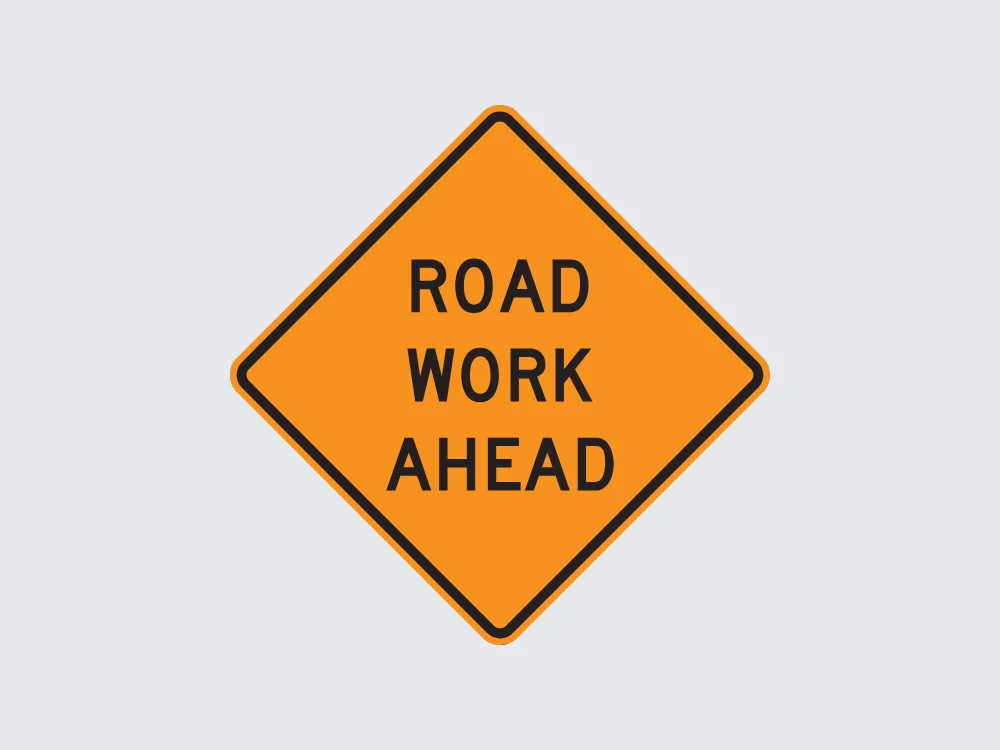
Correct answer: Slow down and watch for workers, equipment and lane changes
Work zones bring sudden slowdowns, narrow lanes and people on foot. Slowing down and leaving extra space gives you time to react.
-
A school crossing guard holds up a STOP paddle in front of you. What do you do?
Correct answer: Stop and wait until the guard signals that you may go
You must always obey a crossing guard's directions. Wait until the guard and the children are clear and you are signaled to go.
-
Orange signs and cones are on the road ahead. Which driving habit fits best?
Correct answer: Leave extra space and expect sudden slowing or stopping
Traffic in work zones can stop without warning. A larger gap and full attention help you avoid rear-end crashes.
-
What does this sign warn you about?
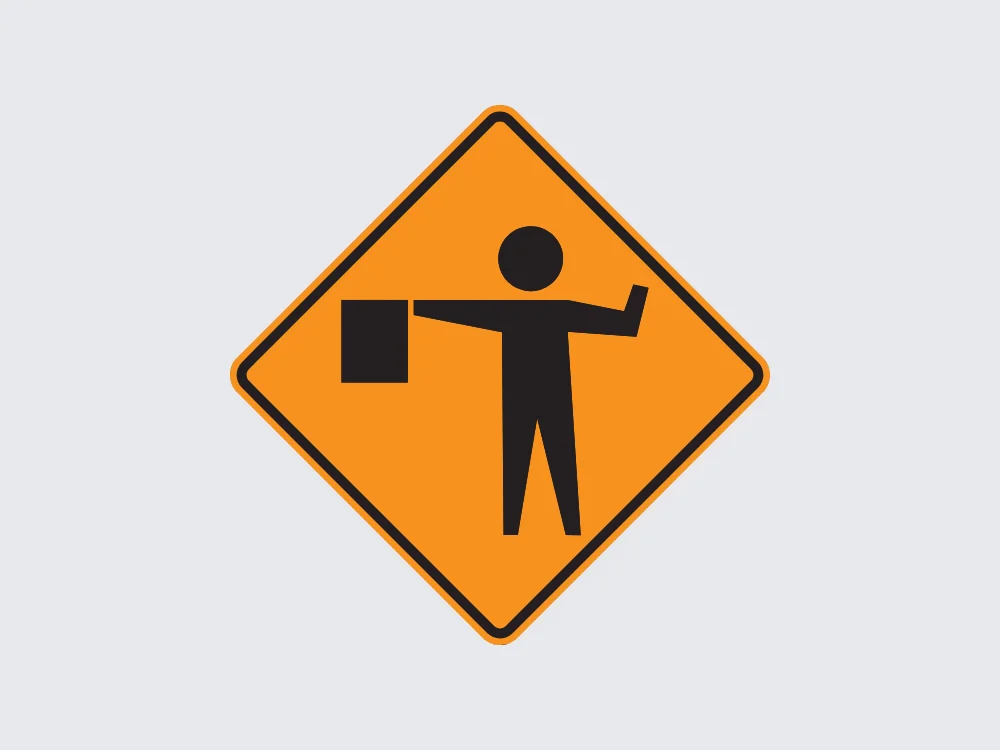
Correct answer: A worker with a flag or paddle is directing traffic ahead
This sign warns of a flagger ahead. Be ready to stop or slow down as the flagger directs.
Your result
Finish the test to see your score. You need 16 of 20 correct.
Review your mistakes
Questions and answers
Is there a separate road signs test in North Carolina?
Separate road sign test: name signs by color and shape and explain them.
What do road sign shapes mean?
An octagon is always STOP. A downward triangle means yield. A diamond warns of a hazard ahead. A pentagon marks a school zone or crossing. A round yellow sign warns of a railroad crossing. Rectangles carry rules (vertical) or directions (horizontal).
What do road sign colors mean?
Red means stop, yield or prohibited. Yellow is a general warning. Orange marks work zones. Fluorescent yellow-green is for school, pedestrian and bicycle crossings. White carries regulations, green gives directions, blue shows services and brown points to recreation areas.