-
Are you legally required to obey regulatory signs?
Correct answer: Yes, they carry the force of traffic law
Regulatory signs state traffic laws. Ignoring them is a violation, whether or not an officer sees it.
Texas Driver Handbook (DL-7), p. 36 -
When must you come to a full stop at this sign?
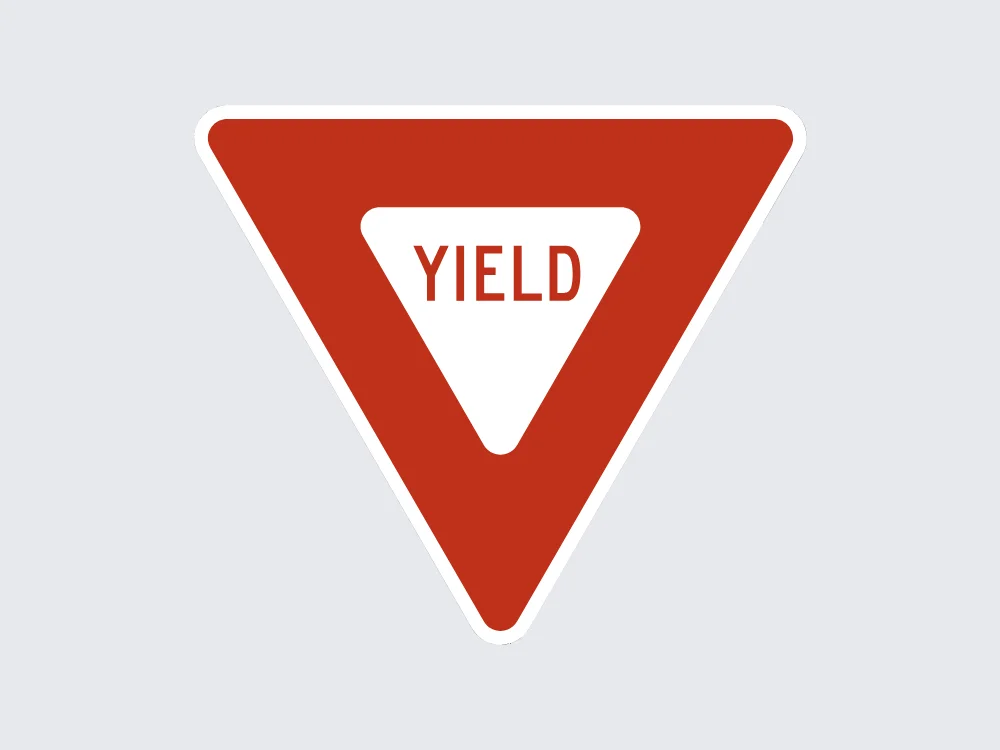
Correct answer: When traffic or pedestrians make it necessary
A YIELD sign does not demand a stop every time, but you must stop whenever that is the only way to let others go first.
-
On traffic signs, the color red is generally used for:
Correct answer: Stop, yield and prohibitions
Red appears on STOP, YIELD, DO NOT ENTER, WRONG WAY and the slash of prohibition signs.
-
What must you do when you reach this sign?
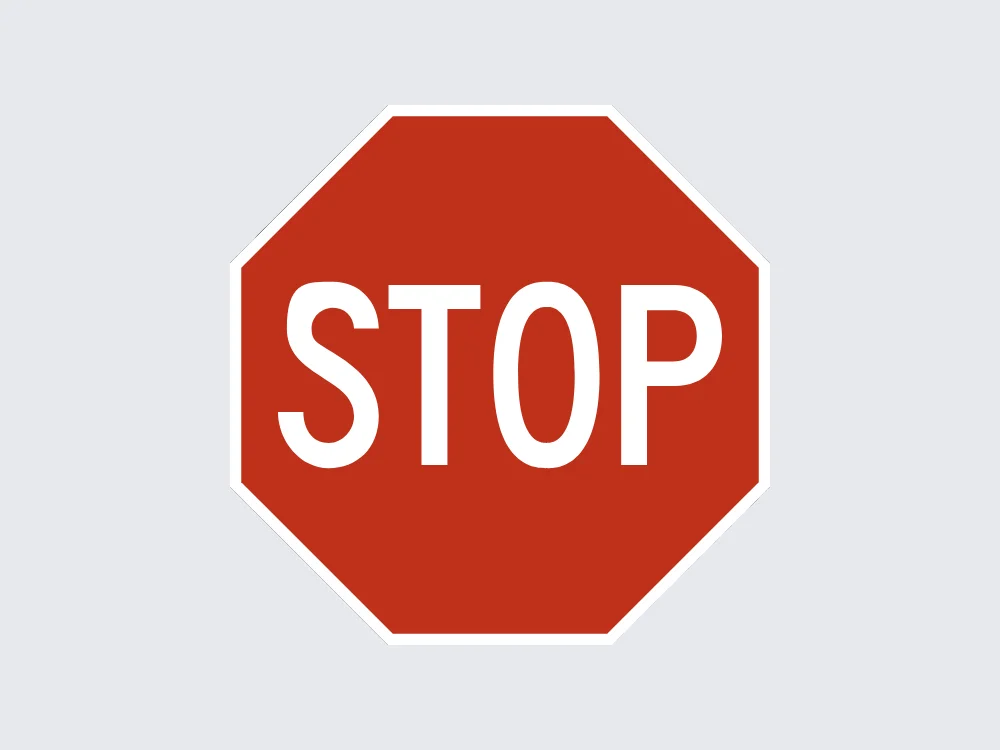
Correct answer: Come to a complete stop, then go only when it is safe
A STOP sign always requires a full stop. After stopping, check traffic in every direction and go only when the way is clear.
-
You see this plaque under a STOP sign. What does it tell you?
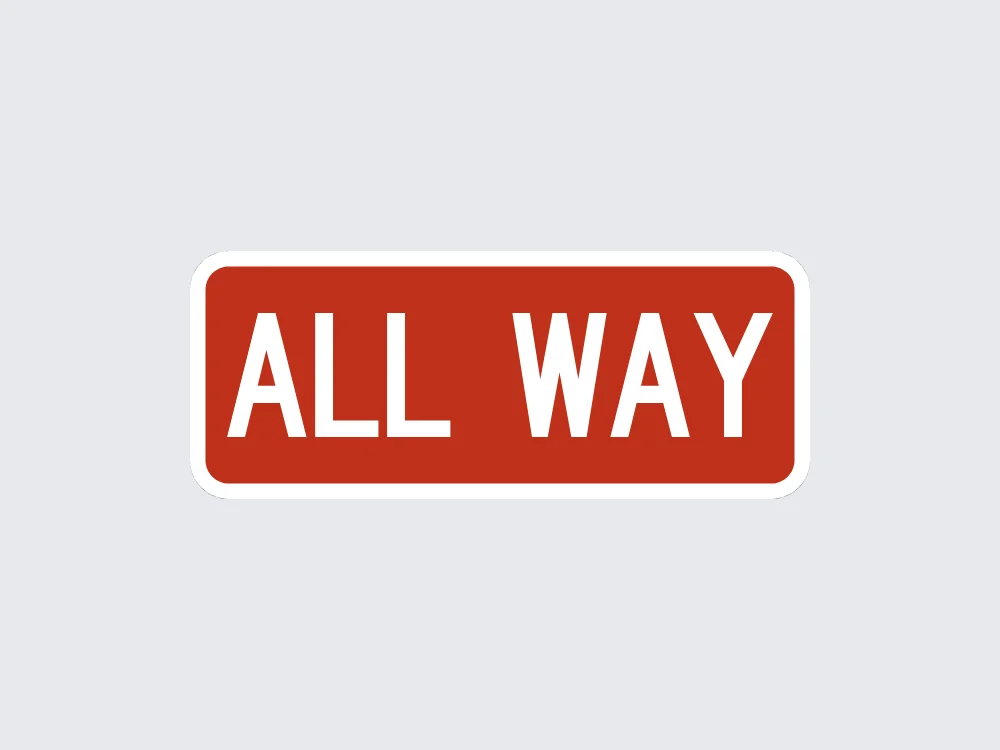
Correct answer: Traffic from every direction must also stop at this intersection
An ALL-WAY plaque means every approach has a STOP sign. Everyone stops, then drivers go in the order they arrived.
Texas Driver Handbook (DL-7), p. 37 -
You have a green light, but traffic is backed up on the far side of the intersection. Following this sign, you should:
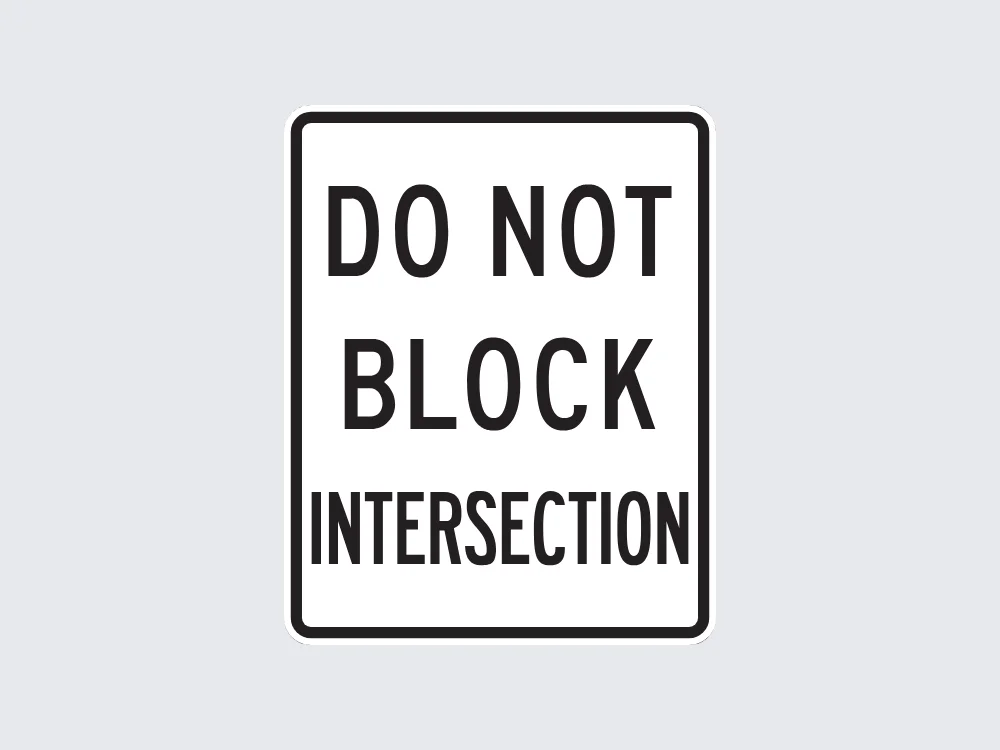
Correct answer: Wait before the intersection until there is room to get all the way through
A green light does not let you enter if you would be stuck in the intersection. Blocking it stops cross traffic when their light changes.
-
At a STOP sign there is no limit line and no crosswalk. Where do you stop?
Correct answer: Before entering the intersection, where you can see cross traffic
If nothing is painted, stop before the intersection itself, at a point where you have a view of the crossing road.
-
What does this sign mean?
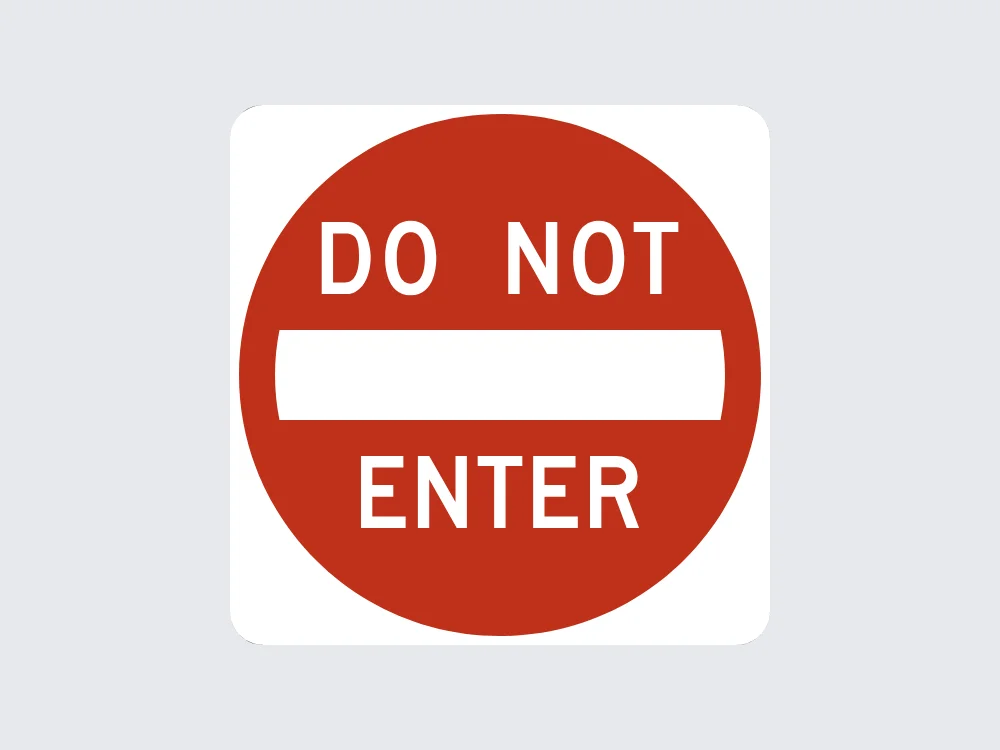
Correct answer: You may not enter the road or ramp from this direction
DO NOT ENTER is posted where traffic flows toward you, such as one-way streets and freeway exit ramps. Entering there means driving against traffic.
-
A sign with a white diamond marks a high-occupancy vehicle (HOV) lane. Who may use it while the restriction is in effect?
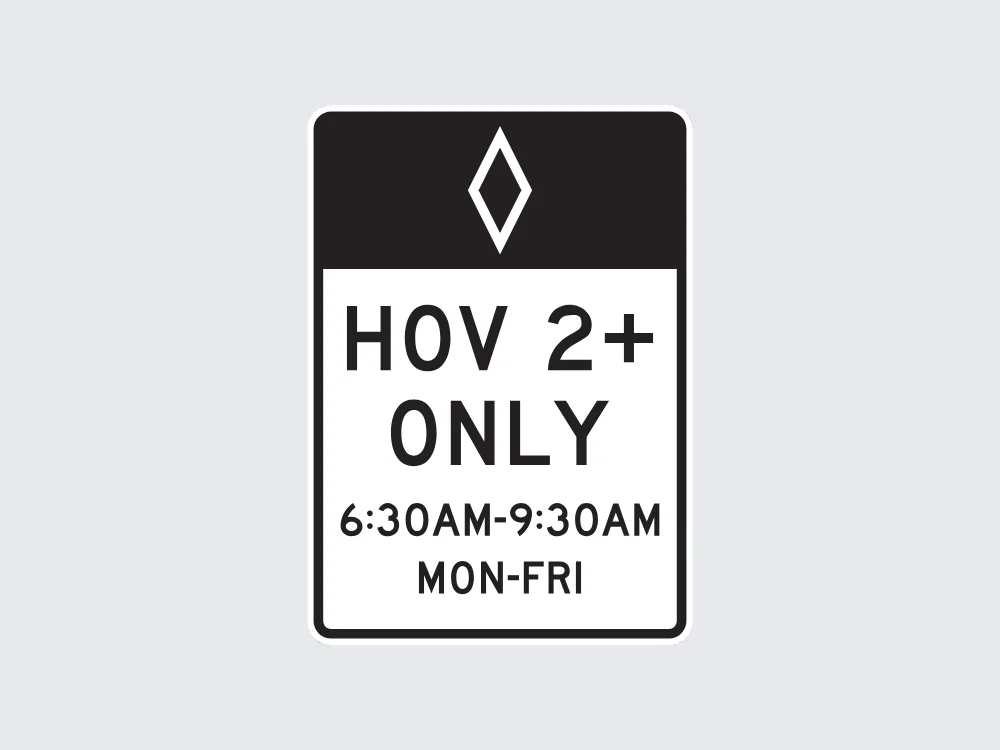
Correct answer: Only vehicles that meet the posted occupancy or vehicle-type rules
HOV lanes are reserved during posted hours for carpools, buses or other vehicles named on the signs. The signs list the minimum number of people and the hours.
-
A diamond-shaped sign warns you about:
Correct answer: Road conditions or hazards ahead
Diamond-shaped signs are warning signs. They tell you about a curve, a crossing, a narrowing road or another condition ahead.
Texas Driver Handbook (DL-7), p. 32 -
What does this sign mean?
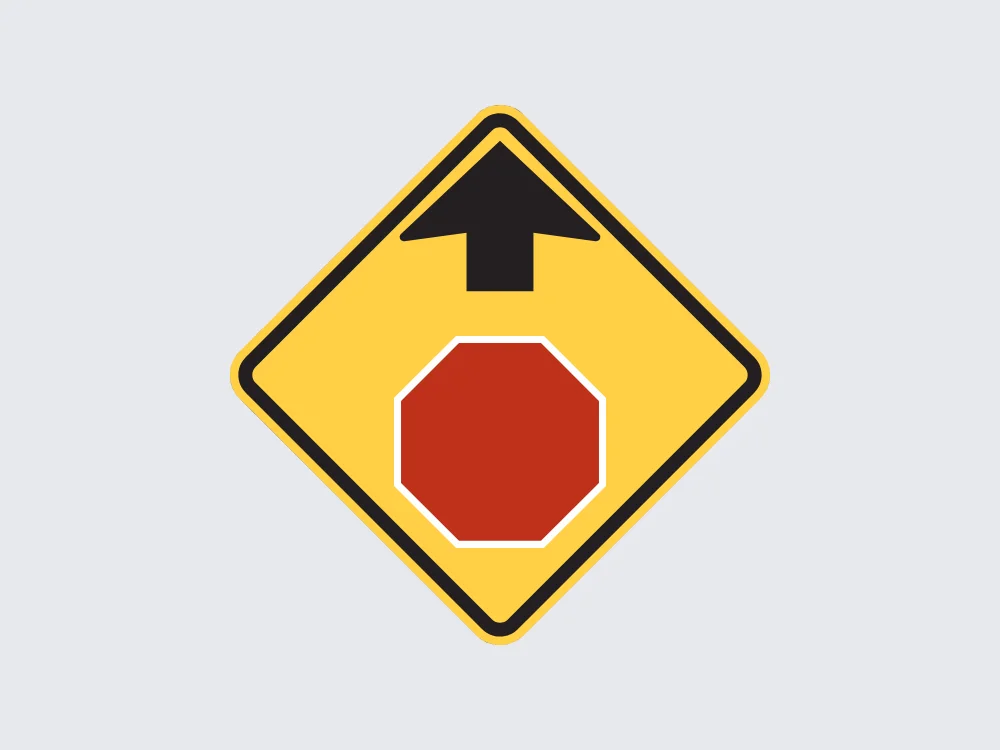
Correct answer: A STOP sign is ahead; slow down and prepare to stop
This warning gives you time to slow down for a STOP sign you may not see yet. You stop at the STOP sign itself, not at this one.
Texas Driver Handbook (DL-7), p. 35 -
What is the safest way to drive after seeing this sign?
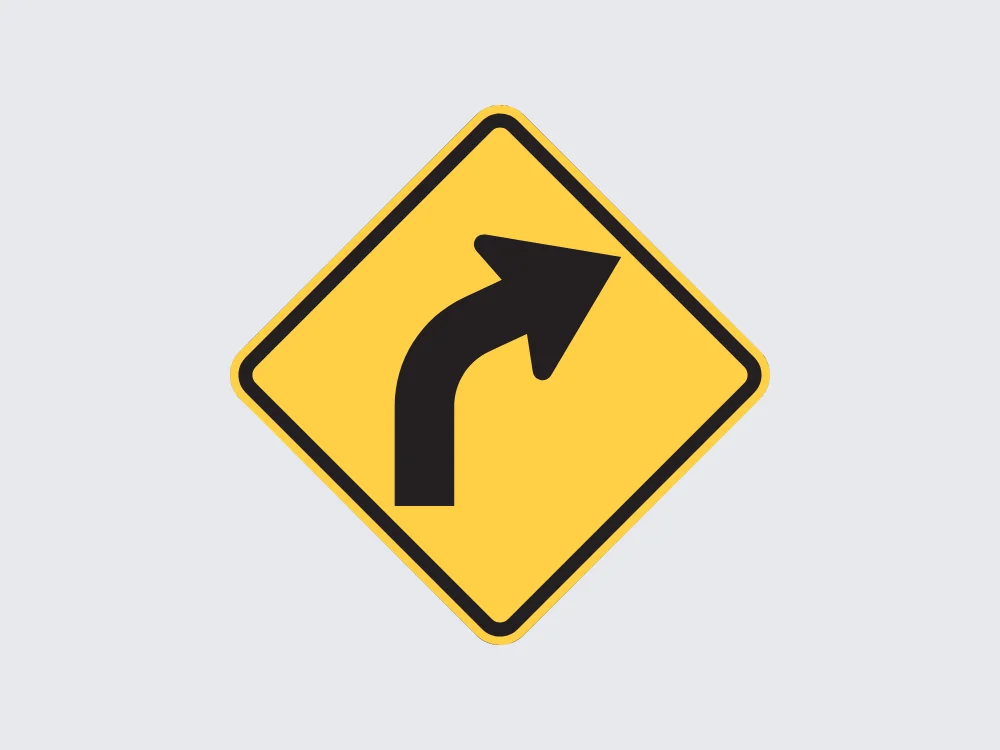
Correct answer: Slow down before the curve, keep right and do not pass
The sign shows the road curving in the direction of the arrow. Slow down before entering it, stay in your lane on the right, and do not pass.
Texas Driver Handbook (DL-7), p. 33 -
An orange triangle with a red border on the back of a farm tractor means:
Correct answer: It is a slow-moving vehicle; be ready to slow down well in advance
This emblem marks vehicles that cannot keep up with normal traffic, such as farm equipment and road machinery. You will close the gap on them quickly.
Texas Driver Handbook (DL-7), p. 43 -
What does this sign mean?
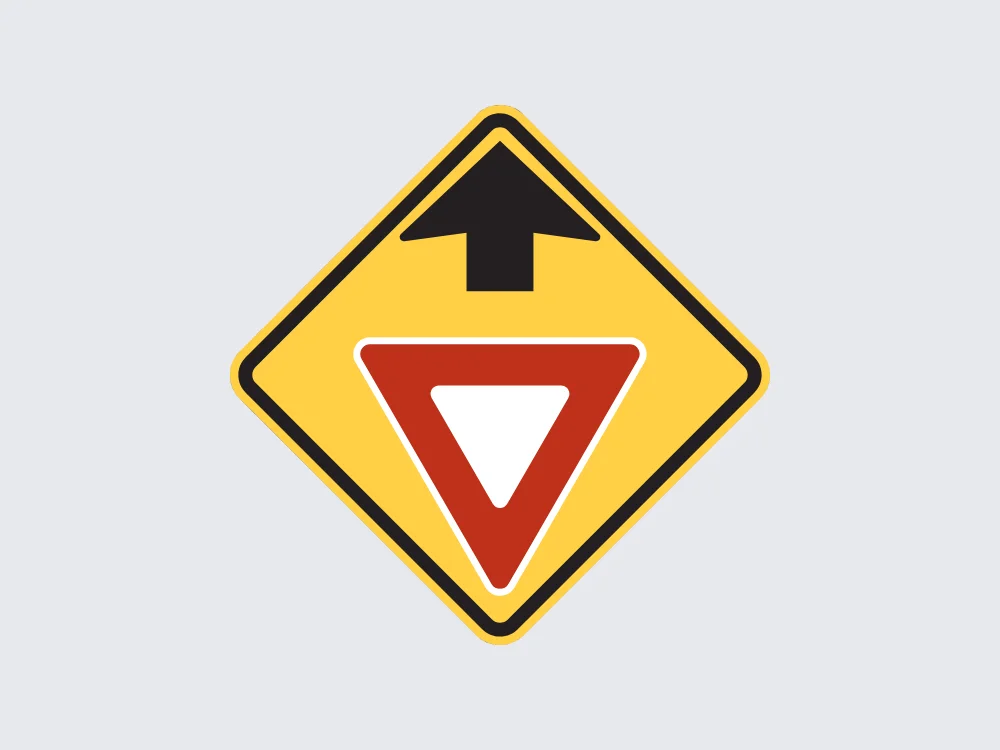
Correct answer: A YIELD sign is ahead; slow down and be ready to yield
It warns of a YIELD sign ahead, so be ready to slow down or stop to let other traffic go first.
-
A brown sign shows a skier. What is it telling you?
Correct answer: How to reach a recreation area, in this case a ski area
Brown signs guide you to recreation and scenic places. A warning about people crossing would be a yellow diamond.
Texas Driver Handbook (DL-7), p. 32 -
You need a hospital while driving on a highway. Which signs will help you find one?
Correct answer: Blue service signs
Medical facilities are among the motorist services shown on blue signs, along with fuel, food and lodging.
-
What does this sign warn you about?
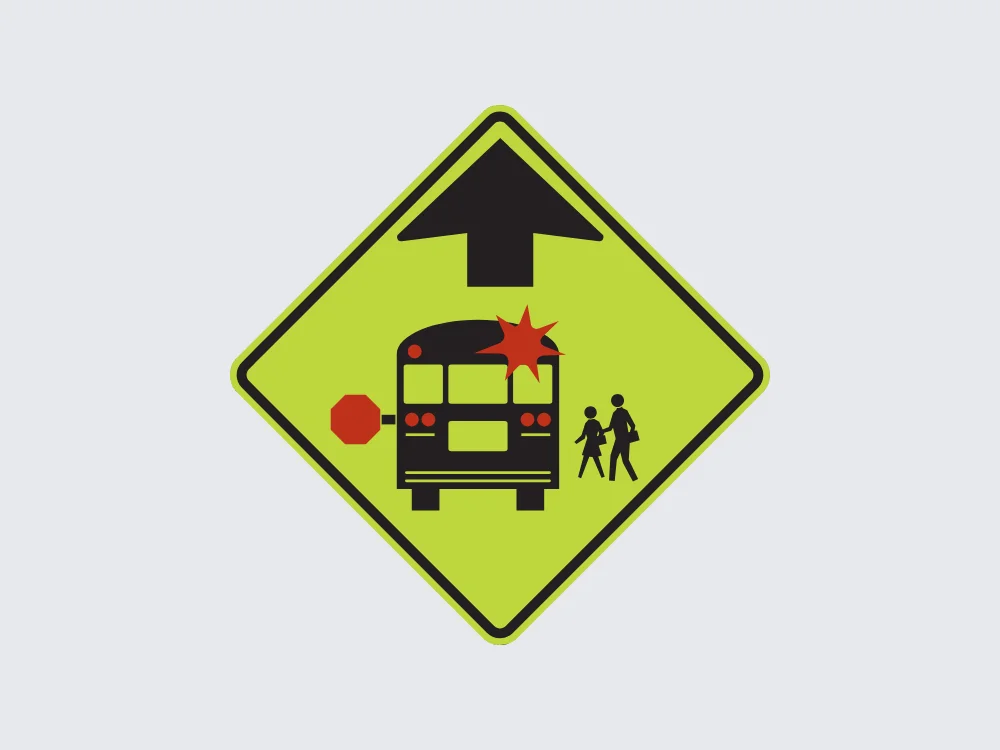
Correct answer: A school bus stop is ahead; be prepared to stop
It warns of a school bus stop you may not be able to see in time. Slow down and be ready for a stopped bus and children.
-
A flagger turns a paddle so this side faces you. What does it mean?
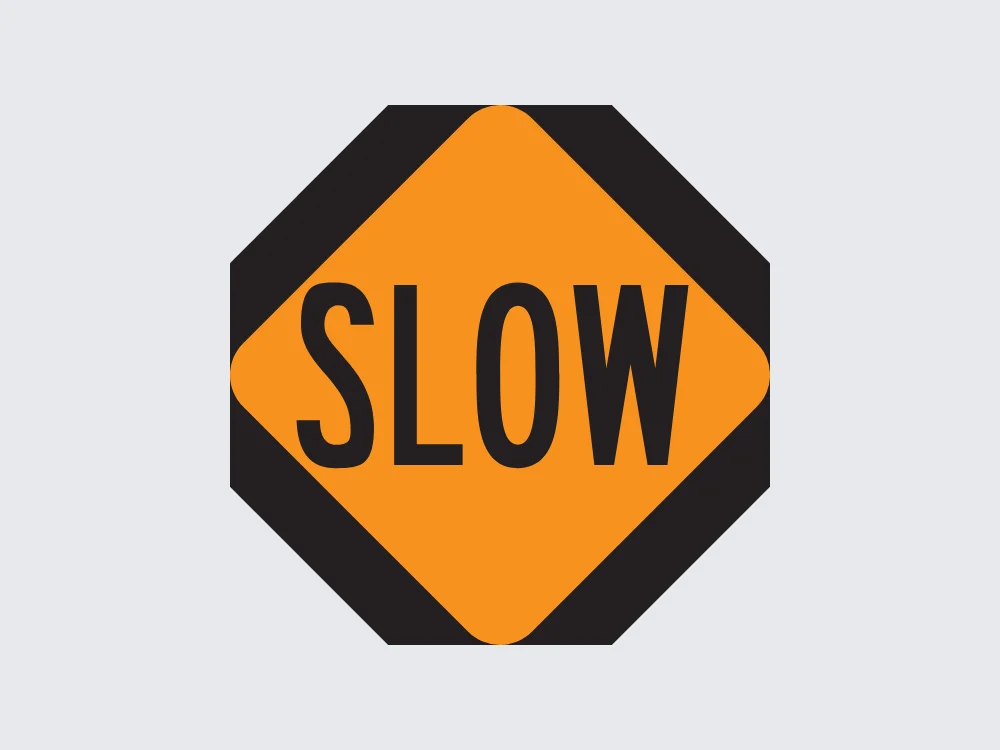
Correct answer: Proceed slowly and carefully through the work area
Flaggers use STOP/SLOW paddles. The SLOW side lets you move ahead at low speed while watching for workers and equipment.
Texas Driver Handbook (DL-7), p. 42 -
What does a five-sided (pentagon) sign like this one mean?
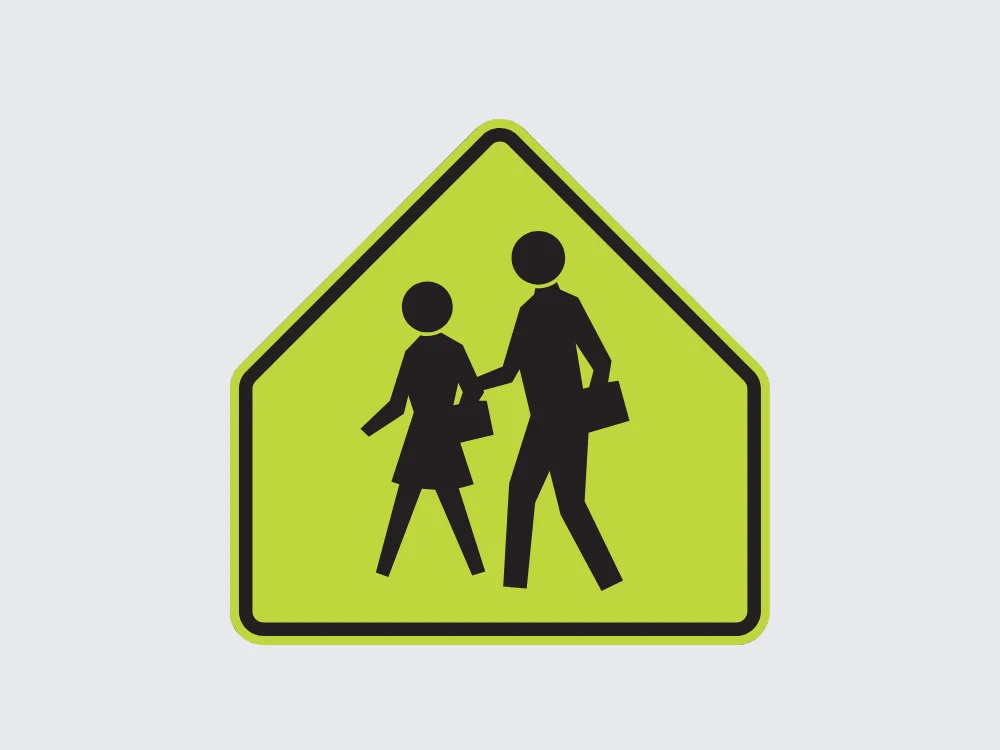
Correct answer: You are near a school or a school crossing
The pentagon shape is used for school zone and school crossing signs, so you can recognize them before you can read them.
Texas Driver Handbook (DL-7), p. 32 -
In a work zone, a flagger signals you to move ahead slowly. What should you do?
Correct answer: Follow the flagger's signal and proceed with care
Flaggers direct traffic where the normal signs and lanes no longer apply, and their signals must be obeyed. Move ahead carefully and watch for workers.
Texas Driver Handbook (DL-7), p. 42
Your result
Finish the test to see your score. You need 16 of 20 correct.
Review your mistakes
Questions and answers
Is there a separate road signs test in Texas?
On the Texas test, sign questions are mixed in with the road rules questions.
What do road sign shapes mean?
An octagon is always STOP. A downward triangle means yield. A diamond warns of a hazard ahead. A pentagon marks a school zone or crossing. A round yellow sign warns of a railroad crossing. Rectangles carry rules (vertical) or directions (horizontal).
What do road sign colors mean?
Red means stop, yield or prohibited. Yellow is a general warning. Orange marks work zones. Fluorescent yellow-green is for school, pedestrian and bicycle crossings. White carries regulations, green gives directions, blue shows services and brown points to recreation areas.