-
This sign is posted on a road you thought was one-way. What does it mean?
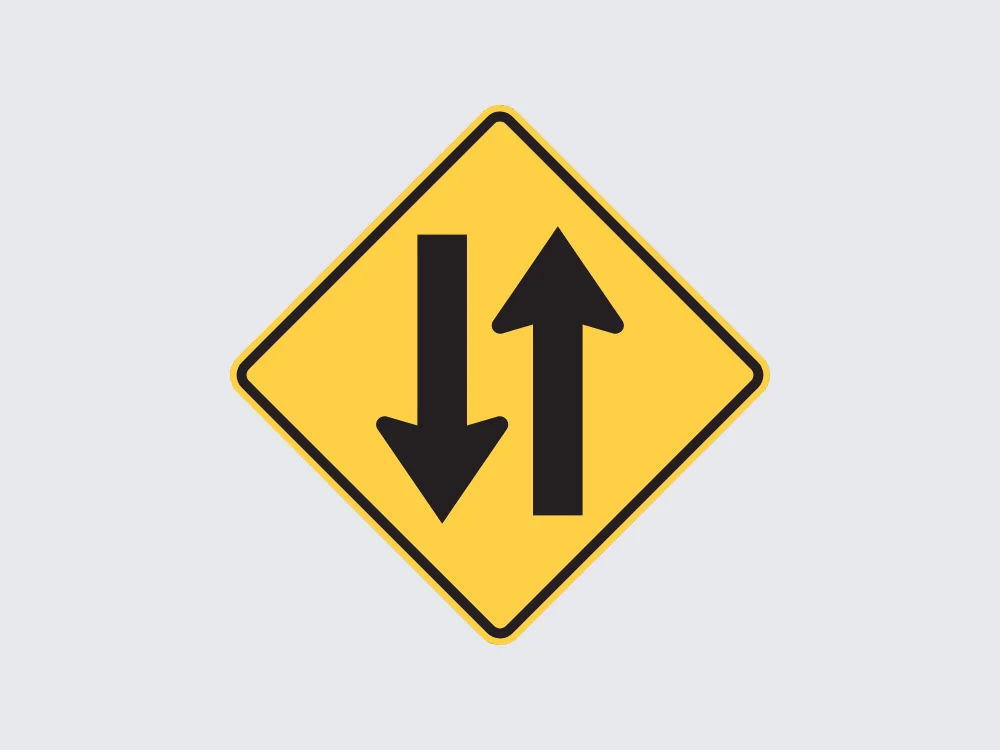
Correct answer: Traffic will soon travel in both directions; keep right and expect oncoming vehicles
The two opposing arrows warn that the road ahead carries traffic in both directions.
-
A green arrow pointing left is lit. What does it mean for drivers in the left-turn lane?
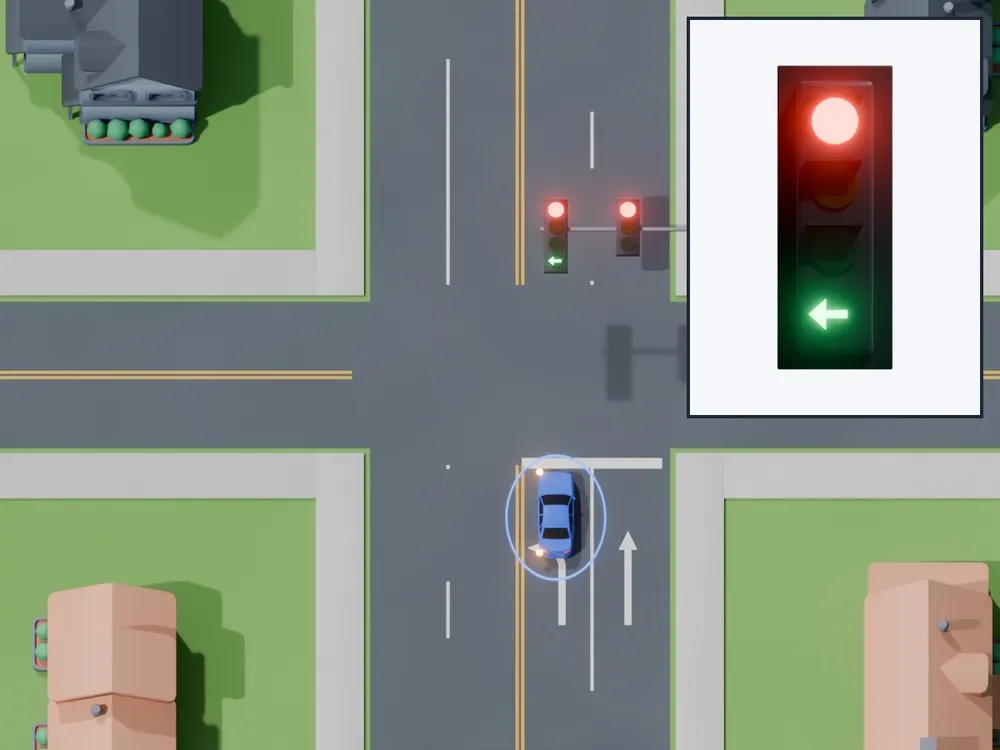
Correct answer: They may turn left; oncoming traffic is being held by a red light
A green arrow gives a protected turn in the direction shown. Still watch for anyone who has not cleared the intersection.
-
A pedestrian is crossing in front of you on a multi-lane street. When may you continue?
Correct answer: After they clear your lane and one more
Wait until the pedestrian is past your lane and one more lane. For someone with a wheelchair, cane or service animal, wait until they have crossed the whole street.
Washington Driver Guide, p. 93 -
Until what age must a Washington child face the rear in a car seat?
Correct answer: Age 2
Children ride rear-facing from birth to age 2, then in a harnessed seat until 4, then in a booster or car seat until the adult belt fits.
Washington Driver Guide, p. 53 -
A school bus ahead has stopped with its red lights flashing. May you use the center turn lane to drive around it?
Correct answer: No; drivers in turn lanes must stop too
A center turn lane may never be used to get around a stopped school bus; every lane, turn lanes included, must stop.
Washington Driver Guide, p. 95 -
Why do you turn your wheels when parking on a hill?
Correct answer: So the car will not roll into traffic if the brakes fail
Turned wheels are a backup in case the parking brake or transmission fails, keeping the car out of the street.
-
What is the speed limit in a Washington school zone?
Correct answer: 20 mph
School zones carry a 20 mph limit because a crash at higher speed is far more likely to kill a child. Signs may show the hours when it applies.
Washington Driver Guide, p. 140 -
You are merging onto a freeway from an on-ramp. Who has the right-of-way?
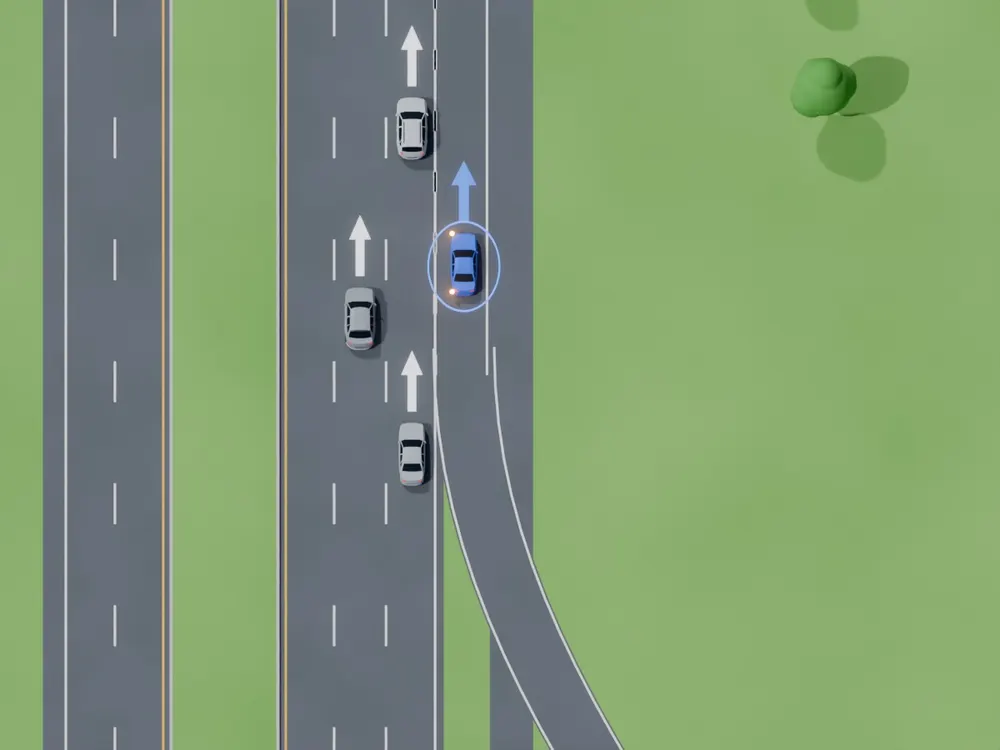
Correct answer: Traffic already on the freeway
Drivers entering a freeway must yield to vehicles already on it and fit into a safe gap.
-
Another driver fails to yield when the right-of-way is yours. What should you do?
Correct answer: Let them go to avoid a crash
Right-of-way is something you give, not something you take. Giving it up is the right choice whenever it prevents a collision.
-
A left-turn lane begins ahead and is separated from your lane by a solid white line at first. How do you enter it?
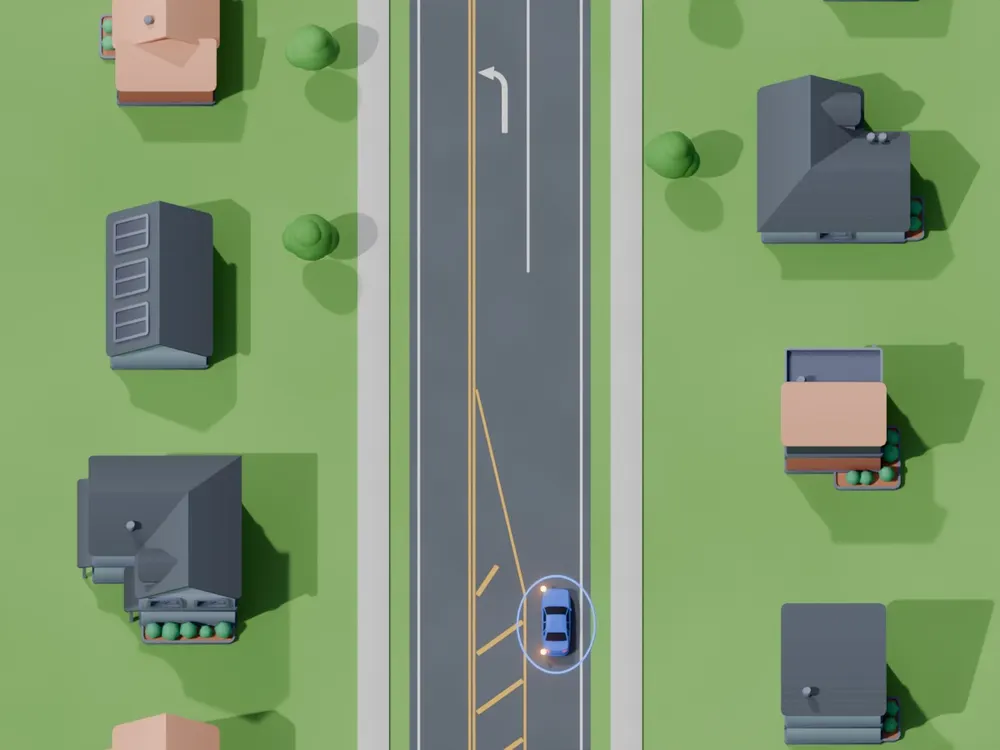
Correct answer: At its opening, without crossing the solid line
Enter a turn lane where it opens and be in the correct lane before the solid line begins.
-
A teen passes the knowledge exam at 15½ but takes no driver training course. When can the teen take the skills exam and get a license?
Correct answer: At 18
Teens who skip driver training can get a permit after the knowledge exam, but the skills exam and license must wait until age 18.
Washington Driver Guide, p. 25 -
At a crash scene, when should you move an injured person?
Correct answer: Only if there is immediate danger, such as fire
Moving an injured person can worsen neck or back injuries. If you must, support the head and spine.
-
Which statement about bicyclists on the road is true?
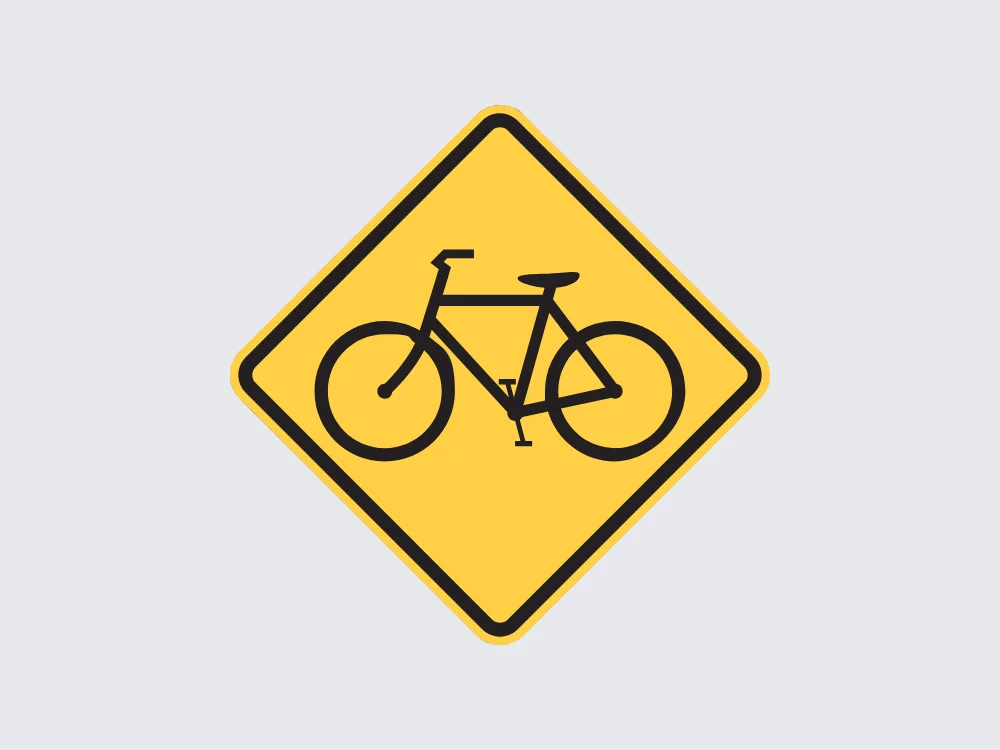
Correct answer: They have the same rights and duties as drivers of motor vehicles
Bicyclists share the road, ride in the same direction as traffic, and must obey the same signs and signals.
-
Your light is green, but traffic is backed up on the far side so you could not get all the way through. What should you do?
Correct answer: Wait before the intersection until there is room to clear it
Do not enter an intersection unless you can get completely across. Blocking it causes gridlock and can get you a ticket.
-
You are driving behind a large truck and cannot see its side mirrors. What does that mean?
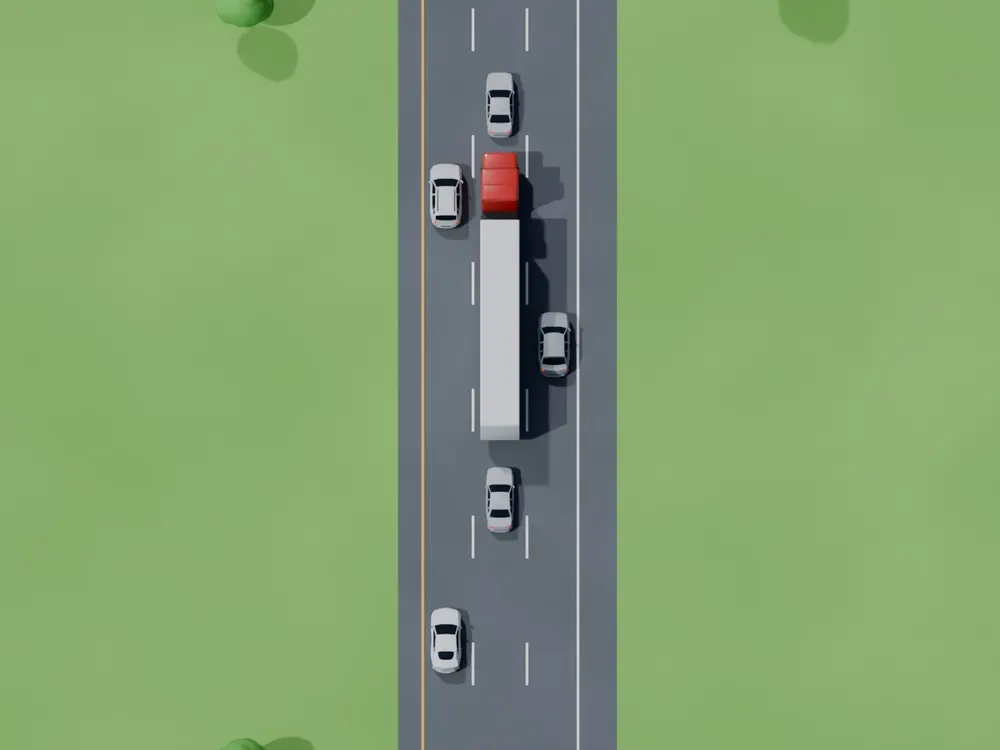
Correct answer: The truck driver cannot see you
If you cannot see the driver in the mirror, you are in a blind spot, or no-zone. Drop back or move where you are visible.
-
For a driver aged 21 or older, what blood alcohol concentration counts as DUI in Washington?
Correct answer: 0.08% or more
At 21 and over, a BAC of 0.08% or higher is DUI. You can still be impaired, and charged, at a lower level.
Washington Driver Guide, p. 37 -
A sign with a white diamond marks a high-occupancy vehicle (HOV) lane. Who may use it while the restriction is in effect?
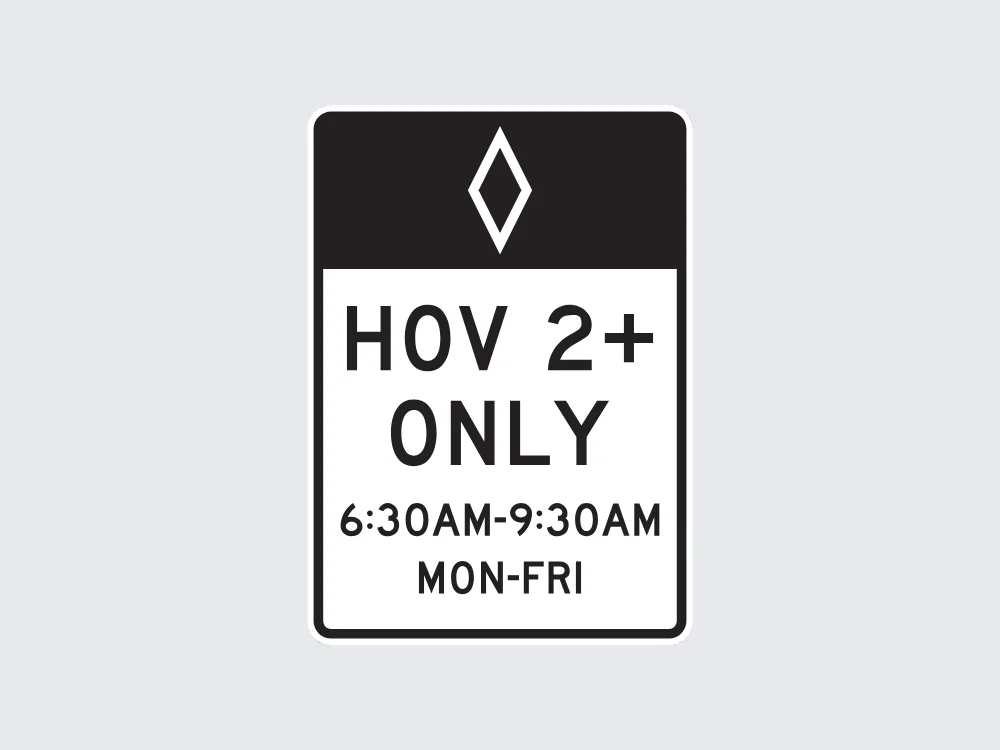
Correct answer: Only vehicles that meet the posted occupancy or vehicle-type rules
HOV lanes are reserved during posted hours for carpools, buses or other vehicles named on the signs. The signs list the minimum number of people and the hours.
-
A 19-year-old driver is tested. At what blood alcohol level does the driver face the same consequences as an adult DUI?
Correct answer: 0.02%
Drivers under 21 face DUI consequences from a BAC of 0.02%, a level reached with very little alcohol.
Washington Driver Guide, p. 37 -
During which hours is an intermediate license holder barred from driving, unless a parent, a guardian or a licensed adult aged 25+ rides along?
Correct answer: 1 a.m. to 5 a.m.
The night limit runs from 1 to 5 a.m.; driving then requires a parent, a guardian or a licensed adult of 25 or older in the car.
Washington Driver Guide, p. 28 -
How close to a fire hydrant may you park in Washington?
Correct answer: No closer than 15 feet
Stay more than 15 feet from a fire hydrant so firefighters can reach it quickly.
Washington Driver Guide, p. 144 -
Why is a U-turn unsafe near the top of a hill or on a curve?
Correct answer: Other drivers cannot see your car in time to stop
A U-turn needs a clear view in both directions. Hills and curves hide your car from approaching traffic.
-
A median is made only of 18-inch solid yellow markings with stripes between them. May you drive across it?
Correct answer: No, crossing any median is illegal
A median can be open ground, a cement divider or 18-inch yellow striped markings. Driving within, over or across any of them is illegal.
Washington Driver Guide, p. 131 -
You are already driving inside a roundabout. A car is waiting at an entry ahead of you. Who goes first?
Correct answer: You, because you are already in the circle
Once you are in the roundabout, you have the right-of-way over drivers waiting to enter. Do not stop inside the circle without a reason.
-
How far may you drive in a shared center left-turn lane?
Correct answer: No more than 300 feet
The shared center lane is only for turning, never for passing, and you should not travel more than 300 feet in it.
Washington Driver Guide, p. 134 -
A driver with an instruction permit or intermediate license wants to use a phone in hands-free mode. When is it allowed?
Correct answer: Only to report an emergency
Permit and intermediate license holders may not use a phone or other mobile device while driving, even hands-free, except to report an emergency.
Washington Driver Guide, p. 29 -
Before driving after a snowstorm, what should you clear from your vehicle?
Correct answer: All windows, mirrors, lights, and the hood and roof
You need to see in every direction and be seen. Snow left on the roof or hood can slide onto the windshield or blow into other cars.
-
You are driving past a crash scene where emergency crews are working. What should you do?
Correct answer: Keep your attention on the road and keep moving as directed
Stopping or slowing to watch blocks the road for ambulances and can cause new crashes. Stop only if you are involved or help has not arrived.
-
You feel dizzy, sleepy and get a headache while driving with the windows closed. What could be the cause?
Correct answer: Carbon monoxide from a leaking exhaust
Carbon monoxide has no smell and can kill. Get fresh air, have the exhaust checked, and never run the engine in a closed garage.
-
How much supervised practice must a teen log before getting a first license?
Correct answer: 40 hours by day and 10 at night
The requirement is 40 daytime hours plus 10 nighttime hours, 50 in all, which a parent or guardian must confirm.
Washington Driver Guide, p. 26 -
Why can driving much slower than the flow of traffic be a problem?
Correct answer: It blocks traffic and can cause others to brake or pass unsafely
Very slow drivers can be as dangerous as speeders. Do not hold up the normal, reasonable flow of traffic.
-
You and several other cars pulled to the right for a fire truck using its siren. After it passes, how should everyone return to traffic?
Correct answer: In the same order as before
Wait until the emergency vehicle has gone by, signal, and pull back into traffic keeping the order the cars had before you stopped.
Washington Driver Guide, p. 107 -
You must stop for a red light. There is no stop line, but there is a marked crosswalk. Where do you stop?
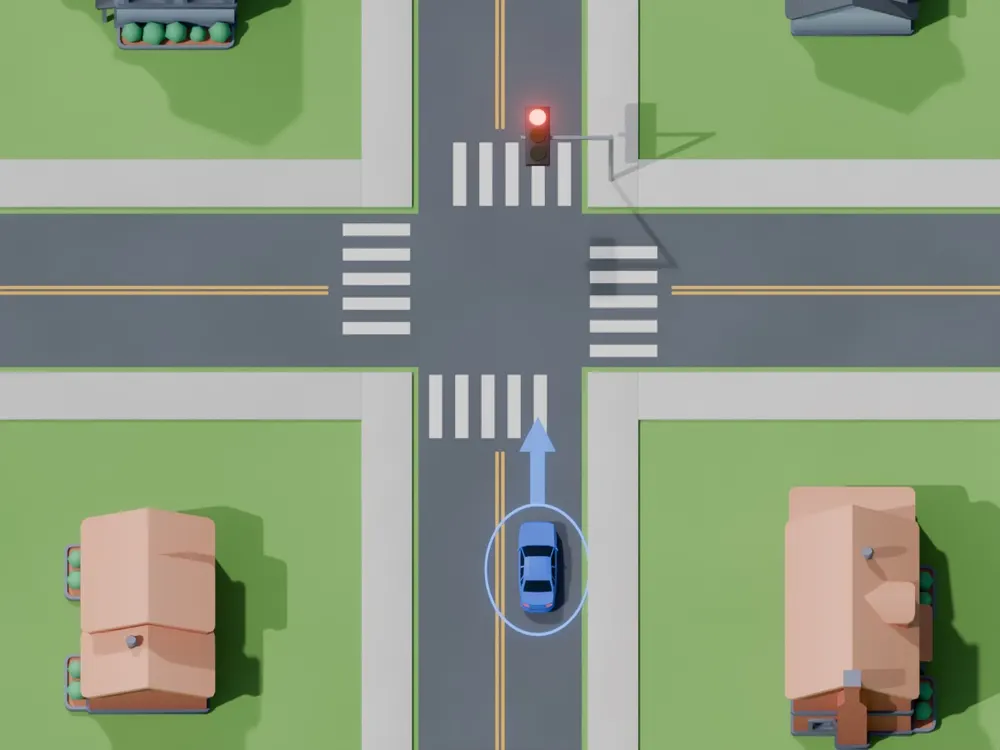
Correct answer: Before the crosswalk
When there is no stop line, the crosswalk is your stopping point. Keep it clear for pedestrians.
-
Signs that warn of road construction and maintenance work are usually what color?
Correct answer: Orange with black letters or symbols
Orange is reserved for work zones. When you see orange signs, cones or drums, expect workers, equipment and changed lanes.
-
What is the safest way to drive on a busy multi-lane road?
Correct answer: Stay in one lane as much as possible
Weaving in and out of traffic increases the chance of a collision. Pick a lane and keep to it.
-
Your car does not have antilock brakes and the wheels lock up on a slippery road. What should you do?
Correct answer: Ease off the brake, then pump it so the wheels can turn again
Locked wheels cannot steer. Letting up and pumping lets them roll so you regain steering control.
-
There are no pedestrian signals at an intersection. Which signals do pedestrians follow?
Correct answer: The vehicle traffic signals for their direction
Without pedestrian signals, people on foot follow the regular traffic light. When they cross on green, turning drivers must yield to them.
-
A sign reads NO TURNS. At this intersection you may:
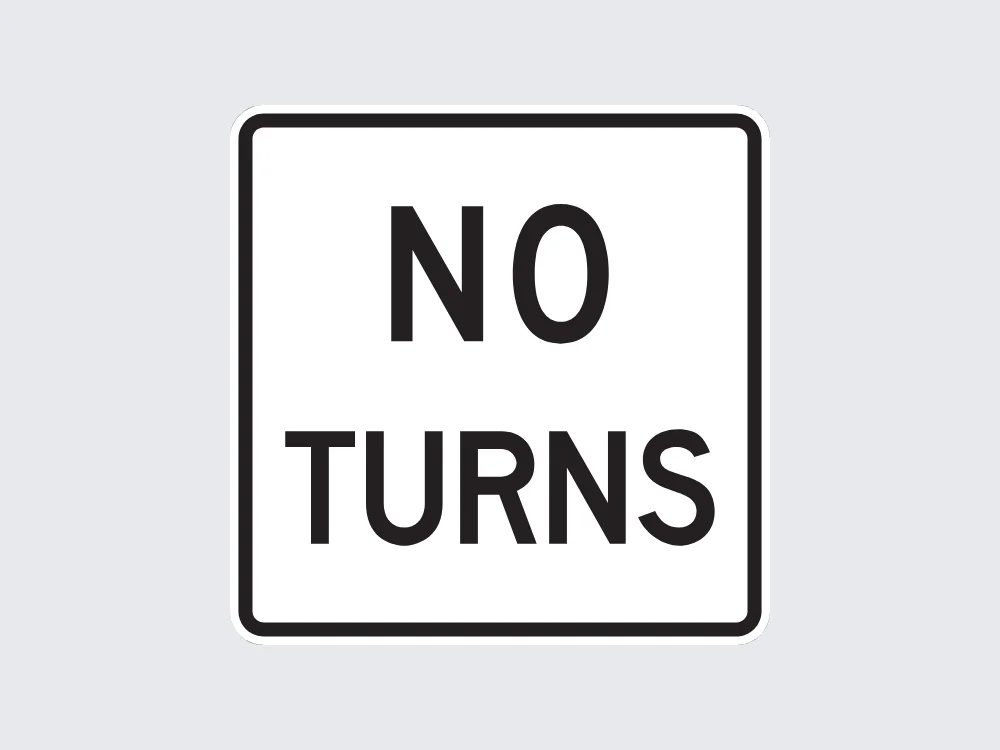
Correct answer: Only go straight
NO TURNS forbids both left and right turns, so the only allowed movement is straight ahead.
-
Approaching a railroad crossing without signals, what helps you hear a train?
Correct answer: Turning down the radio and opening a window
A train horn can be hard to hear inside a closed car. Stop, look and listen before you cross.
-
You are using high beams on a dark road. Within what distance of an oncoming vehicle must you switch to regular headlights?
Correct answer: 500 feet
Dim your high beams once an oncoming vehicle is within 500 feet so you do not blind its driver.
Washington Driver Guide, p. 50 -
You are at a red light on a two-way street and want to go left into a one-way street whose traffic flows to your left. There is no sign against it. What may you do?
Correct answer: Turn after a full stop, if there is room
In Washington, a complete stop on red lets you make a left into a one-way street, as long as no NO TURN ON RED sign is posted and there is room to merge.
Washington Driver Guide, p. 110
Your result
Finish the test to see your score. You need 32 of 40 correct.
Review your mistakes
About the Washington DOL written test
Facts from the Washington State Department of Licensing, with links to the official pages.
- Questions
- 40 multiple-choice questions source ↗
- To pass
- 32 correct answers out of 40 source ↗
- Time limit
- No published time limit
- Permit age
- 15 years with driver training; 15½ without source ↗
- Fee
- $35 permit fee; test fee varies by location source ↗
- If you fail
- There may be a waiting period before you can retest
- Test in Spanish
- Yes, offered in 12 languages including Spanish (varies by site) source ↗
- Online test
- No; in person at an approved testing location
Our practice test: 40 questions, 32 correct to pass.
Official sources
What the Washington test covers
Topics in our 433 Washington practice questions, written from the Washington Driver Guide. 60 of them cover rules specific to Washington.
- Intersections and turns38
- Regulatory signs33
- Weather and night driving31
- Sharing the road30
- Right of way28
- Pavement markings28
- Traffic signals25
- Lanes and passing23
- Parking23
- Emergencies20
Washington numbers to know
The figures test writers love, from the Washington Driver Guide. Open the handbook ↗
Speed limits
| School zone | 20 mph |
| Ocean beach (Grays Harbor, Pacific counties) | 25 mph |
| Emergency zone: slow down / never above | 10 mph under the limit / 50 mph |
Alcohol
| DUI: 21 and older / under 21 | BAC 0.08 / 0.02 |
| Active THC: 21 and older / under 21 | More than 5 ng/mL / above 0 |
| Refusing a test | 90–730 days, or until 21 if longer |
Permit and teen drivers
| Instruction permit: with a course / without | 15 / 15½ (license at 18) |
| Before the license (16–17) | Permit 6 months; 40 h day + 10 h night |
| Passengers under 20: first 6 months / after | Family only / up to 3 |
| Intermediate license: no driving | 1 a.m. – 5 a.m. (unless with a driver 25+) |
Phones
| Holding a phone or tablet | Not allowed for any driver |
| Permit or intermediate license | No phone, even hands-free (emergencies only) |
Seat belts and child seats
| Rear-facing seat | Up to age 2 |
| Booster or car seat | From 4 until 4 ft 9 in |
School buses
| Bus across a median, 3+ lanes | No need to stop |
Points and penalties
| Passing a stopped school bus | Fine doubled |
| Intermediate license: 2nd violation / 3rd | 6 months or until 18 / until 18 |
| Crash report (if police did not file one) | Within 4 days |
Distances
| Passing a bicyclist | 3 ft |
| Dim high beams: oncoming / following | 500 ft / 300 ft |
| Turn signal before turning | 100 ft |
| No parking near a stop sign or signal / driveway | 30 ft / 5 ft |
| No parking near a hydrant / railroad crossing | 15 ft / 50 ft |
Questions and answers
How many questions are on the Washington permit test?
40 multiple-choice questions. To pass: 32 correct answers out of 40.
How many questions can you miss on the Washington permit test?
You can miss up to 8 of 40 questions: you need 32 correct answers.
Can you take the Washington permit test in Spanish?
Yes, offered in 12 languages including Spanish (varies by site).
Can you take the Washington permit test online?
No; in person at an approved testing location.
What age can you get your permit in Washington?
You can apply for a learner's permit at 15 years with driver training; 15½ without.
How long is the Washington permit test?
No published time limit.
What happens if you fail the Washington permit test?
There may be a waiting period before you can retest.
How much does the Washington permit test cost?
$35 permit fee; test fee varies by location.
How do I study for the Washington permit test?
Read the Washington Driver Guide, then take practice tests in the real exam format until you pass them with room to spare. Learn the numbers by heart: speed limits, following distances, alcohol limits and permit rules. The dmvly app has 433 Washington questions with an explanation for each one.