-
Signs that tell you about laws you must obey, such as speed and turn rules, are usually:
Correct answer: White rectangles with black or red lettering
Regulatory signs are mostly white rectangles. Yellow diamonds warn, green signs guide and orange signs mark work zones.
-
What does this sign prohibit?
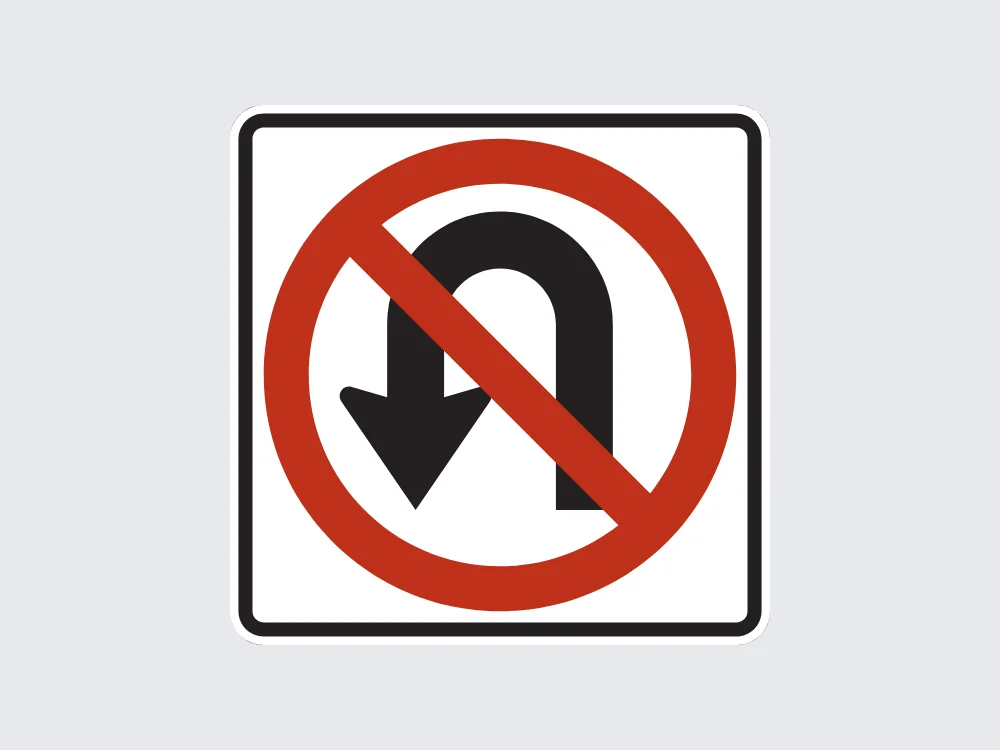
Correct answer: Making a U-turn
The U-shaped arrow inside a red circle with a slash means you may not turn around to go the opposite way here.
-
This sign is posted over your lane. What must you do?
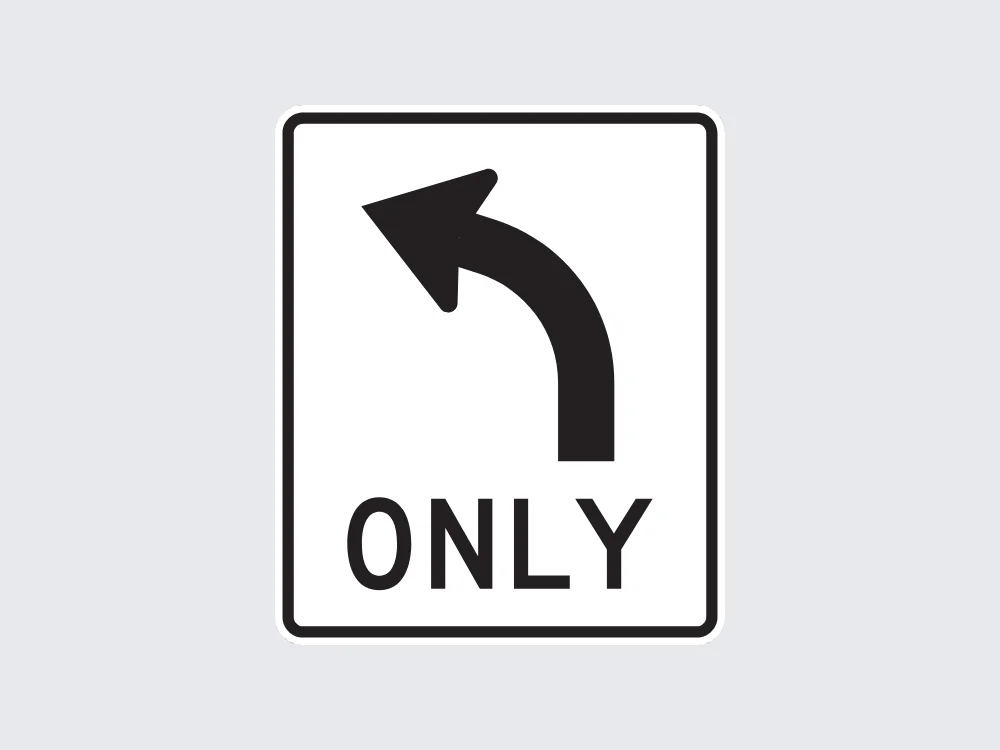
Correct answer: Turn left; going straight from this lane is not allowed
A curved arrow with the word ONLY makes that turn mandatory for the lane. Change lanes before you reach the solid line if you want to go another way.
-
At a STOP sign there is no clear traffic. Is slowing down to a crawl without stopping enough?
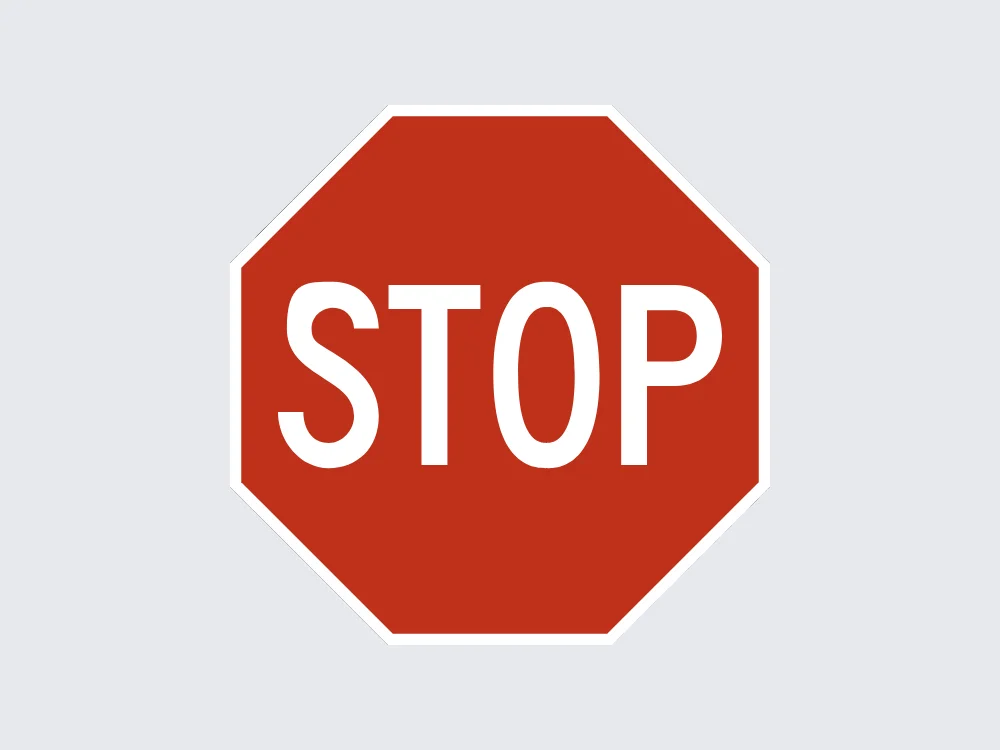
Correct answer: No, you must come to a complete stop every time
The rule applies to every vehicle that reaches the sign, whether or not traffic is present. Only a full stop meets it.
-
You see this plaque under a STOP sign. What does it tell you?
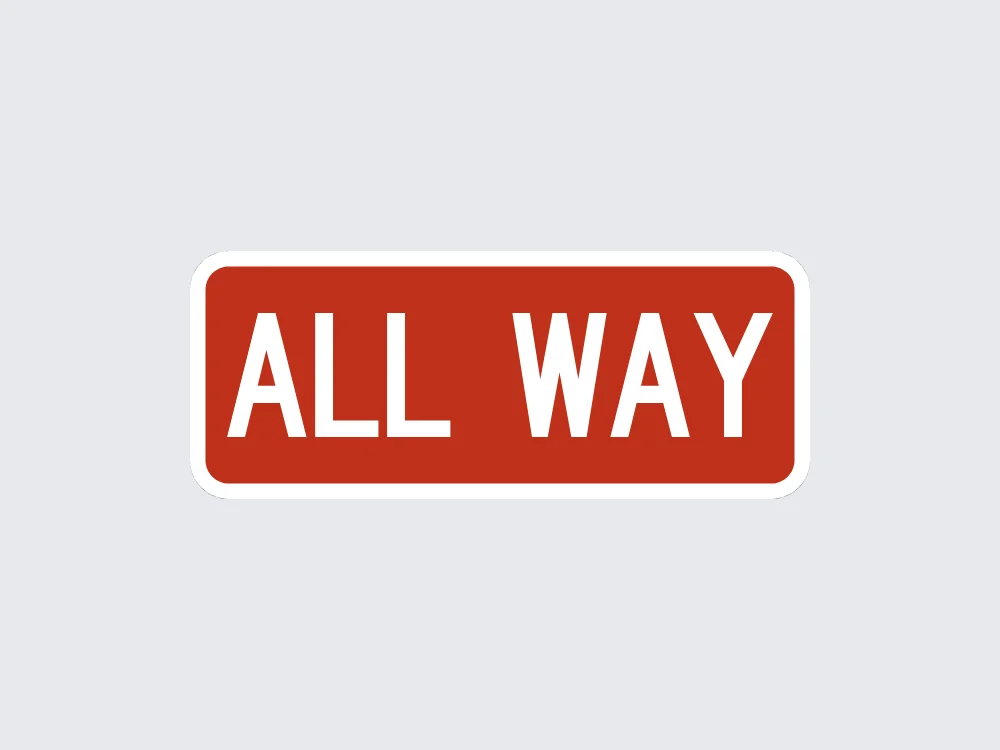
Correct answer: Traffic from every direction must also stop at this intersection
An ALL-WAY plaque means every approach has a STOP sign. Everyone stops, then drivers go in the order they arrived.
-
What does this sign mean?
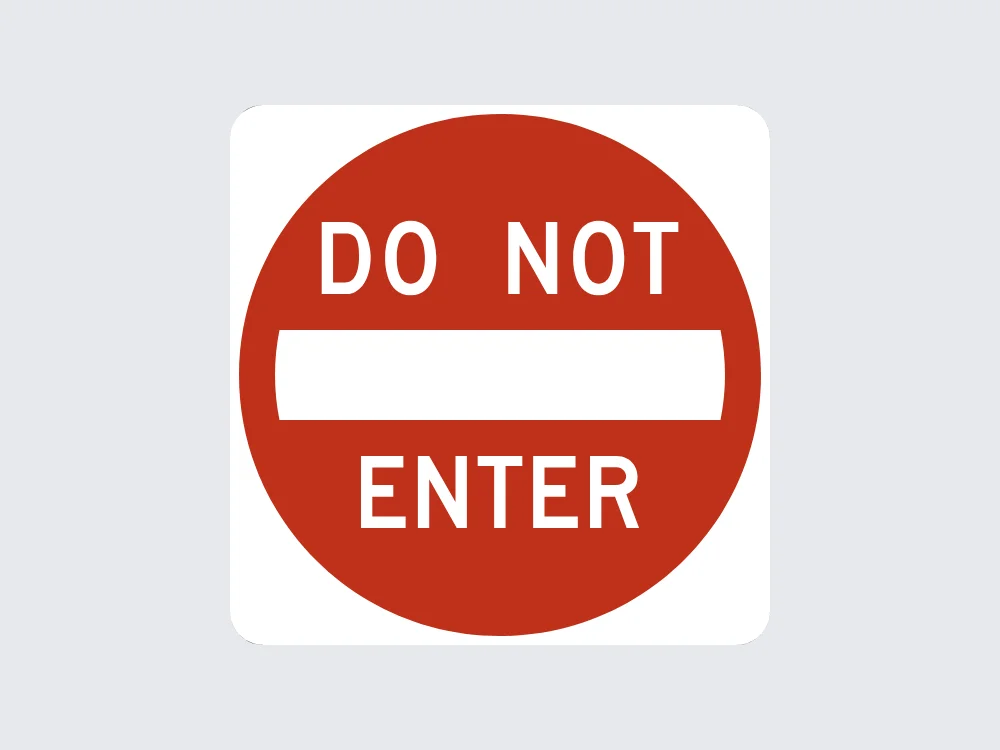
Correct answer: You may not enter the road or ramp from this direction
DO NOT ENTER is posted where traffic flows toward you, such as one-way streets and freeway exit ramps. Entering there means driving against traffic.
-
What must you do when you reach this sign?
Correct answer: Come to a complete stop, then go only when it is safe
A STOP sign always requires a full stop. After stopping, check traffic in every direction and go only when the way is clear.
-
What does this sign require?
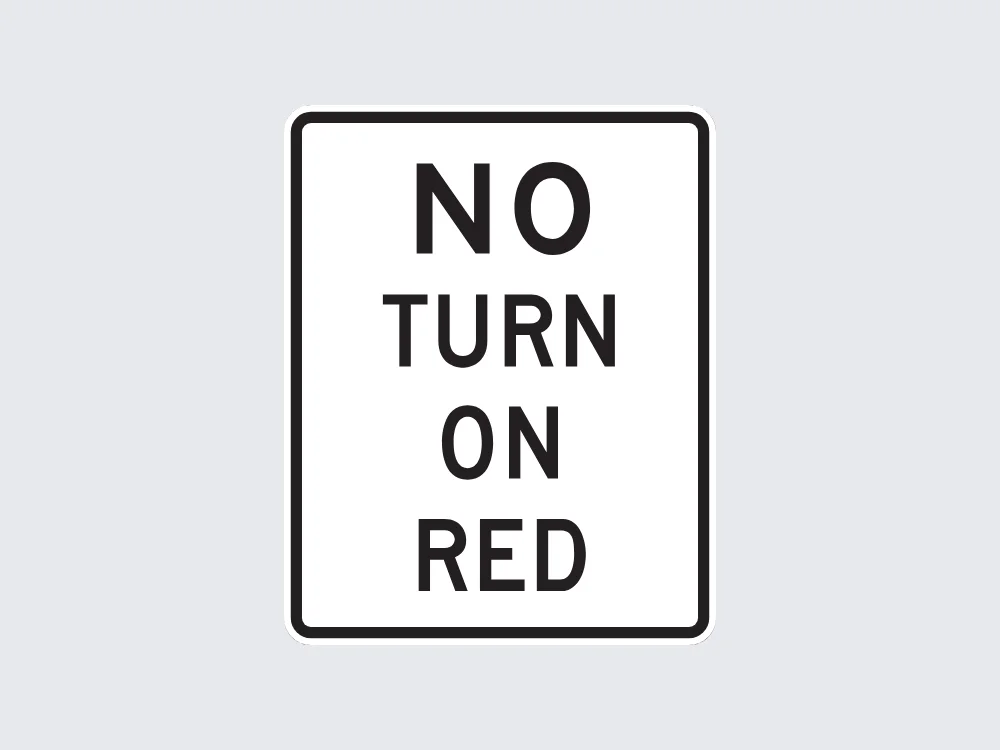
Correct answer: While the light is red, you may not turn; wait for green
NO TURN ON RED removes any permission to turn during the red phase. You may turn once the signal turns green.
-
What does this sign warn about?
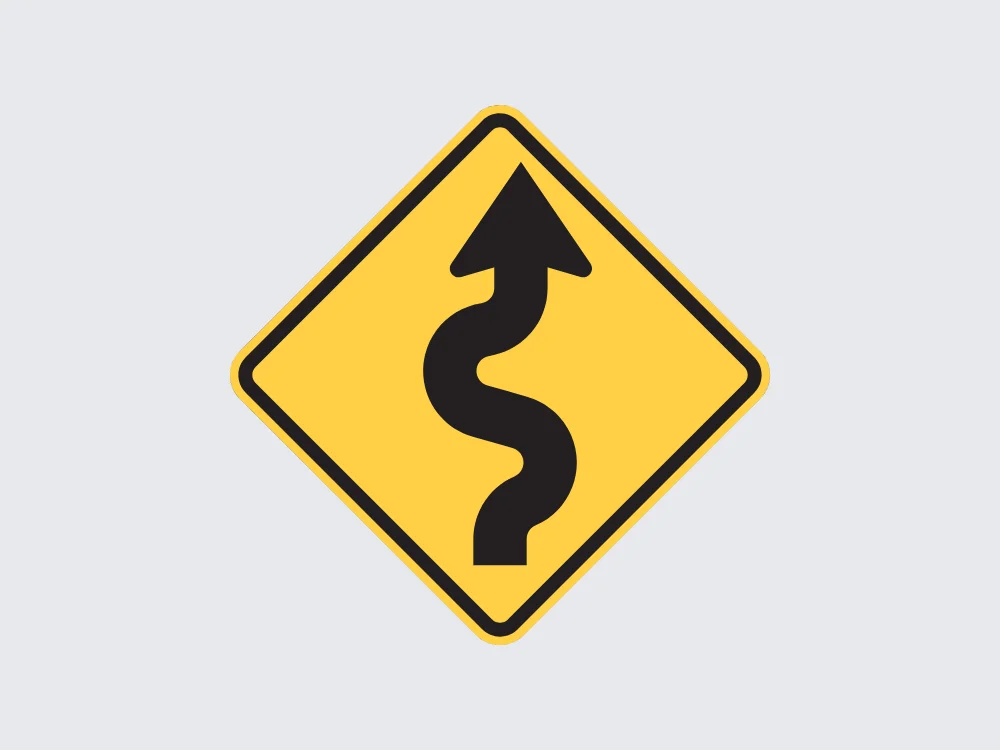
Correct answer: A winding road with several curves; drive slowly and do not pass
A series of curves lies ahead. Keep your speed down and do not try to pass where you cannot see far ahead.
-
What does this sign tell you about the road ahead?
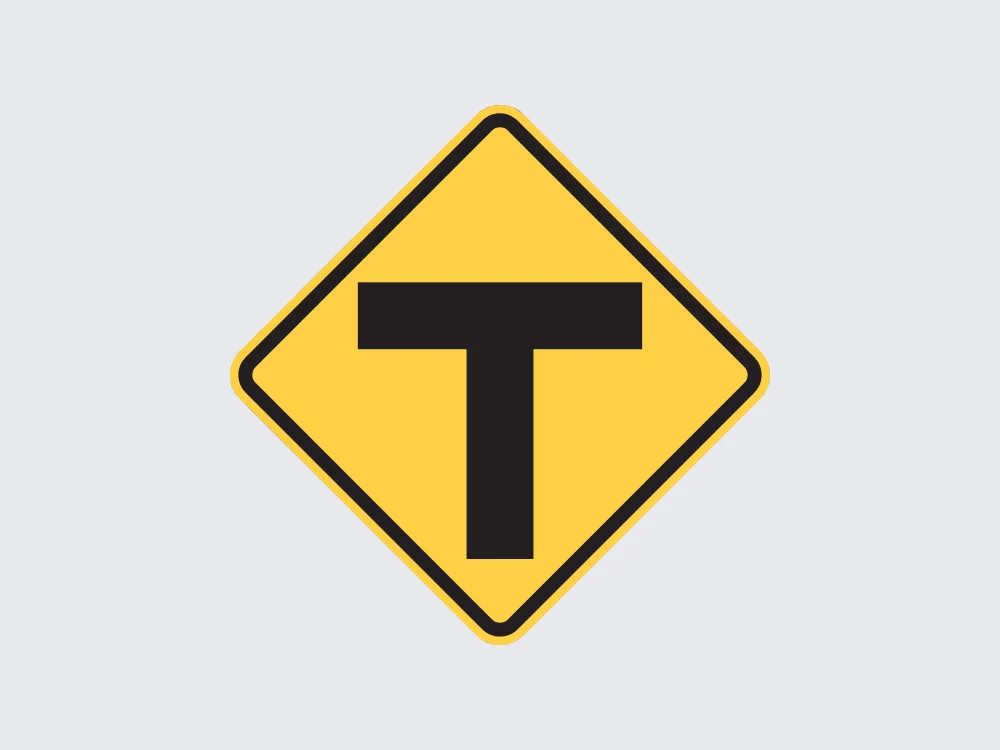
Correct answer: It ends at a T intersection; you will have to turn left or right
The T shape shows that your road meets a crossing road and does not continue. Slow down and be ready to yield before turning.
-
What does this sign mean?
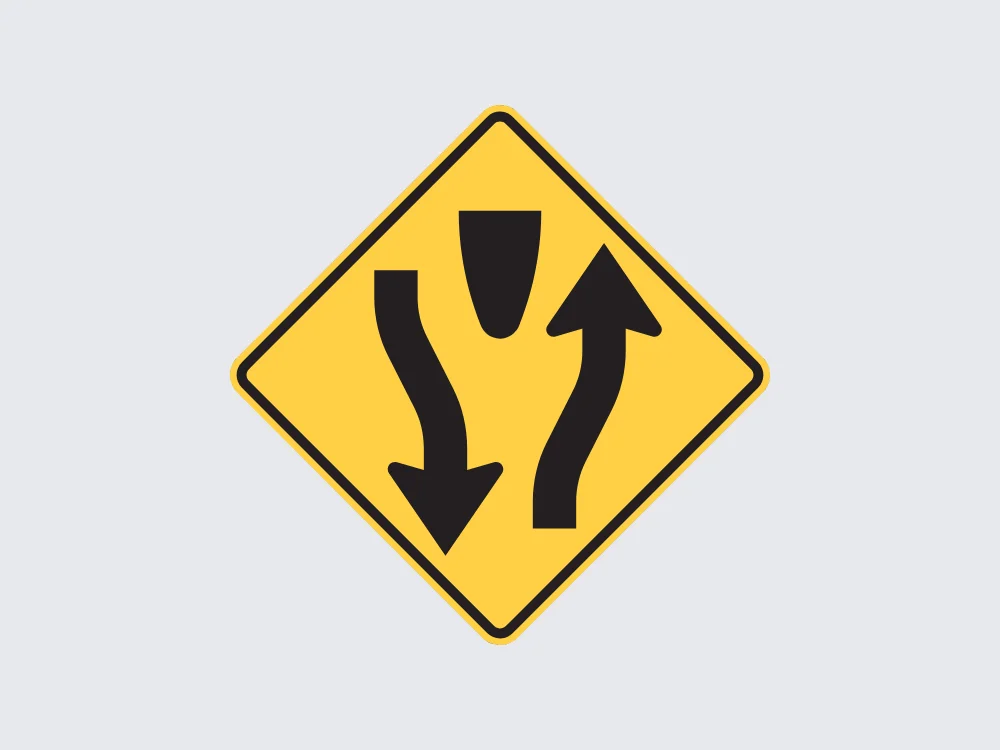
Correct answer: A divided highway begins; keep to the right of the median
Ahead, a median or barrier will separate the two directions of traffic. Stay on the right side of it.
-
What should you do when you see this sign?
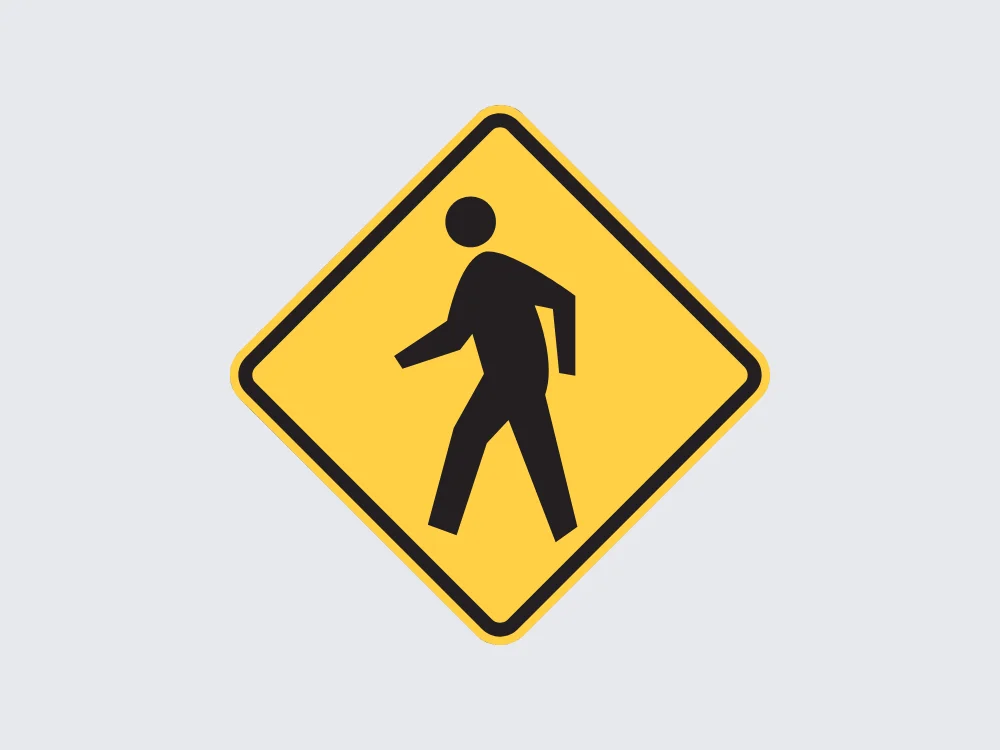
Correct answer: Slow down and watch for people crossing; be ready to stop for them
This sign marks a place where many pedestrians cross. Slow down, look for them, and yield as needed.
-
What should you expect after passing this sign?
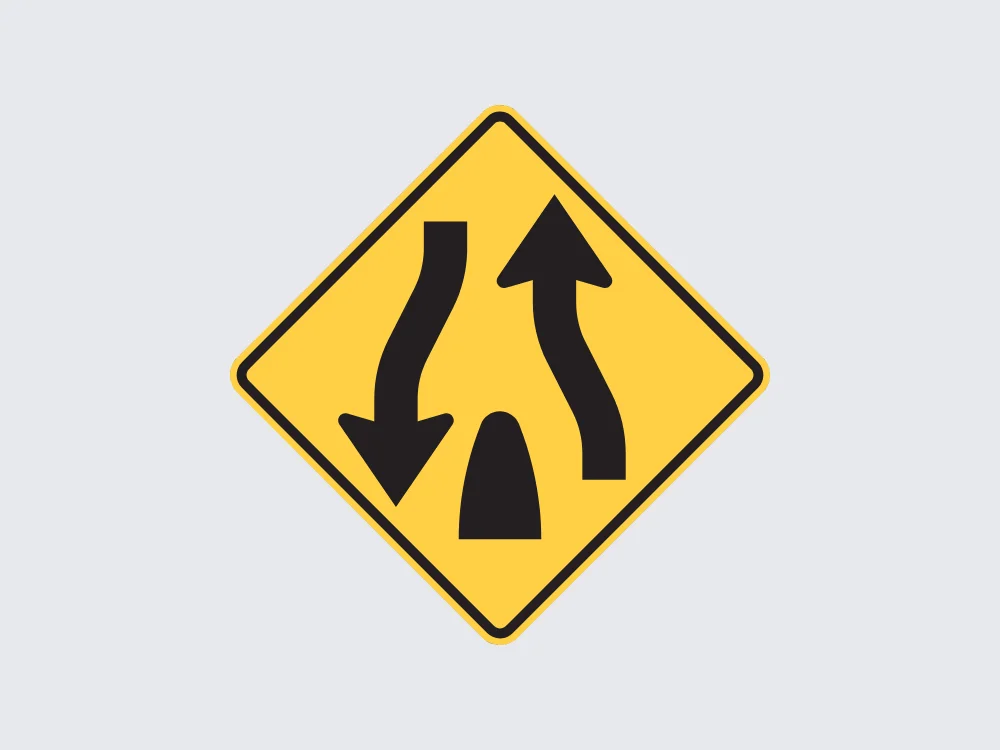
Correct answer: The median ends and oncoming traffic will be on the same roadway; keep right
Where a divided highway ends, nothing separates you from oncoming vehicles anymore. Keep right and stay alert.
-
Green signs on streets and highways give you:
Correct answer: Directions and distances to destinations
Green is the guide color: it shows routes, directions, exits and distances to places.
-
Which group of signs helps you find your way when you do not know the area?
Correct answer: Guide signs, such as route markers and destination signs
Guide signs name the road you are on and point the way and distance to places. Watching for them helps you avoid sudden turns or stops.
-
A school crossing guard holds up a STOP paddle in front of you. What do you do?
Correct answer: Stop and wait until the guard signals that you may go
You must always obey a crossing guard's directions. Wait until the guard and the children are clear and you are signaled to go.
-
Orange signs and cones are on the road ahead. Which driving habit fits best?
Correct answer: Leave extra space and expect sudden slowing or stopping
Traffic in work zones can stop without warning. A larger gap and full attention help you avoid rear-end crashes.
-
A flagger in a work zone signals you to stop. What should you do?
Correct answer: Stop and wait until the flagger signals you to go
A flagger's signals carry the same weight as a sign. Stop, stay stopped, and move only when the flagger tells you to.
-
Most signs used in road work zones have which shape?
Correct answer: Diamond
Work zone signs are mostly orange diamonds, the same warning shape used on yellow signs, with a few rectangles.
-
What is the first thing to do after passing this sign?
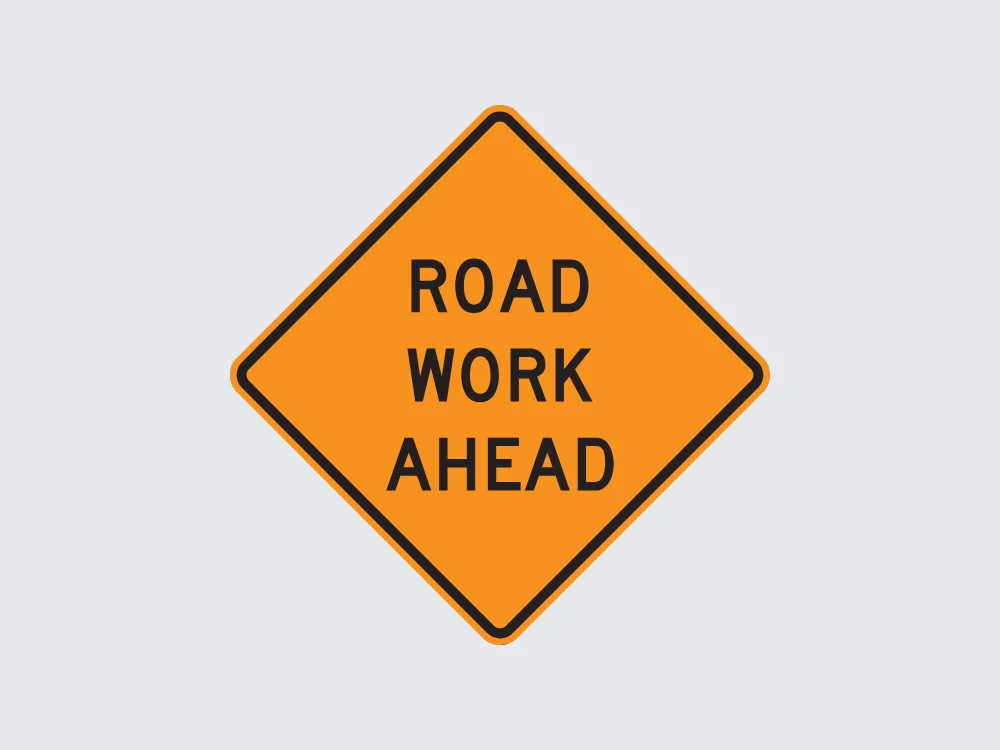
Correct answer: Slow down and watch for workers, equipment and lane changes
Work zones bring sudden slowdowns, narrow lanes and people on foot. Slowing down and leaving extra space gives you time to react.
Your result
Finish the test to see your score. You need 16 of 20 correct.
Review your mistakes
Questions and answers
Is there a separate road signs test in Arizona?
On the Arizona test, sign questions are mixed in with the road rules questions.
What do road sign shapes mean?
An octagon is always STOP. A downward triangle means yield. A diamond warns of a hazard ahead. A pentagon marks a school zone or crossing. A round yellow sign warns of a railroad crossing. Rectangles carry rules (vertical) or directions (horizontal).
What do road sign colors mean?
Red means stop, yield or prohibited. Yellow is a general warning. Orange marks work zones. Fluorescent yellow-green is for school, pedestrian and bicycle crossings. White carries regulations, green gives directions, blue shows services and brown points to recreation areas.