-
You have a green light, but traffic is backed up on the far side of the intersection. Following this sign, you should:
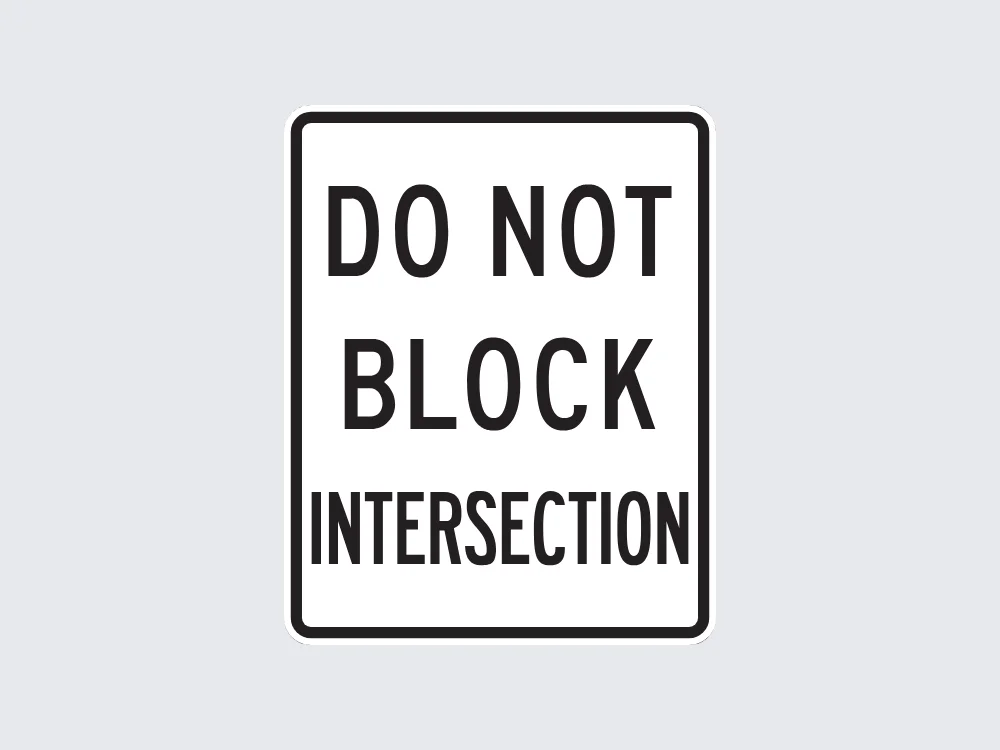
Correct answer: Wait before the intersection until there is room to get all the way through
A green light does not let you enter if you would be stuck in the intersection. Blocking it stops cross traffic when their light changes.
-
This sign marks the center lane of a two-way street. How may you use that lane?
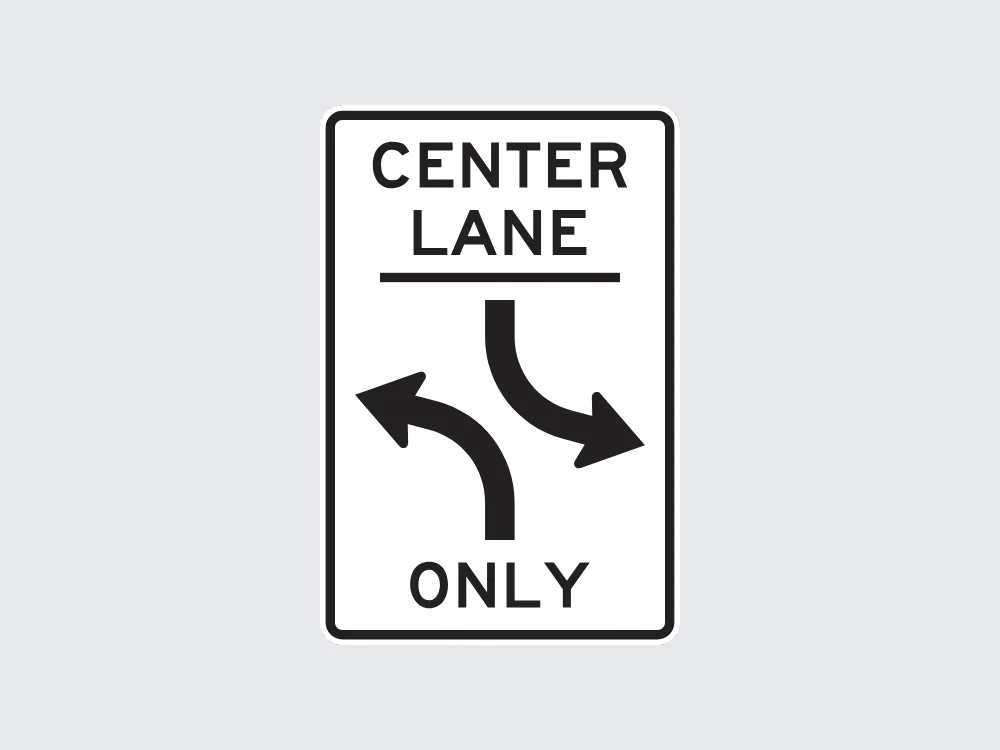
Correct answer: Only to prepare for and make left turns; drivers from both directions share it
The two-way left-turn lane is shared by both directions for left turns. It is never a passing lane or a through lane.
-
What does this sign require?
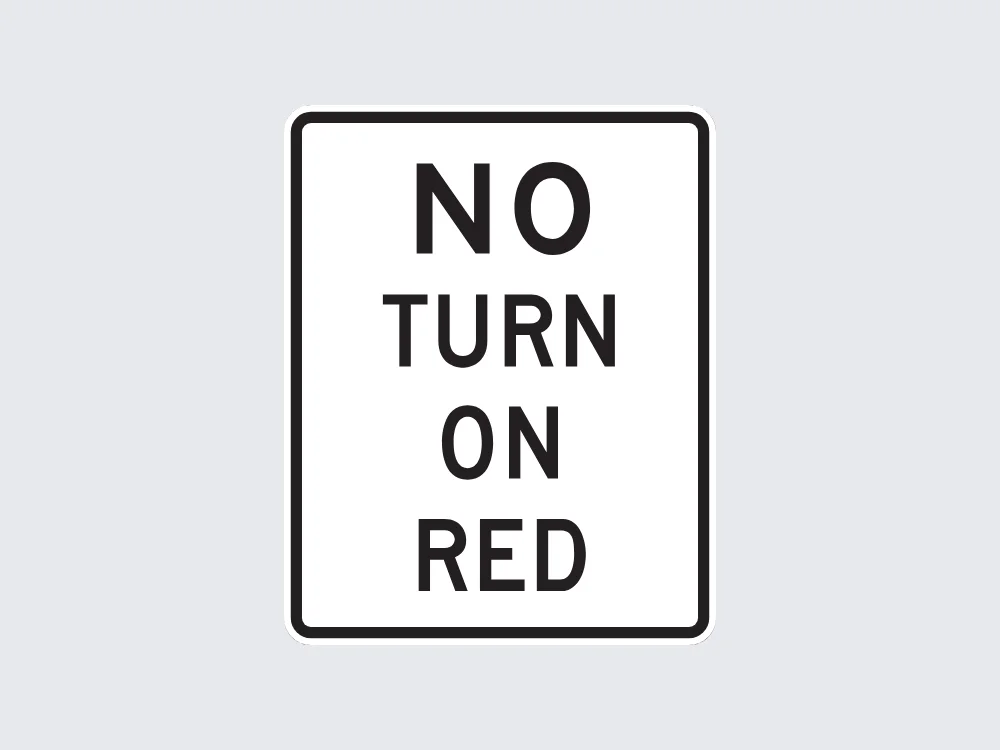
Correct answer: While the light is red, you may not turn; wait for green
NO TURN ON RED removes any permission to turn during the red phase. You may turn once the signal turns green.
-
What does this sign tell you?
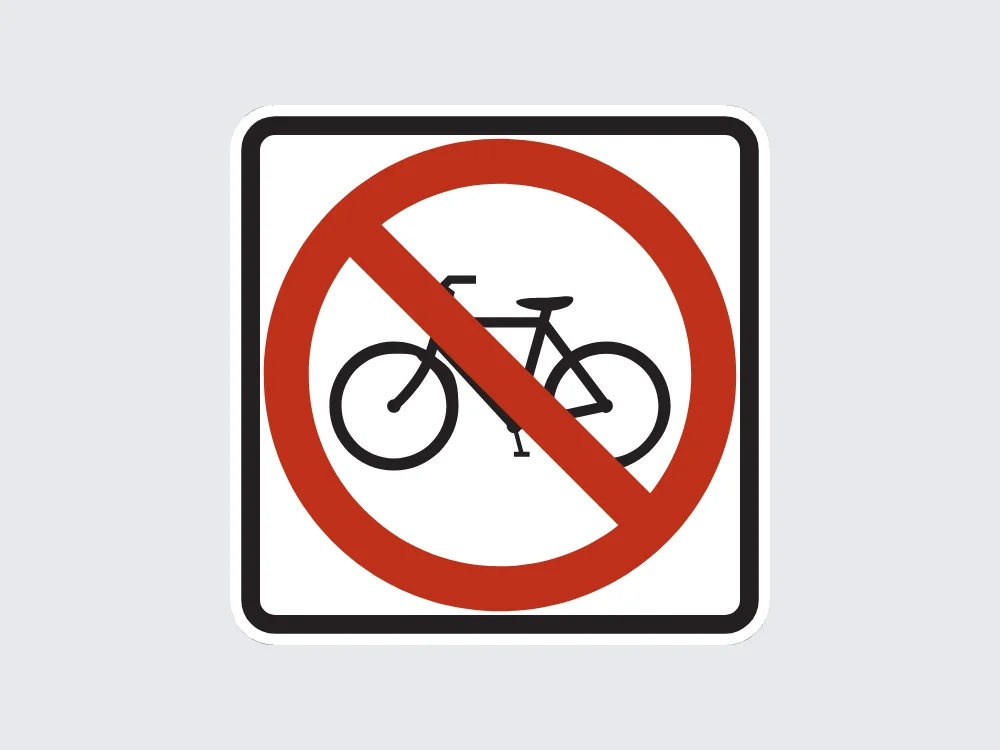
Correct answer: Bicycles are not allowed on this road
A bicycle inside a red circle with a slash prohibits bicycles. A warning about bicyclists would be a yellow diamond instead.
-
What does this sign mean?
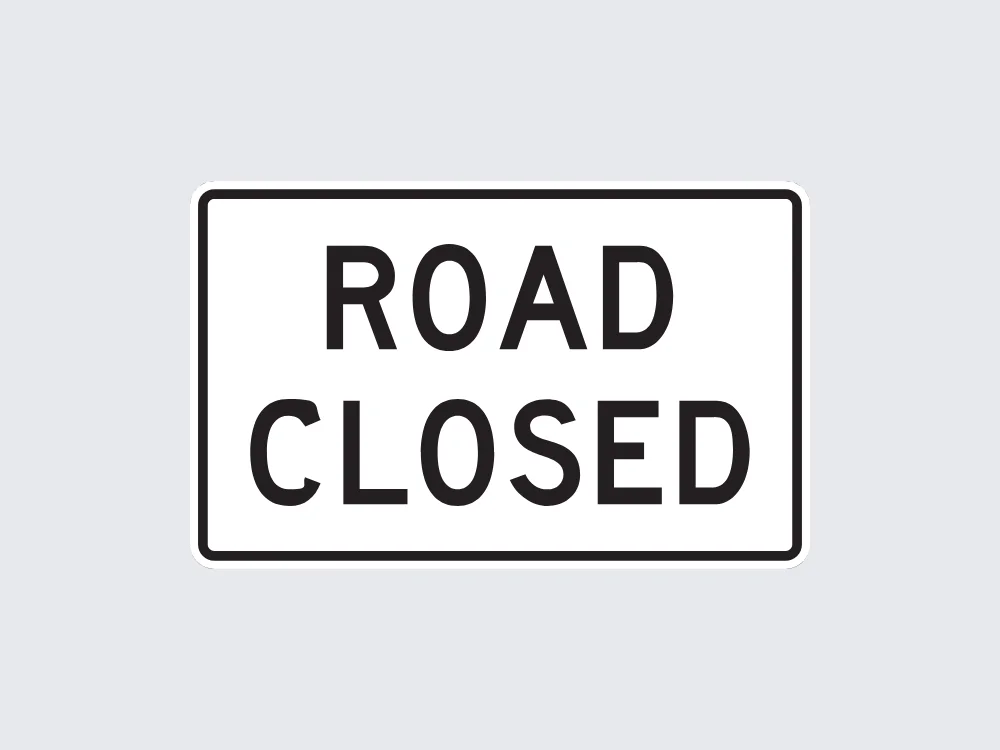
Correct answer: The road is not open to traffic; use another route or follow the detour
ROAD CLOSED means you may not continue on that road. Look for detour signs or choose another route.
-
You see this plaque under a STOP sign. What does it tell you?
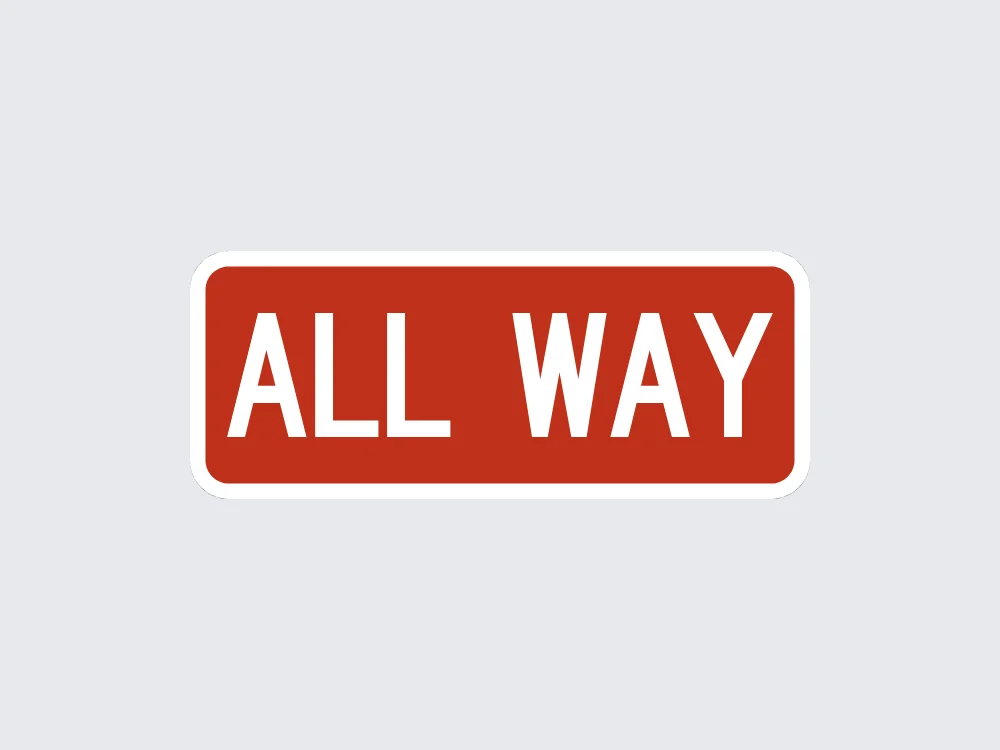
Correct answer: Traffic from every direction must also stop at this intersection
An ALL-WAY plaque means every approach has a STOP sign. Everyone stops, then drivers go in the order they arrived.
-
A sign reads NO TURNS. At this intersection you may:
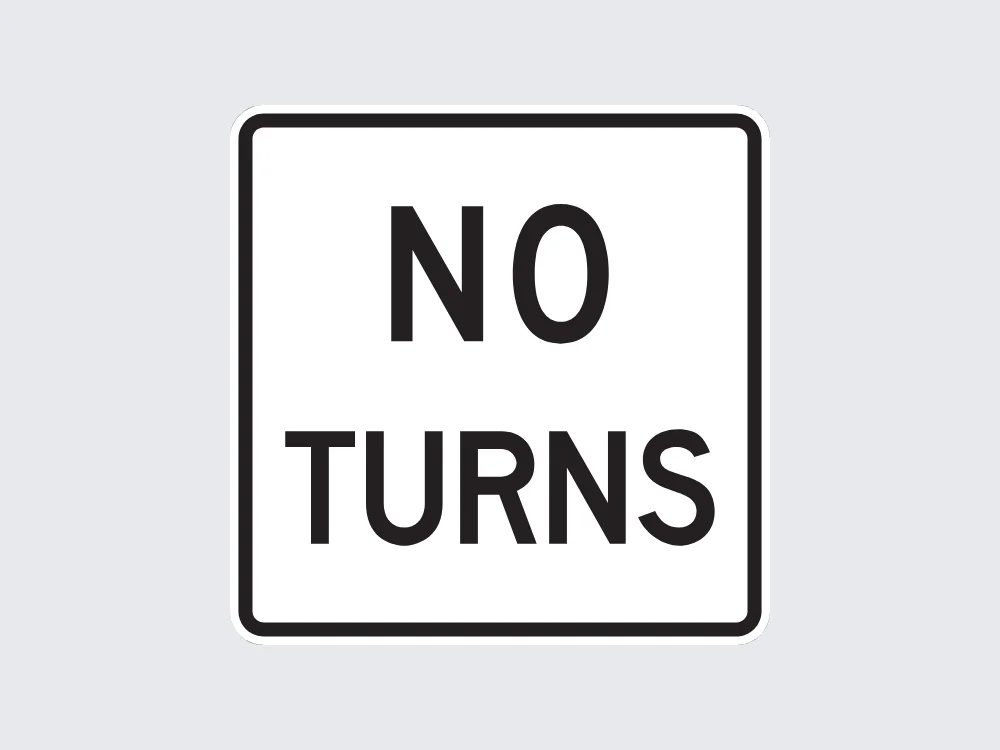
Correct answer: Only go straight
NO TURNS forbids both left and right turns, so the only allowed movement is straight ahead.
-
You pass this sign facing you. What should you do?
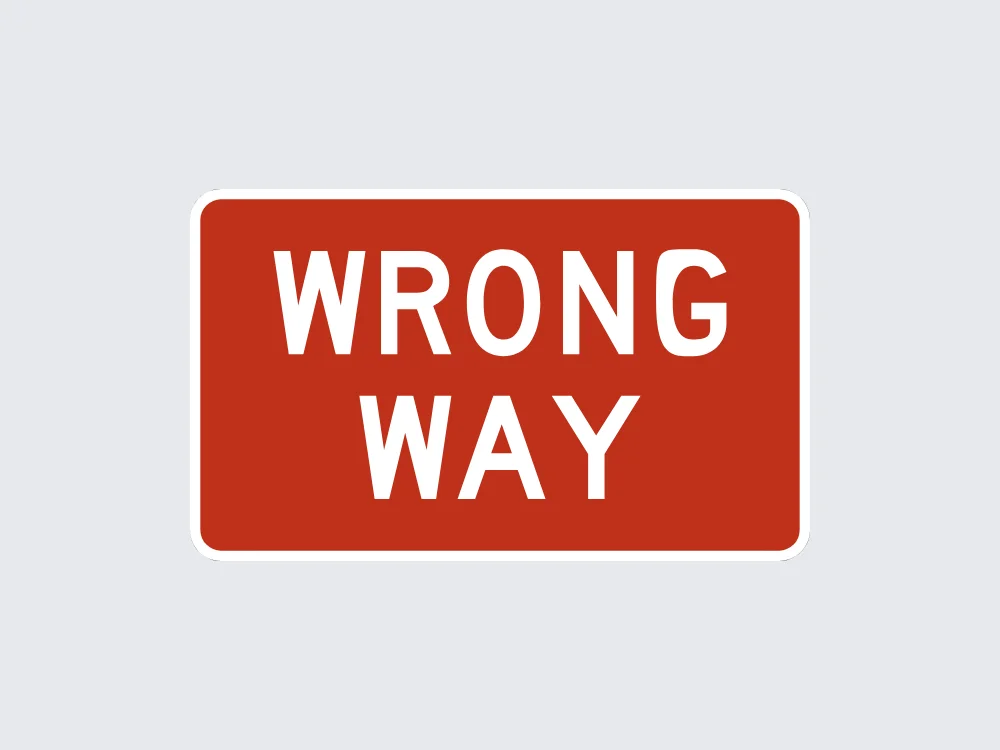
Correct answer: You are going against traffic; turn around or back out as soon as it is safe
A WRONG WAY sign facing you means you are on a road or ramp against the flow of traffic. Get out of that direction as soon as you safely can.
-
You are stopping at a STOP sign. There is a marked crosswalk but no limit (stop) line. Where should your vehicle stop?
Correct answer: Before entering the crosswalk
With no limit line, the crosswalk marks where you stop. Stopping on it would block people crossing.
-
What does this sign warn you about?
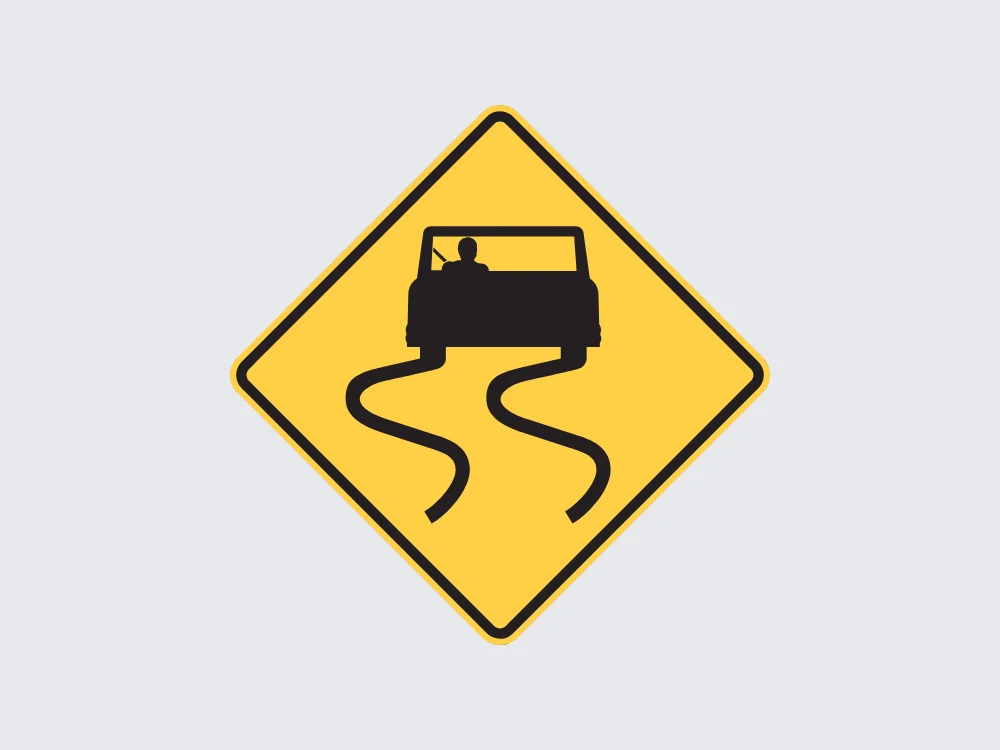
Correct answer: The road becomes slippery when wet; slow down and avoid sudden moves
On wet pavement this stretch loses grip. Slow down and avoid hard braking, sharp steering and quick acceleration.
-
What does this sign warn about?
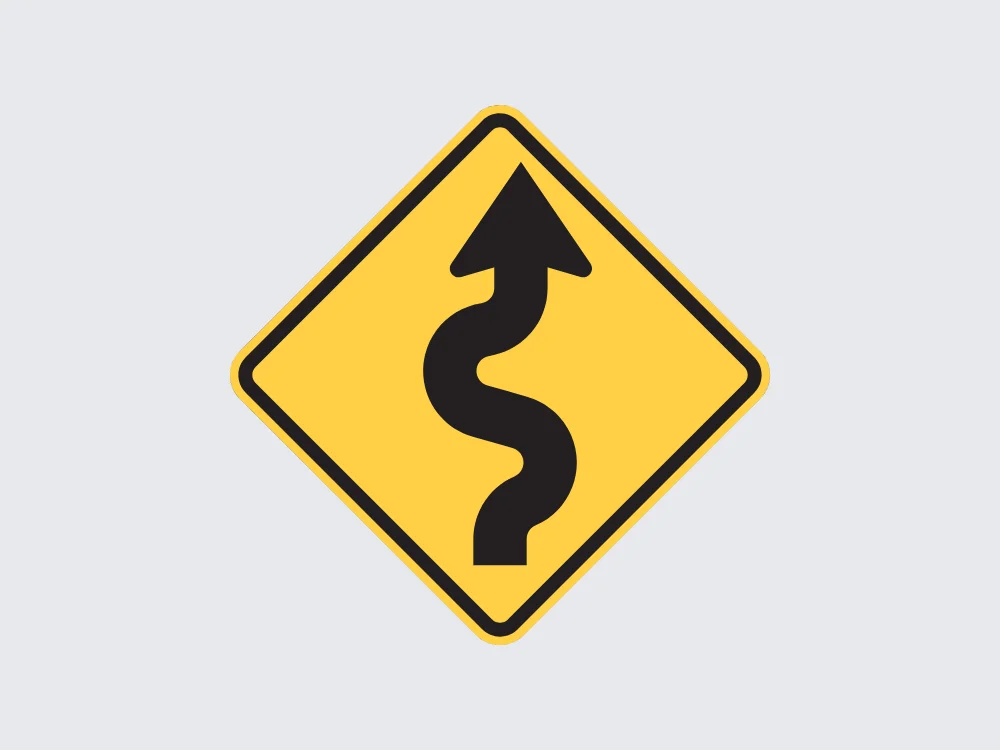
Correct answer: A winding road with several curves; drive slowly and do not pass
A series of curves lies ahead. Keep your speed down and do not try to pass where you cannot see far ahead.
-
What does this sign tell you about the road ahead?
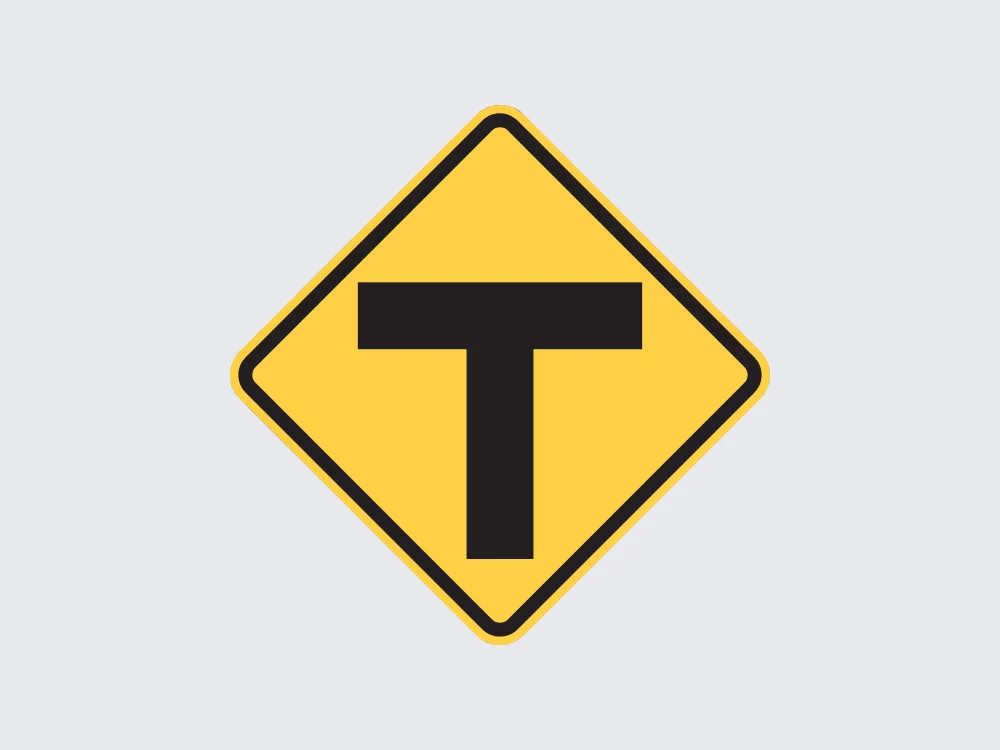
Correct answer: It ends at a T intersection; you will have to turn left or right
The T shape shows that your road meets a crossing road and does not continue. Slow down and be ready to yield before turning.
-
What does this sign mean?
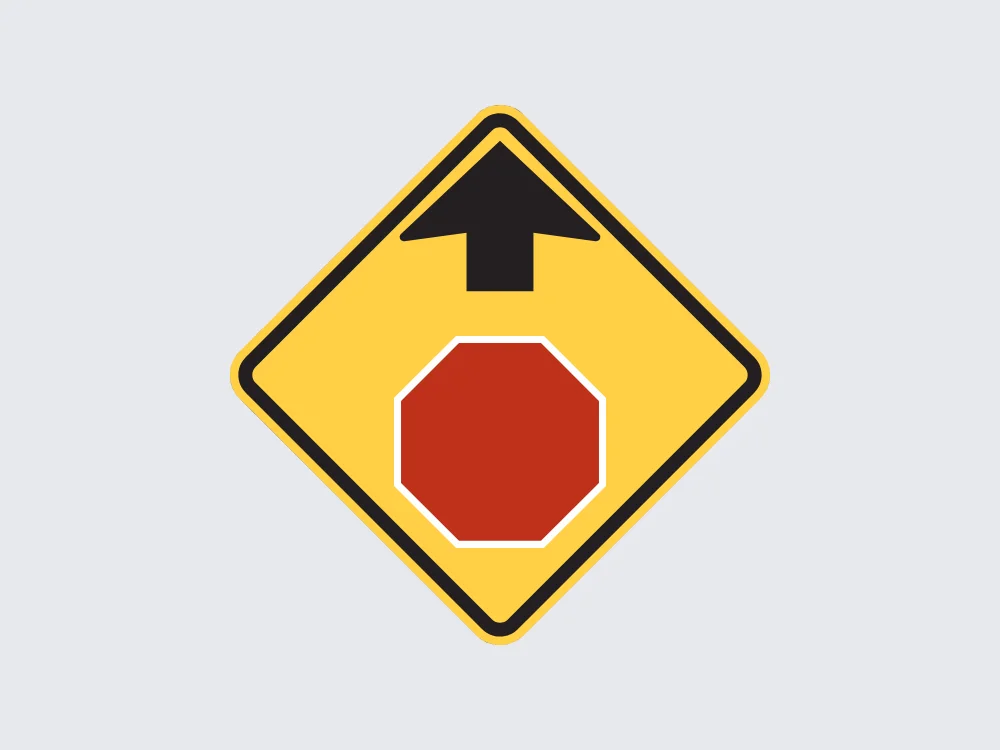
Correct answer: A STOP sign is ahead; slow down and prepare to stop
This warning gives you time to slow down for a STOP sign you may not see yet. You stop at the STOP sign itself, not at this one.
-
Do you have to pay attention to warning signs, or are they only advice?
Correct answer: Obey them; ignoring a warning sign can be a traffic violation
Warning signs alert you to real hazards and you are expected to adjust your driving. Disregarding them can also get you cited.
-
A green sign shows an airplane symbol and an arrow. What does it do?
Correct answer: Points the way to an airport
Green signs give direction to destinations. This one guides you to an airport.
-
A brown sign shows a skier. What is it telling you?
Correct answer: How to reach a recreation area, in this case a ski area
Brown signs guide you to recreation and scenic places. A warning about people crossing would be a yellow diamond.
-
You pass this sign. What should you do?
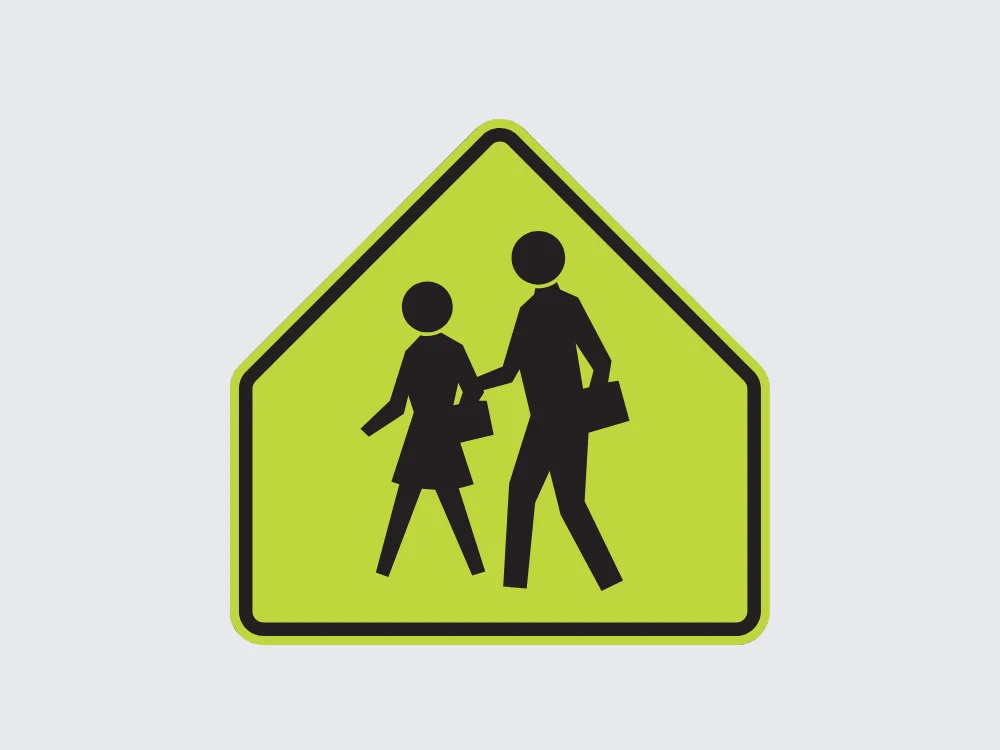
Correct answer: Slow down, watch for children and be ready to stop for them in crosswalks
Children near schools can move unpredictably. Drive slowly and stop for any child in a crosswalk.
-
A flagger in a work zone signals you to stop. What should you do?
Correct answer: Stop and wait until the flagger signals you to go
A flagger's signals carry the same weight as a sign. Stop, stay stopped, and move only when the flagger tells you to.
-
A flagger turns a paddle so this side faces you. What does it mean?
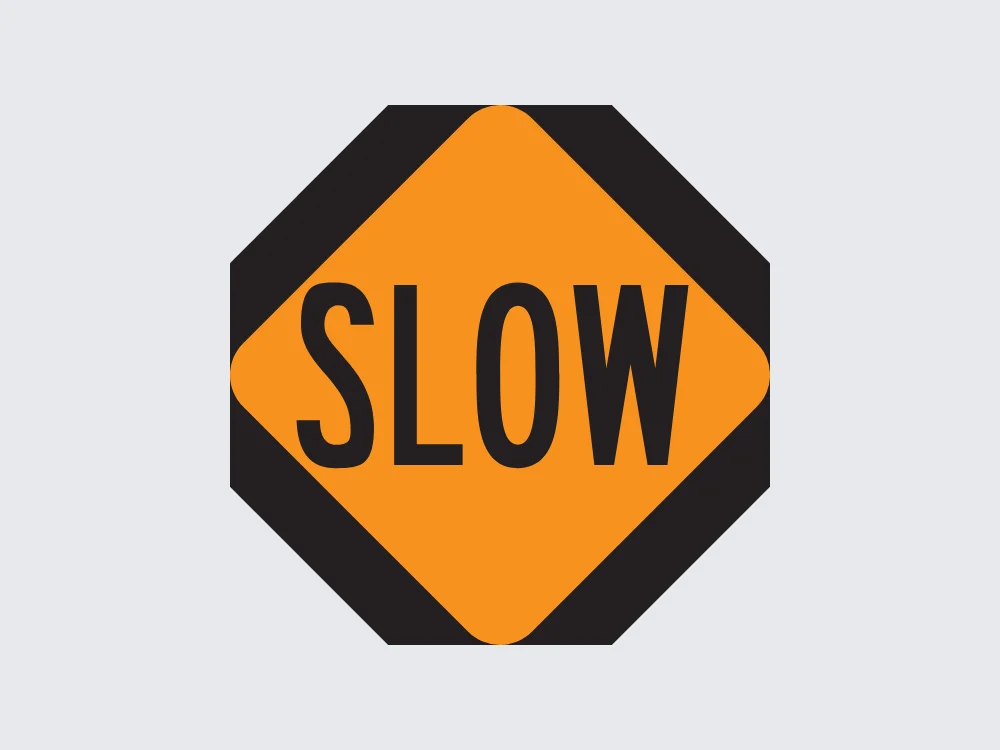
Correct answer: Proceed slowly and carefully through the work area
Flaggers use STOP/SLOW paddles. The SLOW side lets you move ahead at low speed while watching for workers and equipment.
-
A school crossing guard holds up a STOP paddle in front of you. What do you do?
Correct answer: Stop and wait until the guard signals that you may go
You must always obey a crossing guard's directions. Wait until the guard and the children are clear and you are signaled to go.
Your result
Finish the test to see your score. You need 16 of 20 correct.
Review your mistakes
Questions and answers
Is there a separate road signs test in Utah?
On the Utah test, sign questions are mixed in with the road rules questions.
What do road sign shapes mean?
An octagon is always STOP. A downward triangle means yield. A diamond warns of a hazard ahead. A pentagon marks a school zone or crossing. A round yellow sign warns of a railroad crossing. Rectangles carry rules (vertical) or directions (horizontal).
What do road sign colors mean?
Red means stop, yield or prohibited. Yellow is a general warning. Orange marks work zones. Fluorescent yellow-green is for school, pedestrian and bicycle crossings. White carries regulations, green gives directions, blue shows services and brown points to recreation areas.