-
On a road with two or more lanes in your direction, this sign means:
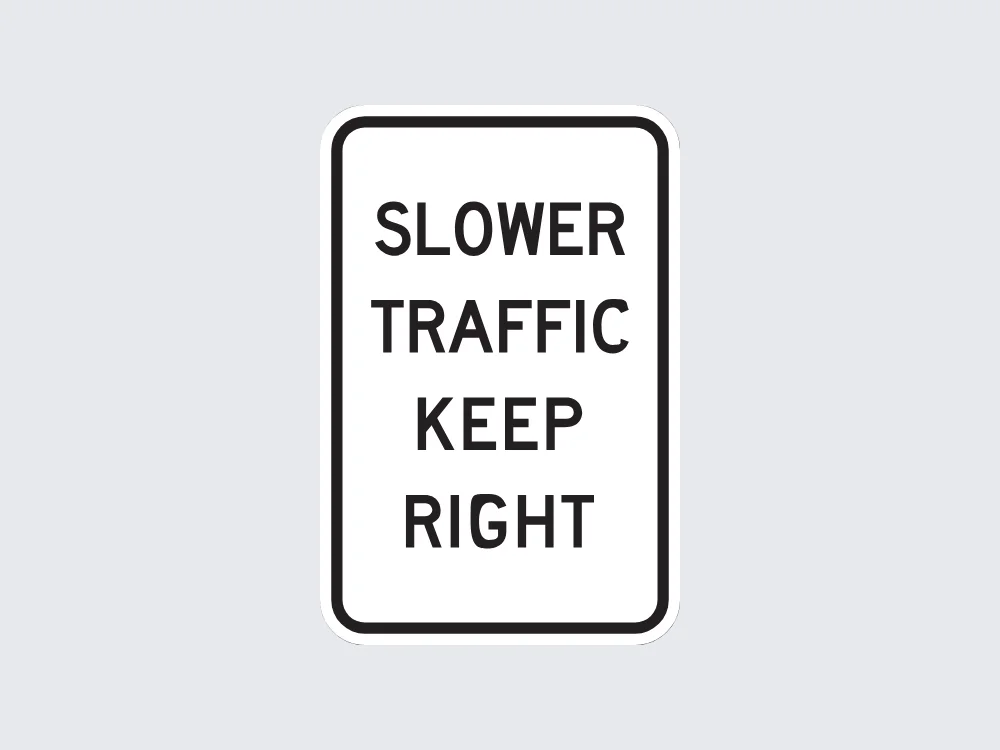
Correct answer: If you drive slower than others, use the right lane and leave the left lane for passing
Slower vehicles belong in the right lane so faster traffic can pass on the left.
-
When must you come to a full stop at this sign?
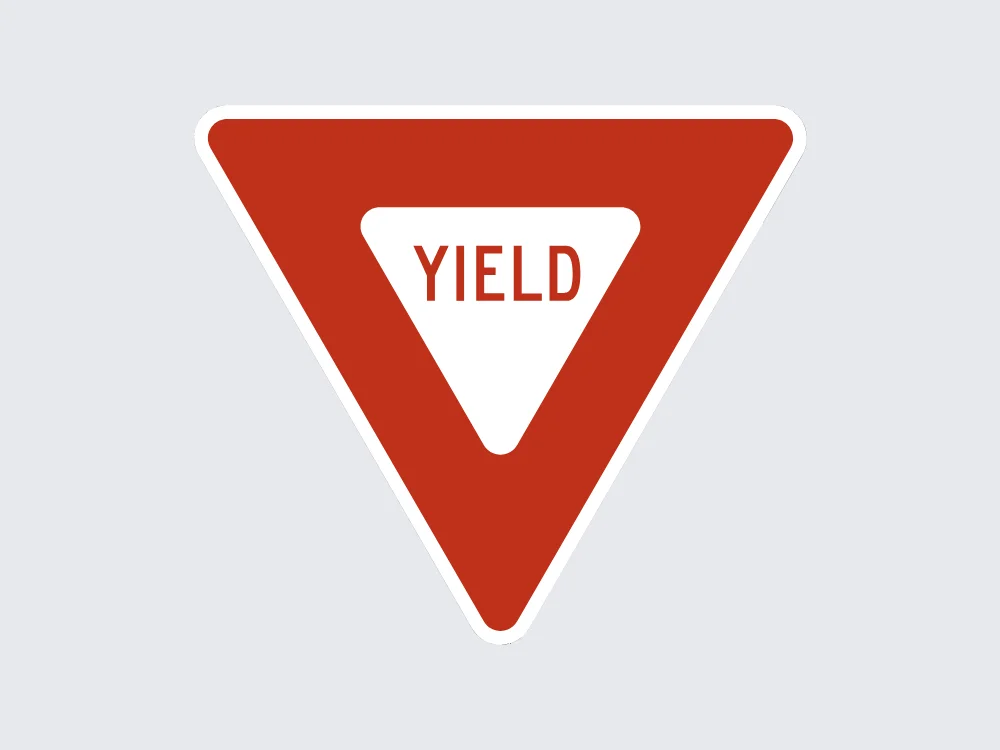
Correct answer: When traffic or pedestrians make it necessary
A YIELD sign does not demand a stop every time, but you must stop whenever that is the only way to let others go first.
-
What does this sign mean?
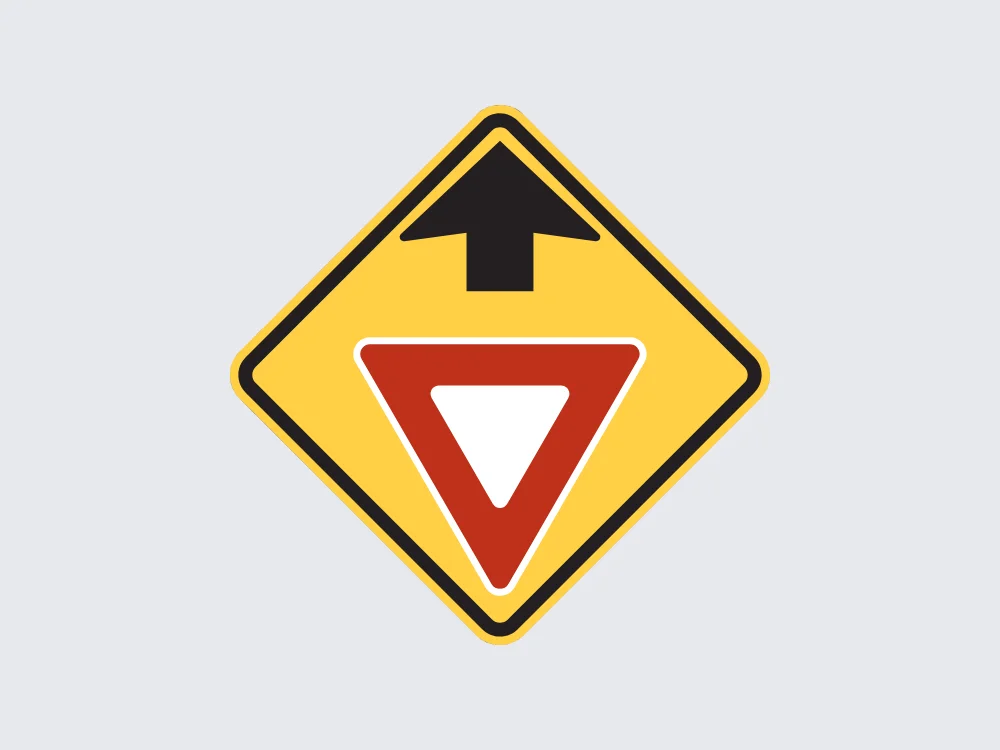
Correct answer: A YIELD sign is ahead; slow down and be ready to yield
It warns of a YIELD sign ahead, so be ready to slow down or stop to let other traffic go first.
-
What is the safest way to drive after seeing this sign?
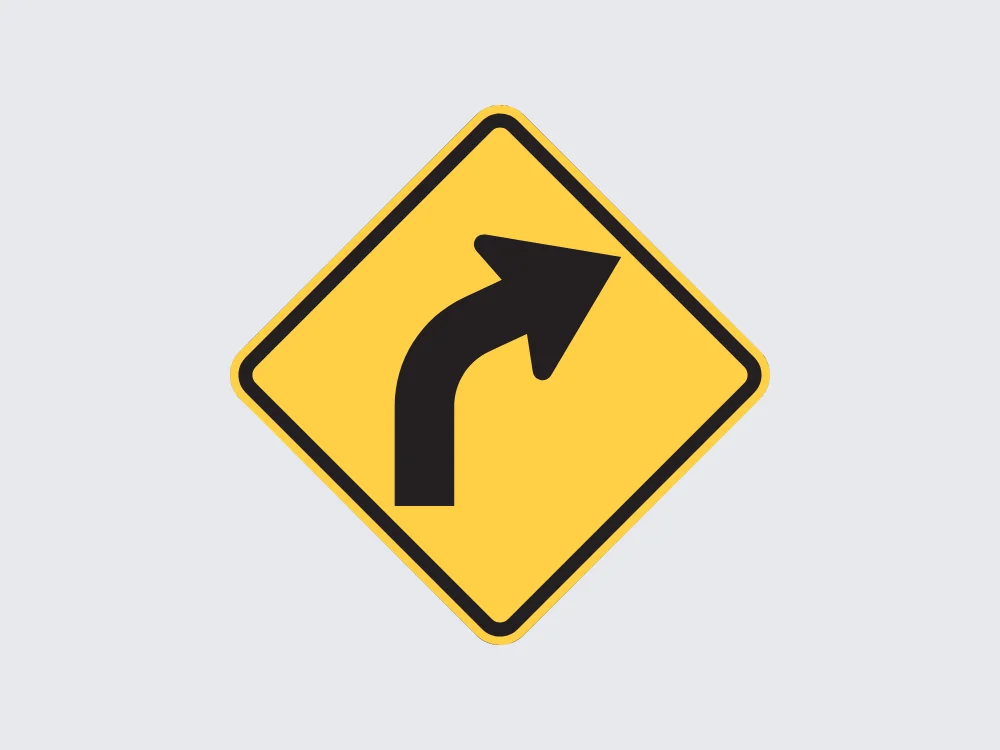
Correct answer: Slow down before the curve, keep right and do not pass
The sign shows the road curving in the direction of the arrow. Slow down before entering it, stay in your lane on the right, and do not pass.
-
Cones and drums are shifting traffic out of a closed lane ahead. What should you do?
Correct answer: Merge into the open lane as soon as it is safe, without crossing the cones
Channelizing devices guide you around the work area. Merge early and smoothly, and watch for drivers who wait until the last moment.
-
What does this sign mean?
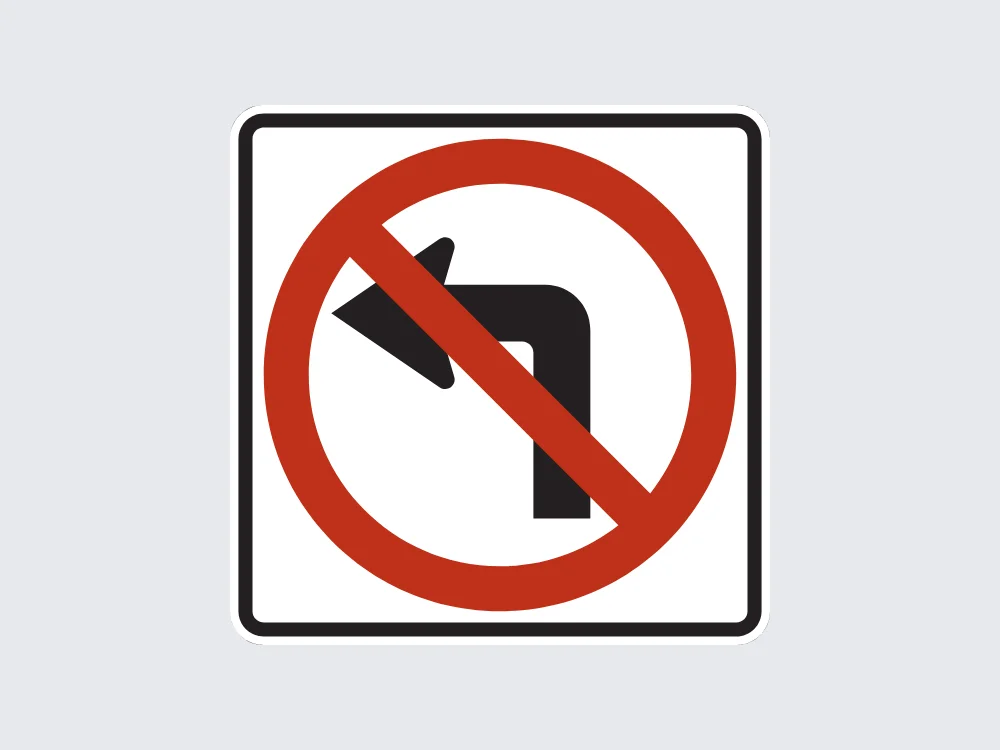
Correct answer: Left turns are not allowed here
A left arrow crossed by a red slash prohibits left turns at this intersection.
-
What does this sign tell you?
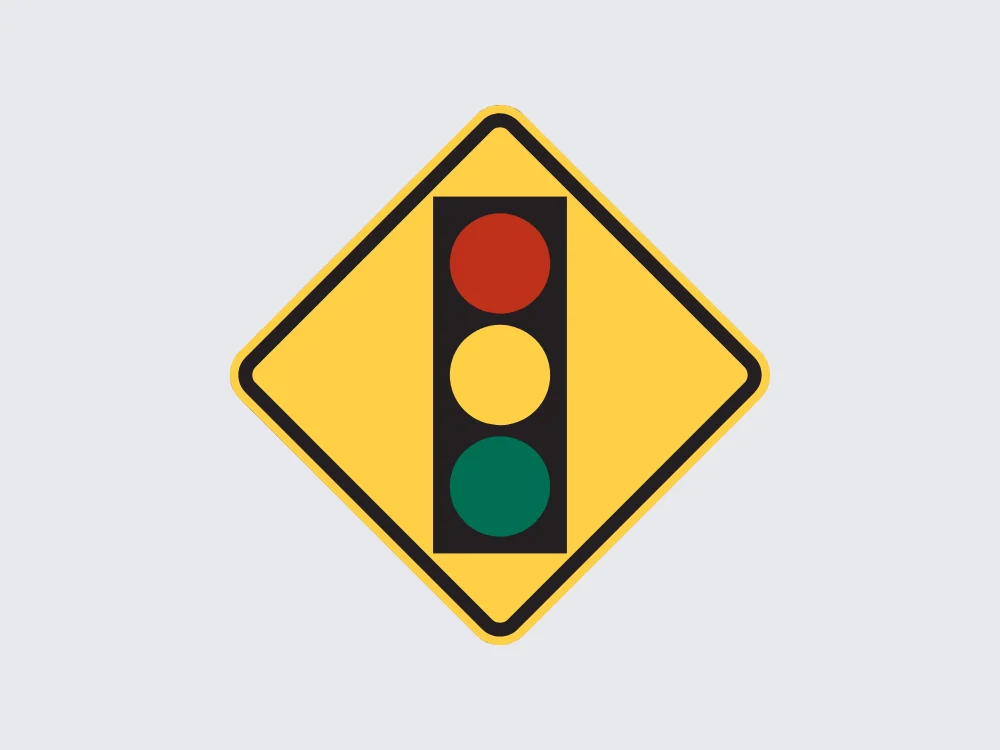
Correct answer: There is a traffic signal ahead; be prepared to stop
This sign gives advance notice of a signal you may not see yet, often past a curve or hill. Slow down so you can stop if the light is red.
-
Signs that tell you about laws you must obey, such as speed and turn rules, are usually:
Correct answer: White rectangles with black or red lettering
Regulatory signs are mostly white rectangles. Yellow diamonds warn, green signs guide and orange signs mark work zones.
-
Green signs on streets and highways give you:
Correct answer: Directions and distances to destinations
Green is the guide color: it shows routes, directions, exits and distances to places.
-
You pass this sign. What should you do?
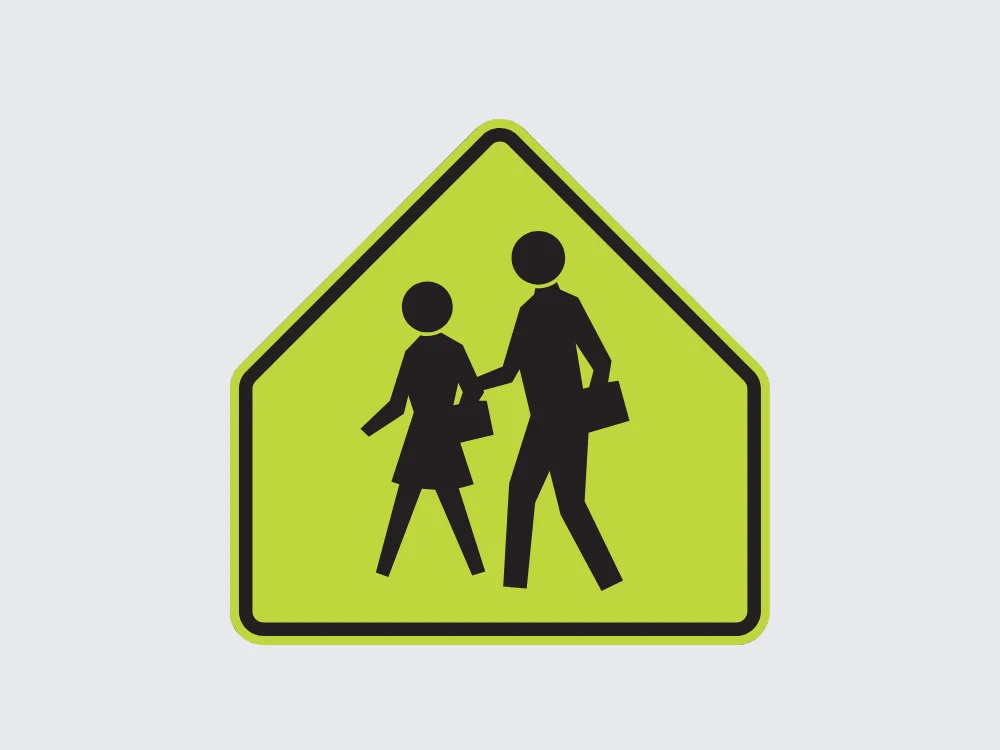
Correct answer: Slow down, watch for children and be ready to stop for them in crosswalks
Children near schools can move unpredictably. Drive slowly and stop for any child in a crosswalk.
-
Under Michigan's Zero Tolerance Law, at what alcohol level is it illegal for a driver under 21 to drive?
Correct answer: After drinking any alcohol at all
Drivers under 21 may not drive after drinking any alcohol at all, and a conviction adds 4 points to the record.
What Every Driver Must Know (SOS-133), p. 20 -
You feel dizzy, sleepy and get a headache while driving with the windows closed. What could be the cause?
Correct answer: Carbon monoxide from a leaking exhaust
Carbon monoxide has no smell and can kill. Get fresh air, have the exhaust checked, and never run the engine in a closed garage.
-
You press the brake pedal and it sinks to the floor. What should you try first?
Correct answer: Pump the brake pedal quickly to build pressure
Pumping can restore some pressure in the brake system. If it does not work, move on to the parking brake and lower gears.
-
Why can driving much slower than the flow of traffic be a problem?
Correct answer: It blocks traffic and can cause others to brake or pass unsafely
Very slow drivers can be as dangerous as speeders. Do not hold up the normal, reasonable flow of traffic.
-
You see emergency flashers on a vehicle ahead. What should you do?
Correct answer: Slow down and pass carefully; there may be a crash or a hazard
Hazard lights warn of trouble ahead, such as a stalled car or a collision, so reduce speed and be ready to stop.
-
A funeral procession marked with orange flags is moving through an intersection. Which vehicles may still go ahead of it?
Correct answer: Fire trucks, ambulances and police
Except for fire trucks, ambulances and police, every vehicle must yield to a funeral procession, and cutting through one is a civil infraction.
What Every Driver Must Know (SOS-133), p. 49 -
A train has just passed a crossing with more than one track. What should you do before you go?
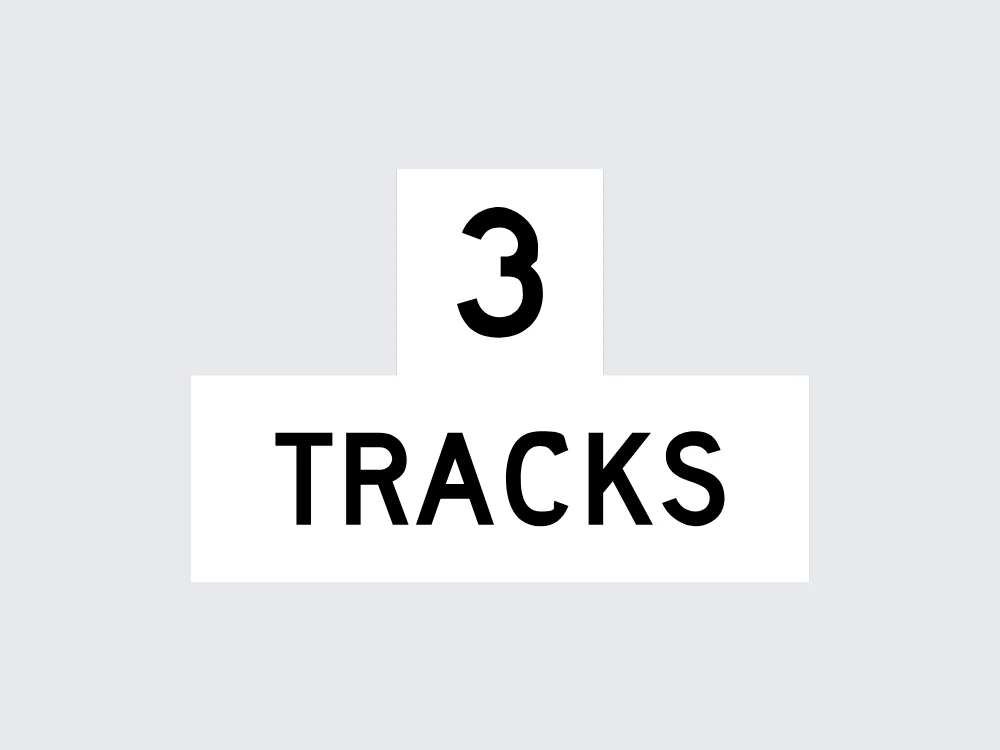
Correct answer: Look and listen for a second train on another track
One train can hide another coming from either direction. Make sure all tracks are clear first.
-
Which condition makes hydroplaning more likely?
Correct answer: Driving fast on worn or underinflated tires
Higher speed and shallow tread make it harder for tires to push water away. Good tires with deep tread help prevent it.
-
A driver is convicted of reckless driving in Michigan. How many points go on the record?
Correct answer: 6 points
Reckless driving is in the top group of 6 points, along with drunk driving, fleeing police and leaving a crash scene.
What Every Driver Must Know (SOS-133), p. 15 -
A center lane is marked on each side by a solid yellow line on the outside and a broken yellow line on the inside. What is it for?
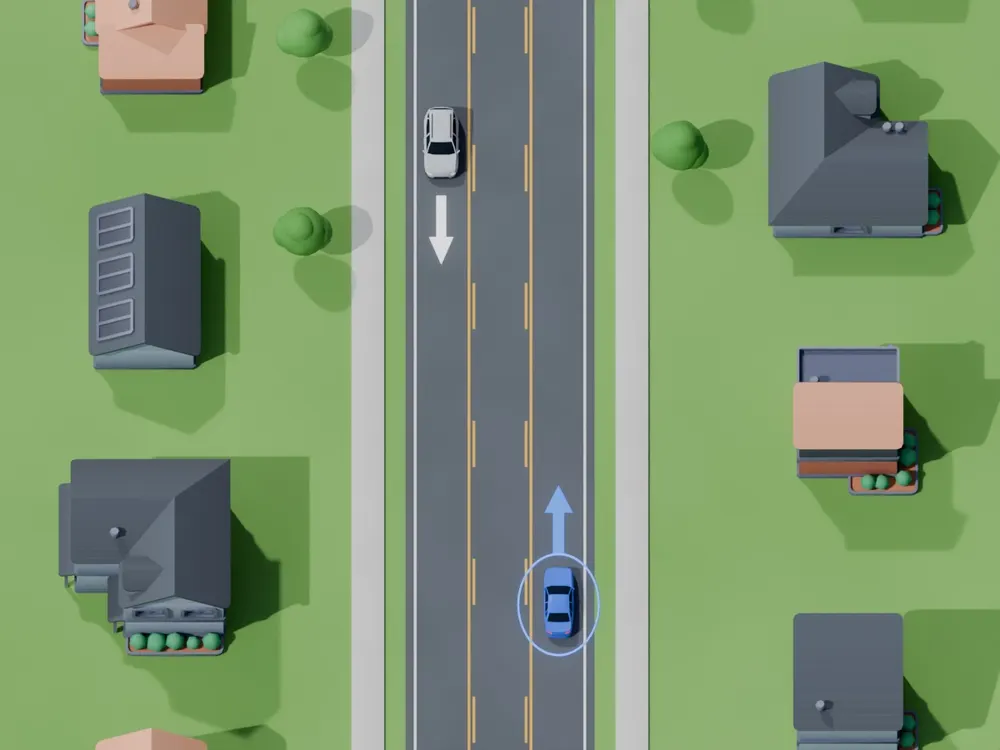
Correct answer: Left turns by drivers from both directions
This is a two-way left-turn lane. Enter it only to slow down and make a left turn; never use it to pass or to travel.
-
Why should you avoid passing as you approach an intersection?
Correct answer: Vehicles may turn or enter the road in front of you
Intersections, crossroads and driveways are places where other vehicles turn across your path. Passing there is dangerous and often illegal.
-
It is raining. Compared with your normal following distance, how much space should you leave?
Correct answer: At least twice as much, about 6 to 8 seconds
In rain, slow down and keep at least double your usual gap, roughly 6 to 8 seconds, and turn on your low-beam headlights.
What Every Driver Must Know (SOS-133), p. 60 -
This sign is posted at an intersection. There is no traffic at all. May you make a U-turn there?
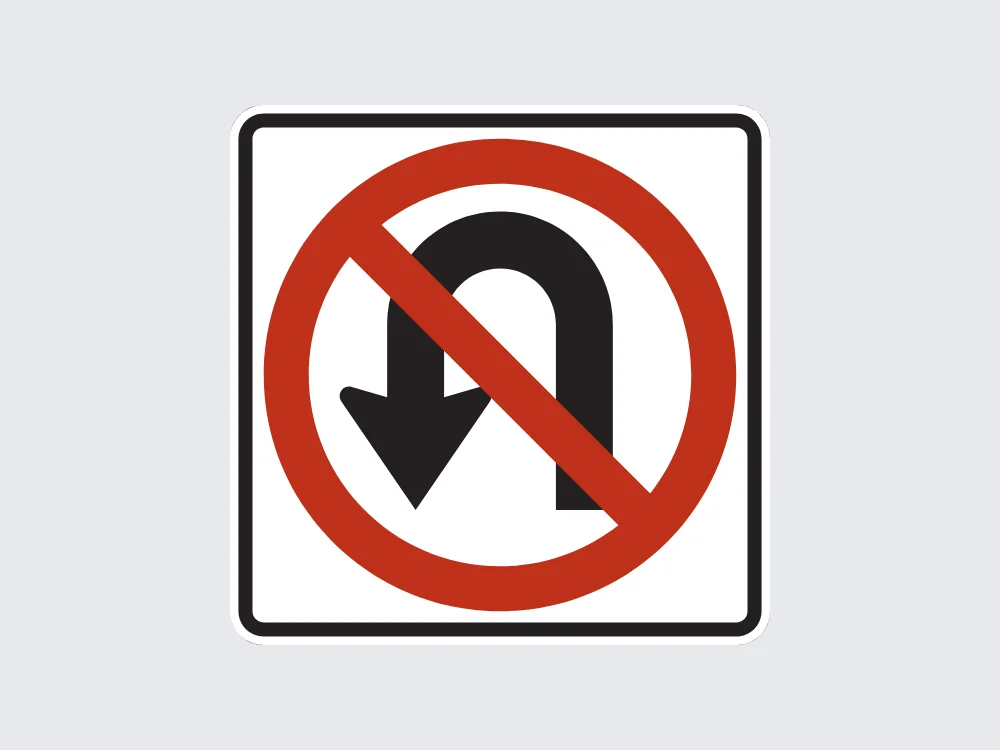
Correct answer: No, the sign forbids it at all times
A posted no-U-turn sign applies regardless of traffic. Find another legal place to turn around.
-
What happens to the fine for a moving violation committed in a work zone?
Correct answer: It is doubled
Fines for all moving violations are doubled in work zones.
What Every Driver Must Know (SOS-133), p. 49 -
You want to pass a bicyclist riding in your lane. What is the safest way?
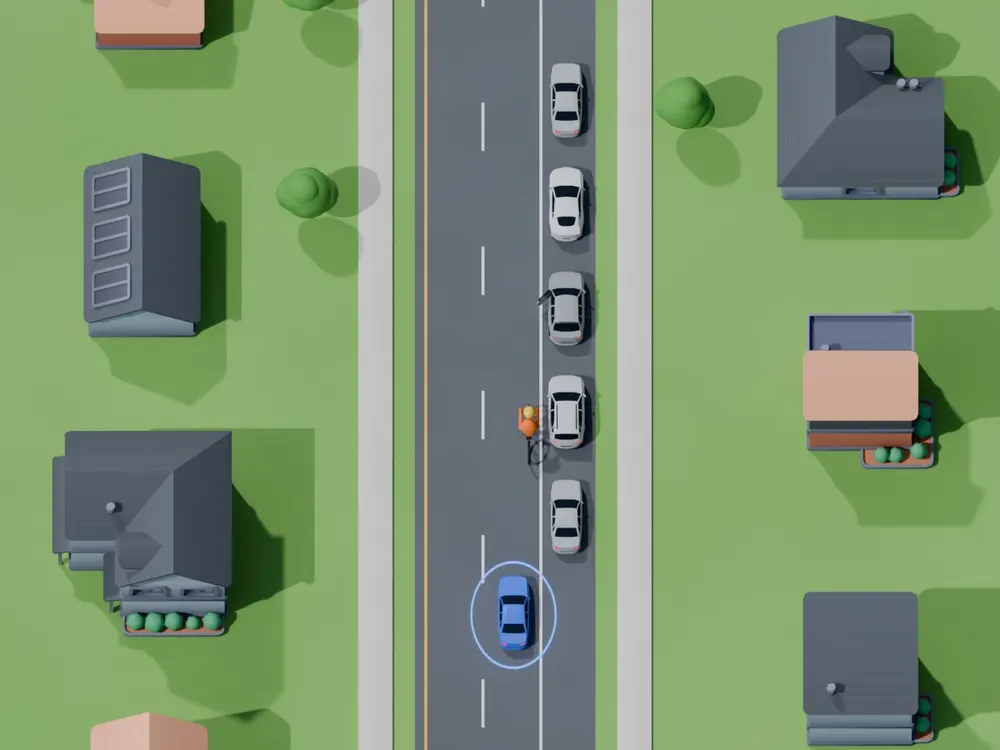
Correct answer: Slow down and pass with plenty of space, changing lanes if you can; wait if there is not enough room
A close, fast pass can push a rider off balance or into parked cars. Give generous room or wait.
-
A left-turn lane begins ahead and is separated from your lane by a solid white line at first. How do you enter it?
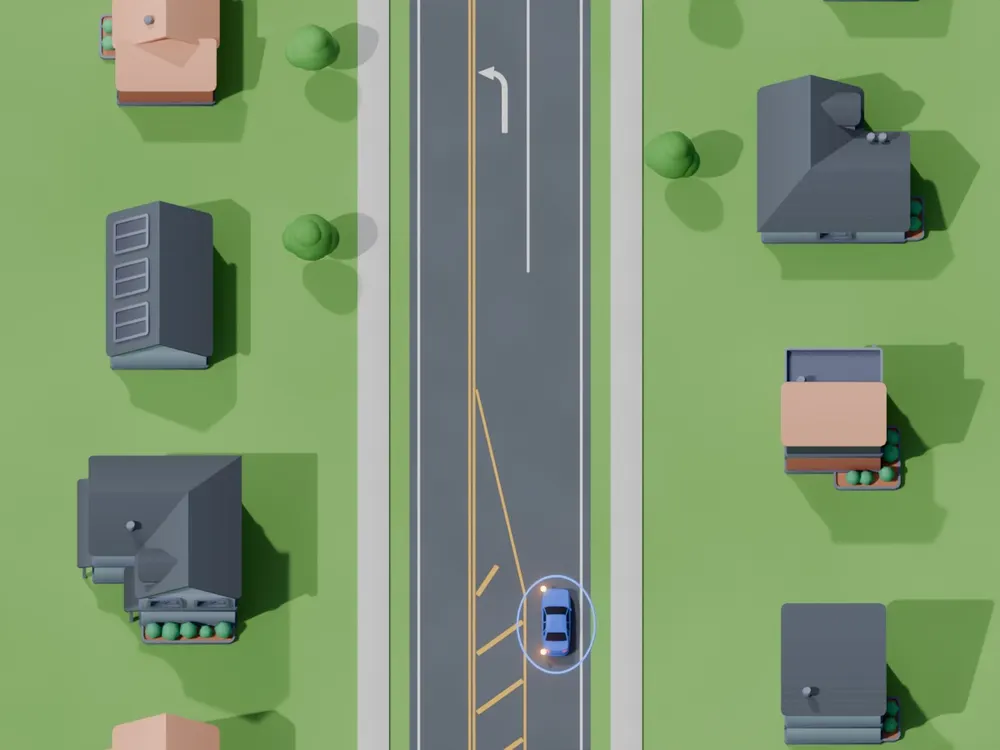
Correct answer: At its opening, without crossing the solid line
Enter a turn lane where it opens and be in the correct lane before the solid line begins.
-
The rear of your car begins to slide to the right. Which way should you steer?
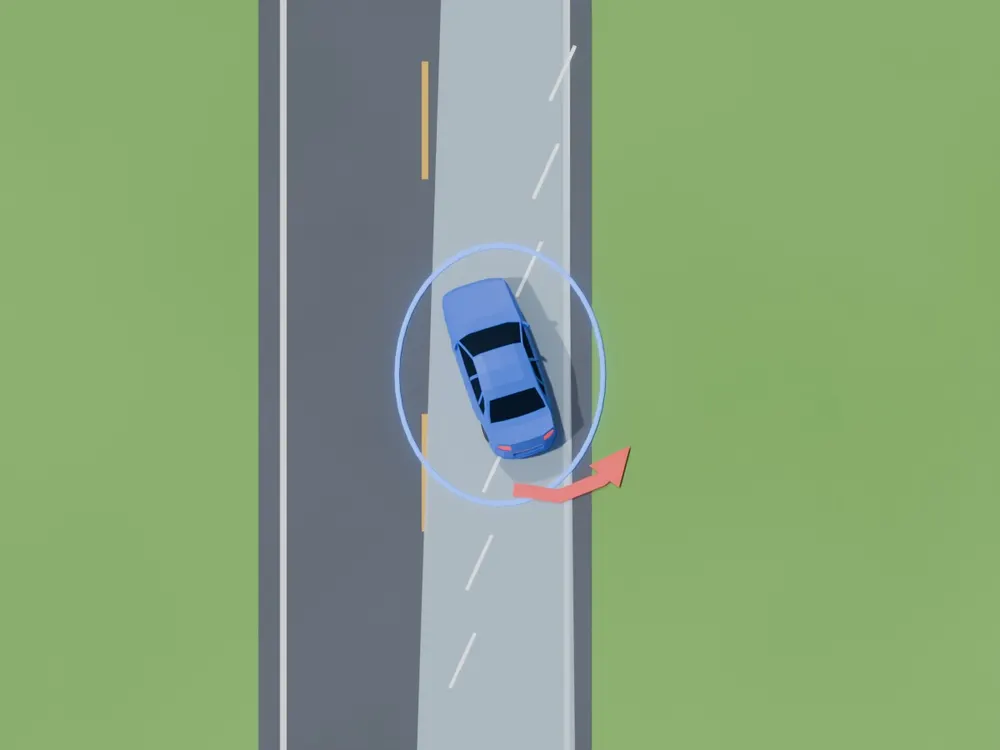
Correct answer: To the right, in the direction the rear is sliding
Steering in the direction of the skid lets the front wheels line up with the car's path. Be ready to correct again as the car straightens.
-
Who may park in a space reserved for people with disabilities?
Correct answer: A vehicle showing a valid disability placard or plates, when carrying the person it was issued to
Disabled parking requires a valid placard or plates, and the placard may be used only when its holder is being transported.
-
Where a Michigan Left is used, how do you turn left from the main road?
Correct answer: Go straight, U-turn at the median crossover, then turn right
A direct left turn is not allowed there. Drive through the intersection, make a U-turn at the crossover just past it, then turn right onto the cross street.
What Every Driver Must Know (SOS-133), p. 38 -
When you pass a bicyclist, what minimum space does Michigan law require?
Correct answer: 3 feet
The law requires at least three feet when passing a bicyclist. Giving as much room as for a car is even safer.
What Every Driver Must Know (SOS-133), p. 43 -
How much supervised driving must a teen log in total before the driving skills test?
Correct answer: 50 hours, including 10 at night
The driving log must show at least 50 hours, 10 of them at night. The teen must also be 15 and have held Level 1 for six months.
What Every Driver Must Know (SOS-133), p. 10 -
When you park at a curb on the street, how far from the curb may your car be?
Correct answer: No more than 12 inches
When parking on the street, keep the car within 12 inches of the curb.
What Every Driver Must Know (SOS-133), p. 66 -
A motorcycle is riding ahead of you in your lane, toward the left side of it. How much room should you give it?
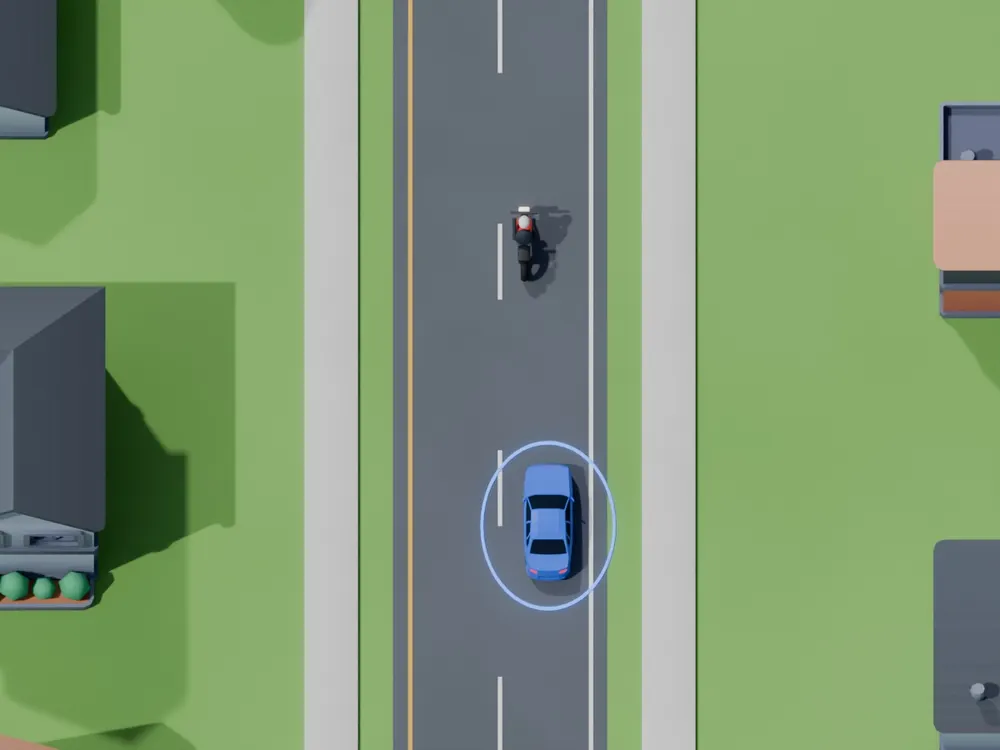
Correct answer: The full lane, as you would for a car
Treat a motorcycle like any other vehicle: do not share its lane or pass it within the lane. Riders need the whole lane to avoid hazards.
-
You are on an on-ramp about to merge. When should you turn on your signal?
Correct answer: Before merging, to show freeway drivers your intention
Signal as you prepare to merge so drivers on the freeway can make room for you.
-
You are turning into a driveway and a pedestrian is walking along the sidewalk across it. Who goes first?
Correct answer: The pedestrian
People on the sidewalk keep the right-of-way where it crosses a driveway or alley. Wait for them before turning in.
-
You want to turn left on a solid green light (no arrow). An oncoming car is close. What should you do?
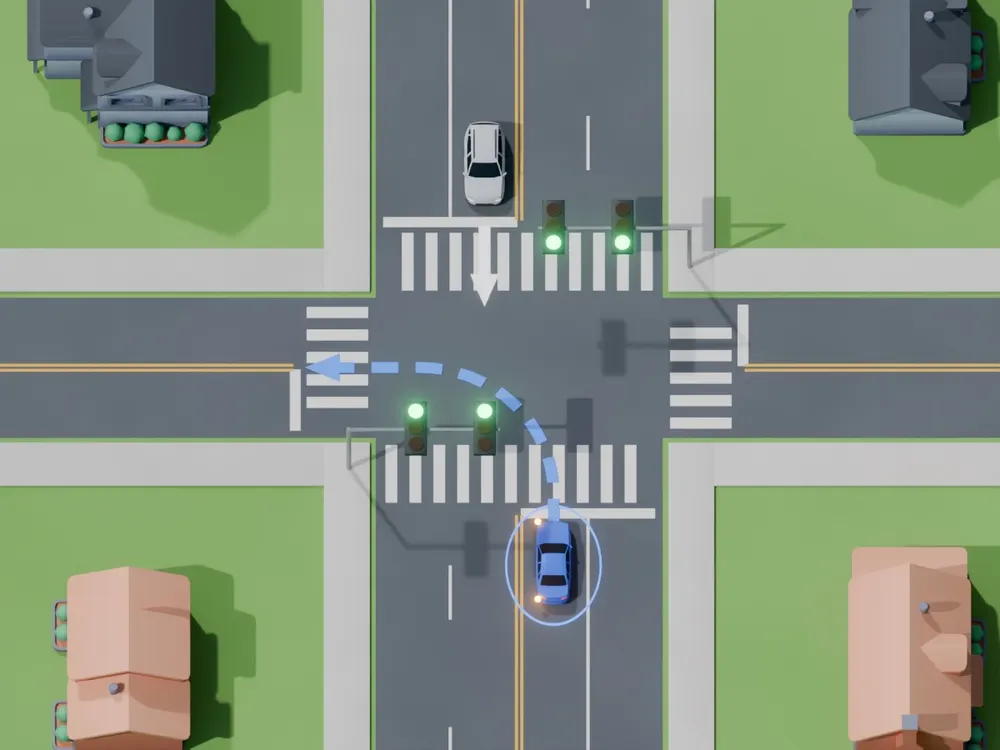
Correct answer: Yield and wait for a safe gap before turning
A green circle allows the left turn, but oncoming traffic close enough to be a danger goes first.
-
What speed limit generally applies on streets in Michigan cities and towns when no other limit is posted?
Correct answer: 25 mph
The handbook lists 25 mph as the common limit in cities and towns unless signs say otherwise.
What Every Driver Must Know (SOS-133), p. 52 -
What are the fines for violating Michigan's Hands-Free Law?
Correct answer: $100 first, then $250 for each later one
First offense: $100, 16 hours of community service, or both. Each later offense: $250, 24 hours, or both.
What Every Driver Must Know (SOS-133), p. 21 -
You are on a one-way street and want to turn right onto another one-way street. Which lane should you start from?
Correct answer: The far-right lane
Turn from the lane closest to the direction you are turning. For a right turn that is the far-right lane.
-
A child must stay in a belt-positioning booster seat until reaching which height or age?
Correct answer: 4 feet 9 inches or age 8
A booster seat is used until the child is 4 feet 9 inches tall or turns 8.
What Every Driver Must Know (SOS-133), p. 19
Your result
Finish the test to see your score. You need 32 of 40 correct.
Review your mistakes
About the Michigan SOS written test
Facts from the Michigan Department of State, with links to the official pages.
- Questions
- Not published by the state; our practice test uses 40 questions
- To pass
- Not published for adults; teens need 70% on the Segment 1 exam source ↗
- Road signs part
- Separate Signs section (about 15 minutes); passing score not published
- Time limit
- No set limit; about 45 min (rules) + 15 min (signs)
- Permit age
- 14 years and 9 months source ↗
- Fee
- $25 permit; test free at an office, $6.50 online source ↗
- If you fail
- Reschedule and retake it on a different day
- Test in Spanish
- Yes, translated tests in Spanish at all offices source ↗
- Online test
- Yes, for adults 18+ with a webcam computer ($6.50) source ↗
Our practice test: 40 questions, 32 correct to pass.
Official sources
What the Michigan test covers
Topics in our 432 Michigan practice questions, written from the What Every Driver Must Know (SOS-133). 59 of them cover rules specific to Michigan.
- Intersections and turns38
- Regulatory signs33
- Sharing the road32
- Weather and night driving31
- Right of way29
- Pavement markings26
- Traffic signals25
- Lanes and passing23
- Parking23
- Warning signs20
Michigan numbers to know
The figures test writers love, from the What Every Driver Must Know (SOS-133). Open the handbook ↗
Speed limits
| Freeway (unless posted) | 70 mph |
| Two-lane highway outside cities | 55 mph |
| Construction zone (unless posted) | 45 mph |
| Move Over: stopped emergency vehicle | 10 mph under the limit + change lanes |
Alcohol
| BAC limit: 21 and older / under 21 | 0.08% / any alcohol |
Permit and teen drivers
| Level 1 learner's license | From 14 years 9 months |
| Supervised driving before road test | 50 h (10 at night) |
| Level 2: no driving | 10 p.m. – 5 a.m. |
| Level 2: passengers under 21 (not family) | No more than 1 |
| Level 3 full license | Age 17 + 6 months on Level 2 |
Phones
| Holding a phone (even at a light) | Not allowed |
| Hands-Free fine: 1st / later | $100 / $250 |
| Level 1 and 2 teens | No phone, even hands-free |
Seat belts and child seats
| Seat belt in every seat | All passengers under 16 |
| Booster seat until | 4 ft 9 in or age 8 |
School buses
| Stop from a school bus with red lights | At least 20 ft |
| Bus across a barrier or unpaved median | No need to stop |
Points and penalties
| Reexamination | 12+ points in 2 years |
| 16+ mph over the limit | 4 points |
| Moving violation in a work zone | Fine doubled |
Distances
| Following distance | 3–4 seconds |
| Passing a bicyclist | 3 ft |
| Behind a moving emergency vehicle | 500 ft |
| No parking near a hydrant / crosswalk at an intersection | 15 ft / 20 ft |
| No parking near a stop sign or signal / railroad crossing | 30 ft / 50 ft |
Questions and answers
How many questions are on the Michigan permit test?
Not published by the state; our practice test uses 40 questions. To pass: Not published for adults; teens need 70% on the Segment 1 exam. The SOS does not publish the exact number, so our practice test uses a typical format.
Can you take the Michigan permit test in Spanish?
Yes, translated tests in Spanish at all offices.
Can you take the Michigan permit test online?
Yes, for adults 18+ with a webcam computer ($6.50).
What age can you get your permit in Michigan?
You can apply for a learner's permit at 14 years and 9 months.
How long is the Michigan permit test?
No set limit; about 45 min (rules) + 15 min (signs).
What happens if you fail the Michigan permit test?
Reschedule and retake it on a different day.
How much does the Michigan permit test cost?
$25 permit; test free at an office, $6.50 online.
How do I study for the Michigan permit test?
Read the What Every Driver Must Know (SOS-133), then take practice tests in the real exam format until you pass them with room to spare. Learn the numbers by heart: speed limits, following distances, alcohol limits and permit rules. The dmvly app has 432 Michigan questions with an explanation for each one.