-
A farm vehicle ahead shows an orange triangle with a reflective red border. What speed should you expect from it?
Correct answer: 25 mph or less
The slow-moving vehicle emblem marks a vehicle that may travel at about 25 mph or slower. Slow down early and be patient.
Wisconsin Motorists' Handbook, p. 29 -
Most signs used in road work zones have which shape?
Correct answer: Diamond
Work zone signs are mostly orange diamonds, the same warning shape used on yellow signs, with a few rectangles.
-
Signs that warn of road construction and maintenance work are usually what color?
Correct answer: Orange with black letters or symbols
Orange is reserved for work zones. When you see orange signs, cones or drums, expect workers, equipment and changed lanes.
-
A sign reads NO TURNS. At this intersection you may:
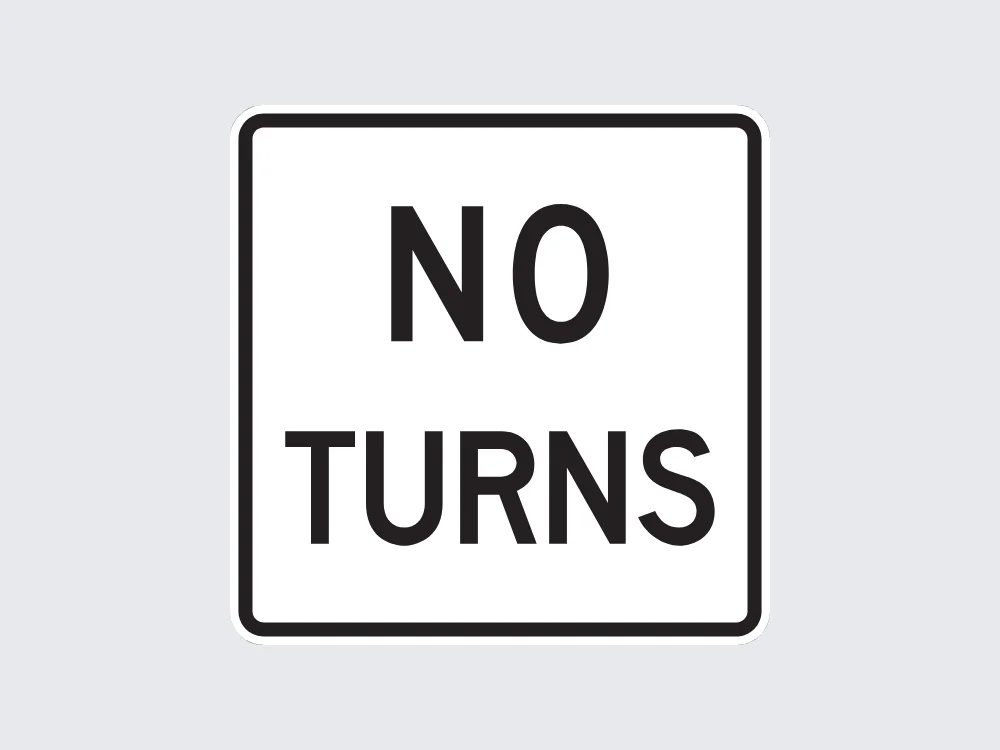
Correct answer: Only go straight
NO TURNS forbids both left and right turns, so the only allowed movement is straight ahead.
-
What does this sign mean?
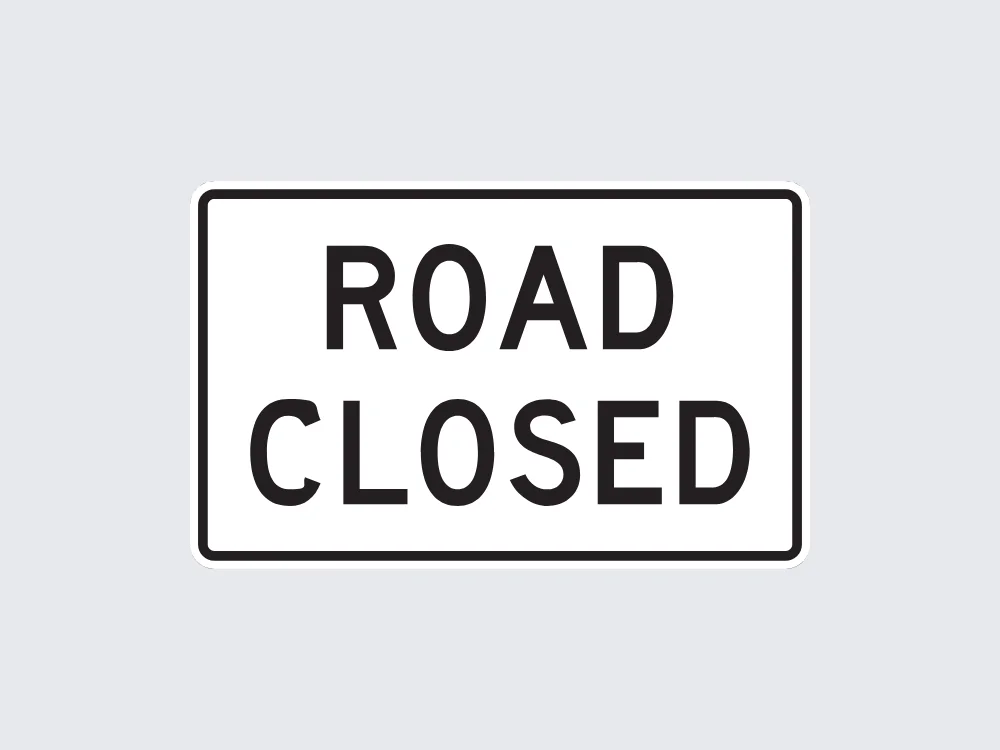
Correct answer: The road is not open to traffic; use another route or follow the detour
ROAD CLOSED means you may not continue on that road. Look for detour signs or choose another route.
-
What does this sign tell you?
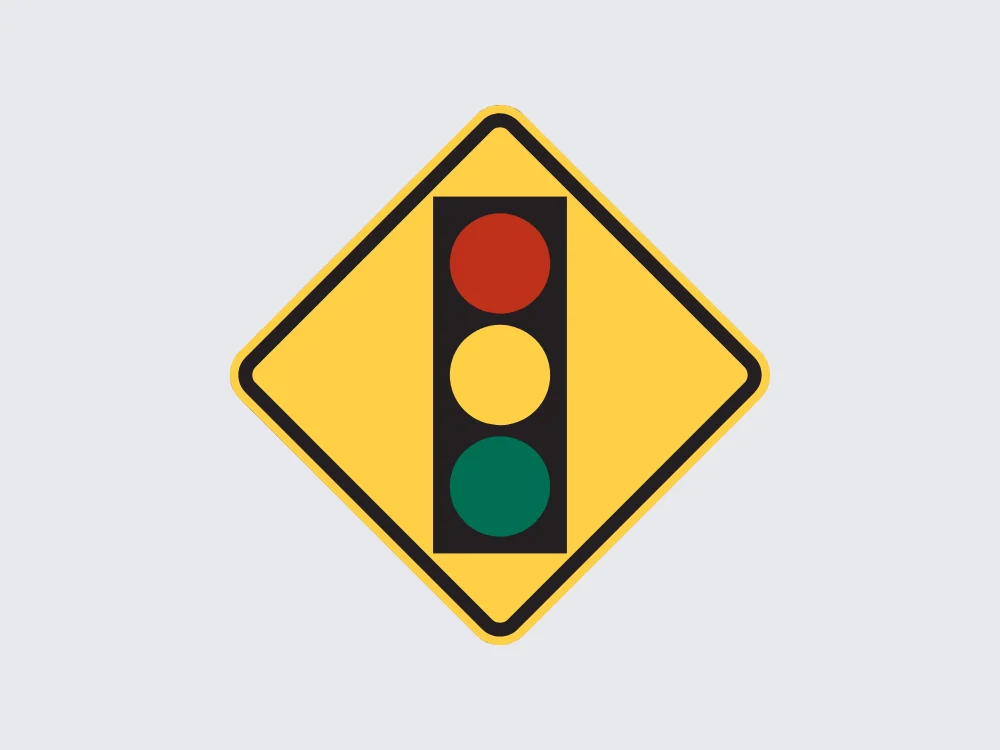
Correct answer: There is a traffic signal ahead; be prepared to stop
This sign gives advance notice of a signal you may not see yet, often past a curve or hill. Slow down so you can stop if the light is red.
-
A red circle with a red slash over a picture means:
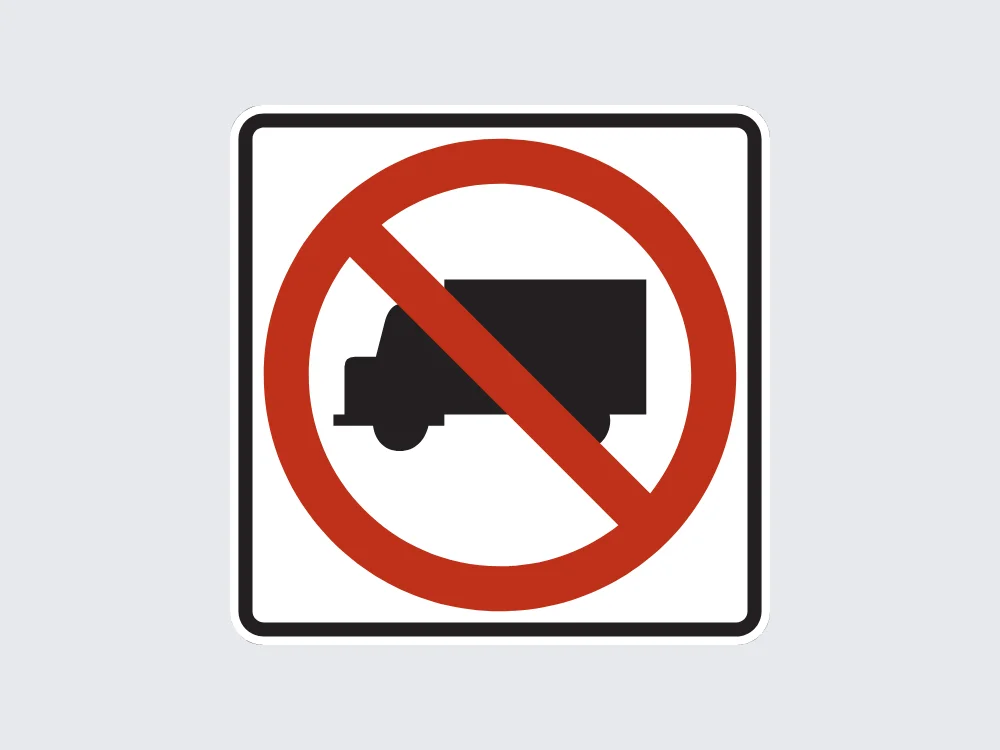
Correct answer: The action or vehicle shown is not allowed
The red circle with a slash is the symbol for 'no'. This example means trucks may not use the road.
-
A flagger turns a paddle so this side faces you. What does it mean?
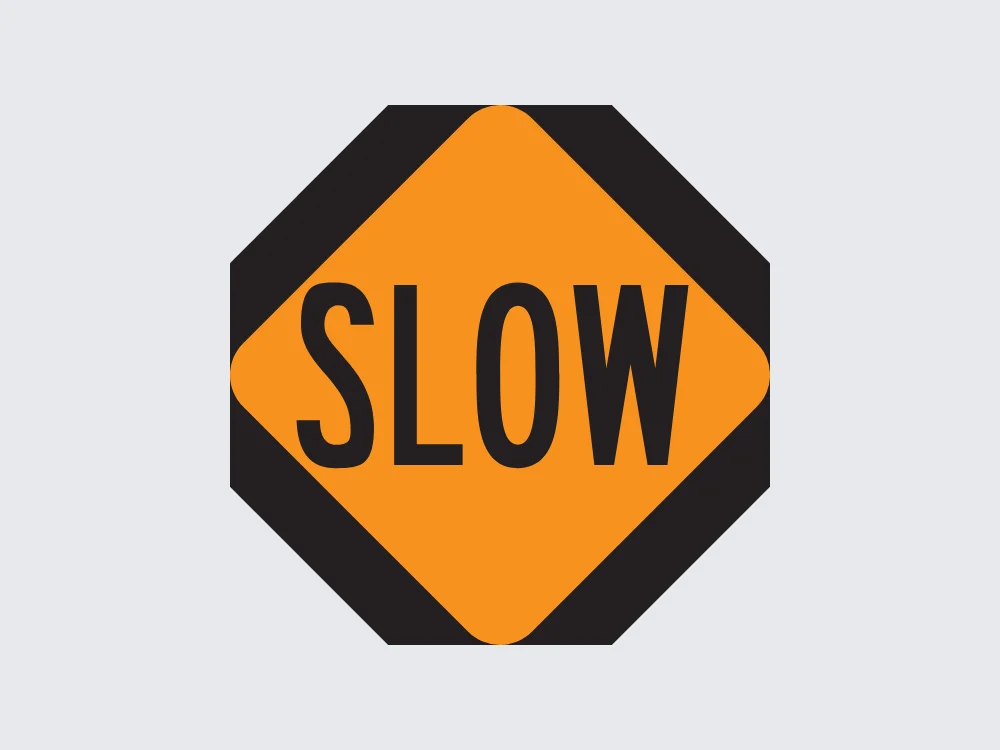
Correct answer: Proceed slowly and carefully through the work area
Flaggers use STOP/SLOW paddles. The SLOW side lets you move ahead at low speed while watching for workers and equipment.
-
An orange triangle with a red border on the back of a farm tractor means:
Correct answer: It is a slow-moving vehicle; be ready to slow down well in advance
This emblem marks vehicles that cannot keep up with normal traffic, such as farm equipment and road machinery. You will close the gap on them quickly.
-
Most general warning signs use which colors?
Correct answer: Black on yellow
General warning signs are yellow with black symbols or words. Green guides, blue shows services and red-and-white signs regulate.
-
What does this sign require?
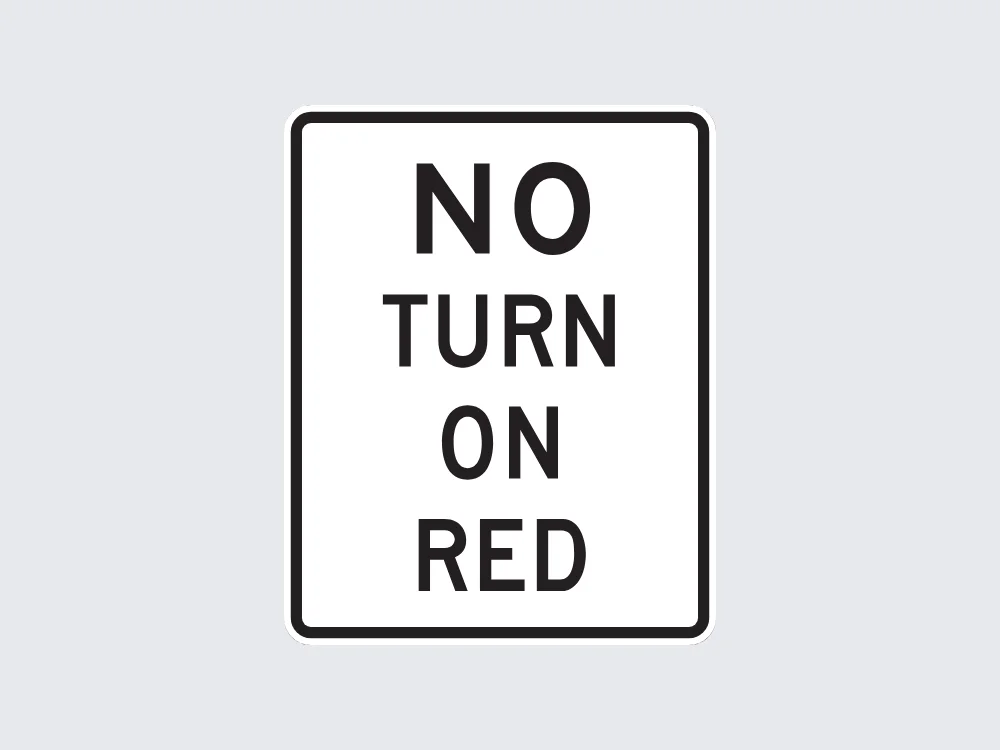
Correct answer: While the light is red, you may not turn; wait for green
NO TURN ON RED removes any permission to turn during the red phase. You may turn once the signal turns green.
-
You need a hospital while driving on a highway. Which signs will help you find one?
Correct answer: Blue service signs
Medical facilities are among the motorist services shown on blue signs, along with fuel, food and lodging.
-
A brown sign shows a skier. What is it telling you?
Correct answer: How to reach a recreation area, in this case a ski area
Brown signs guide you to recreation and scenic places. A warning about people crossing would be a yellow diamond.
-
What does this sign mean?
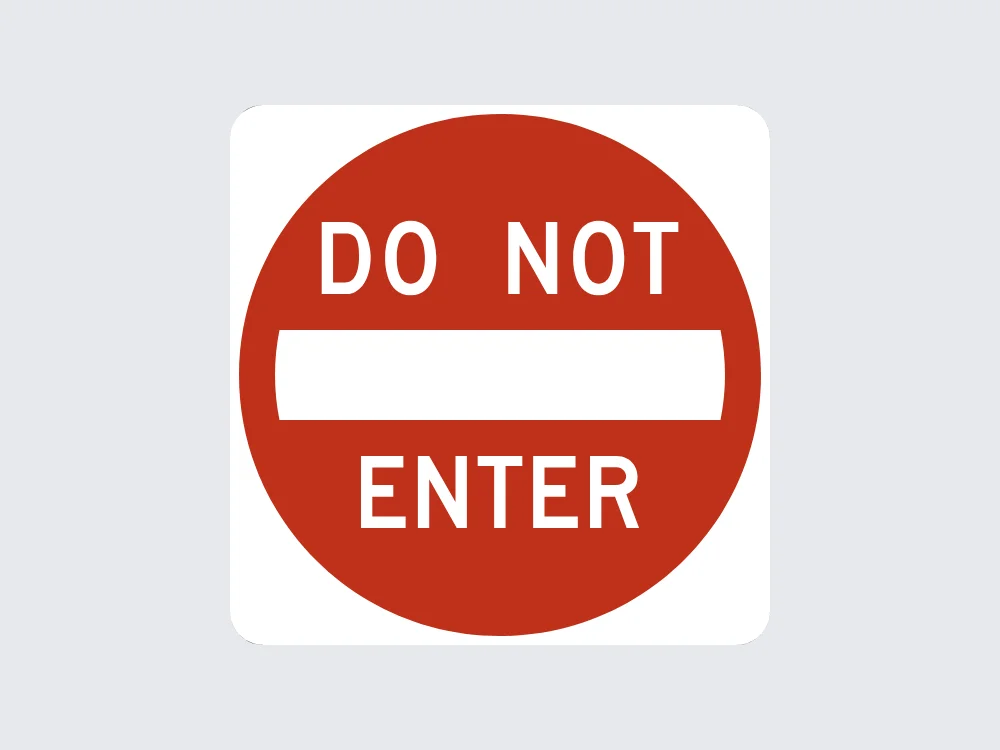
Correct answer: You may not enter the road or ramp from this direction
DO NOT ENTER is posted where traffic flows toward you, such as one-way streets and freeway exit ramps. Entering there means driving against traffic.
-
A sign with a white diamond marks a high-occupancy vehicle (HOV) lane. Who may use it while the restriction is in effect?
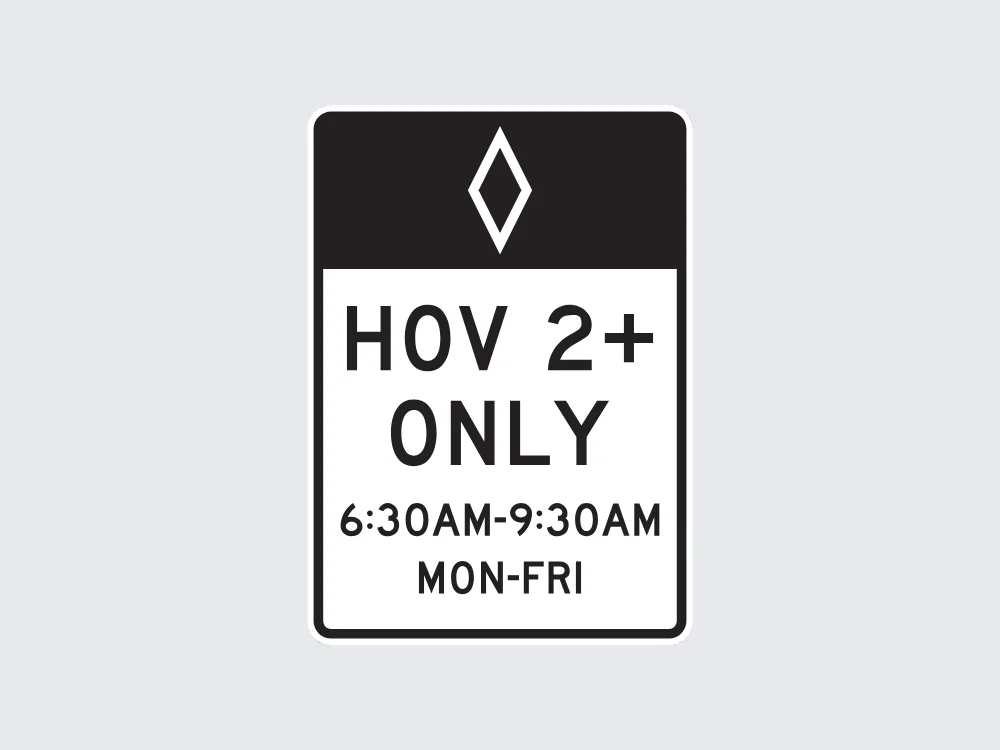
Correct answer: Only vehicles that meet the posted occupancy or vehicle-type rules
HOV lanes are reserved during posted hours for carpools, buses or other vehicles named on the signs. The signs list the minimum number of people and the hours.
-
What alcohol concentration may a Wisconsin driver under 21 legally have?
Correct answer: 0.00%
Wisconsin's limit for drivers under 21 is 0.00%: no alcohol at all may be in their system while driving.
Wisconsin Motorists' Handbook, p. 53 -
Who must wear a seat belt in a moving vehicle in Wisconsin?
Correct answer: Everyone in the vehicle
Wisconsin law requires the driver and passengers of any age to wear seat belts, even in a car with air bags.
Wisconsin Motorists' Handbook, p. 58 -
Many pedestrians and bicyclists are along and crossing the road. How should this affect your speed?
Correct answer: Lower your speed, even if the posted limit is higher
People walking or biking are unprotected. Their presence is one of the conditions that calls for a slower speed.
-
You are in the proper lane for your freeway exit. What should you do before leaving the freeway?
Correct answer: Signal your exit in advance
Signal well before the exit ramp so drivers behind you know you are leaving.
-
What does a double solid white line between lanes going the same way mean?
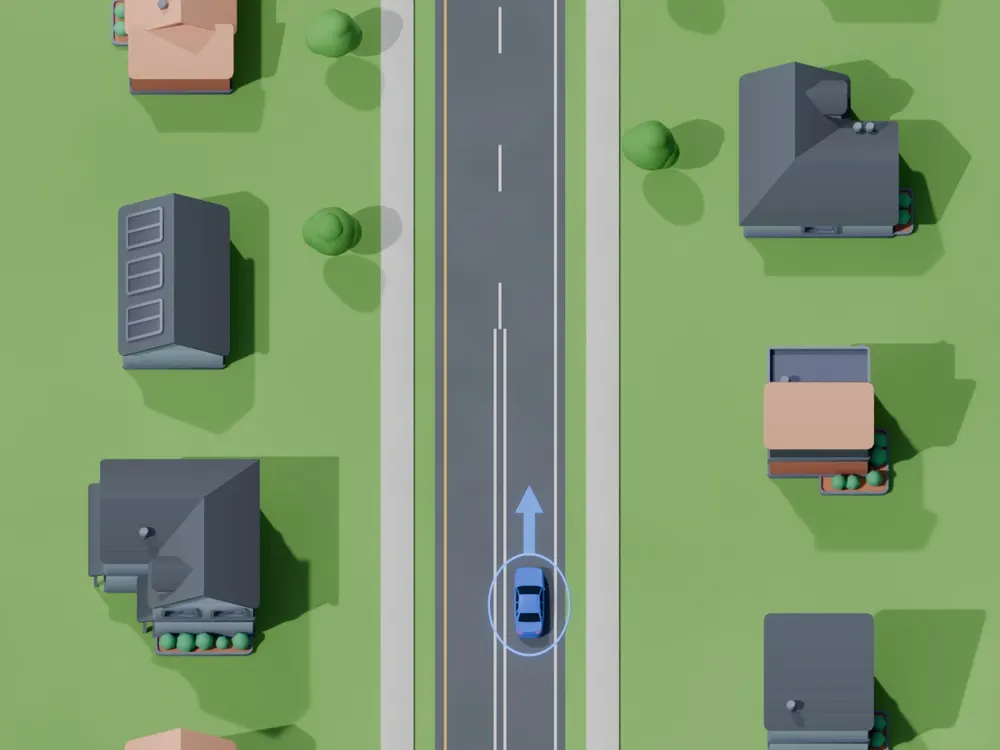
Correct answer: Do not cross it to change lanes
Double solid white lines work as a barrier between lanes. Wait for a single broken white line before changing lanes.
-
The rear of your car begins to slide to the right. Which way should you steer?
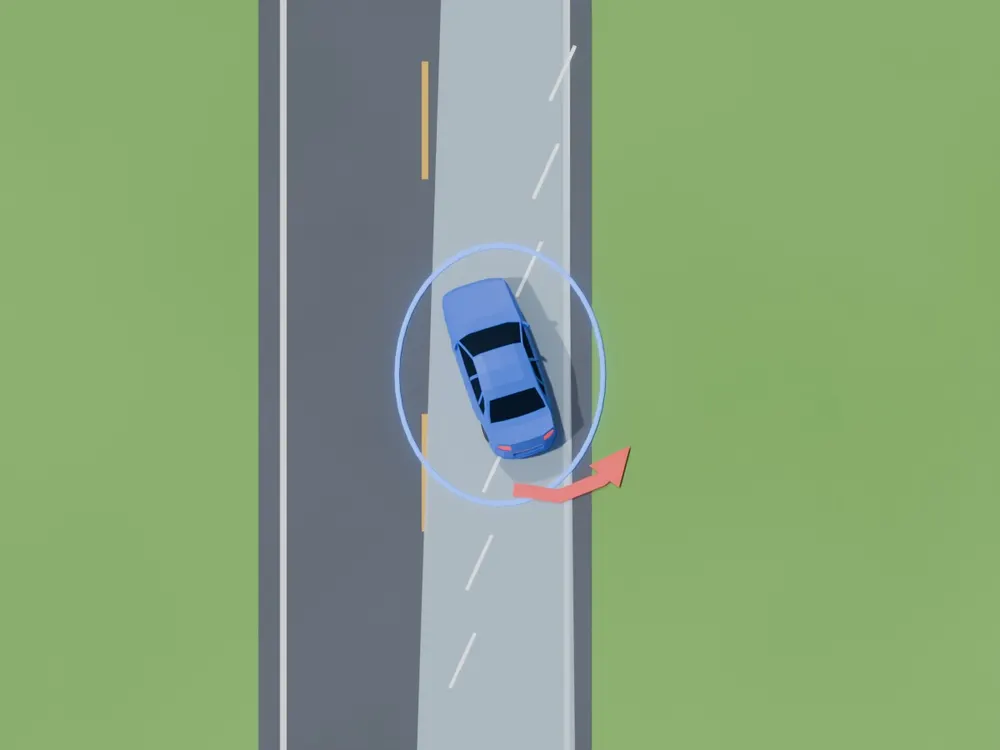
Correct answer: To the right, in the direction the rear is sliding
Steering in the direction of the skid lets the front wheels line up with the car's path. Be ready to correct again as the car straightens.
-
Wisconsin gives a separate highway signs test. How many of its questions must you answer correctly to pass?
Correct answer: 12 of 15
The signs test has 15 questions, and you pass with 12 correct (80%). It is separate from the 50-question knowledge test.
Wisconsin Motorists' Handbook, p. 5 -
Your light has just turned green. Before you enter the intersection, you should:
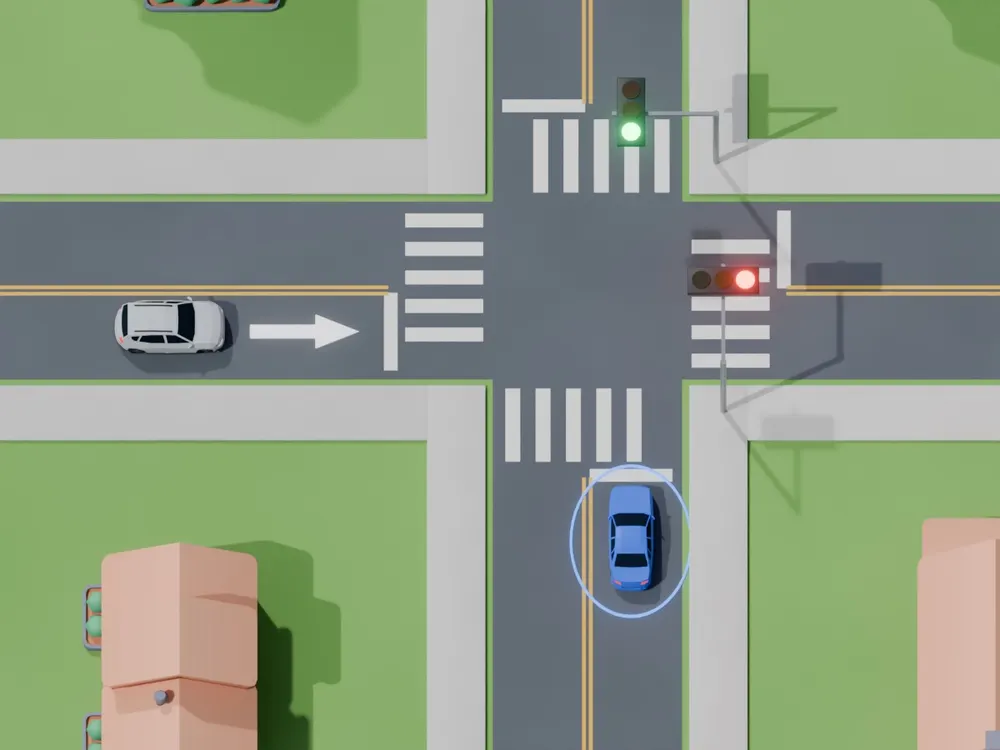
Correct answer: Check that cross traffic has stopped and the intersection is clear
Green allows you to go only when it is safe. Some drivers race through at the end of their light, so look before entering.
-
There are no pedestrian signals at an intersection. Which signals do pedestrians follow?
Correct answer: The vehicle traffic signals for their direction
Without pedestrian signals, people on foot follow the regular traffic light. When they cross on green, turning drivers must yield to them.
-
What does a curb with yellow markings mean in Wisconsin?
Correct answer: Parking is not allowed
Yellow curb markings mean no parking in Wisconsin, just like the area in front of a fire hydrant.
Wisconsin Motorists' Handbook, p. 22 -
A car is coming straight at you in your lane. What should you do?
Correct answer: Slow down, move to the right, and sound your horn
If you swerve left, the other driver may recover and return to their lane, causing a head-on crash. Going right off the road is safer than into traffic.
-
During your GDL period, besides any immediate family members and one qualified adult, how many other passengers may ride with you?
Correct answer: One
The GDL limits passengers to immediate family, one qualified licensed adult, and one other person.
Wisconsin Motorists' Handbook, p. 10 -
You have a regular license and are driving through a road construction zone. When may you use a handheld cell phone?
Correct answer: Only to report an emergency
In a construction or work zone, any driver may use a handheld phone only to report an emergency.
Wisconsin Motorists' Handbook, p. 30 -
You stopped behind a school bus with flashing red lights. When may you start moving again?
Correct answer: When its red lights stop flashing
Wait until the red lights on the bus have stopped flashing, and keep watching for children near the road.
Wisconsin Motorists' Handbook, p. 55 -
You are behind a slow car on a road with a broken yellow center line. An oncoming vehicle is approaching and is fairly close. What should you do?
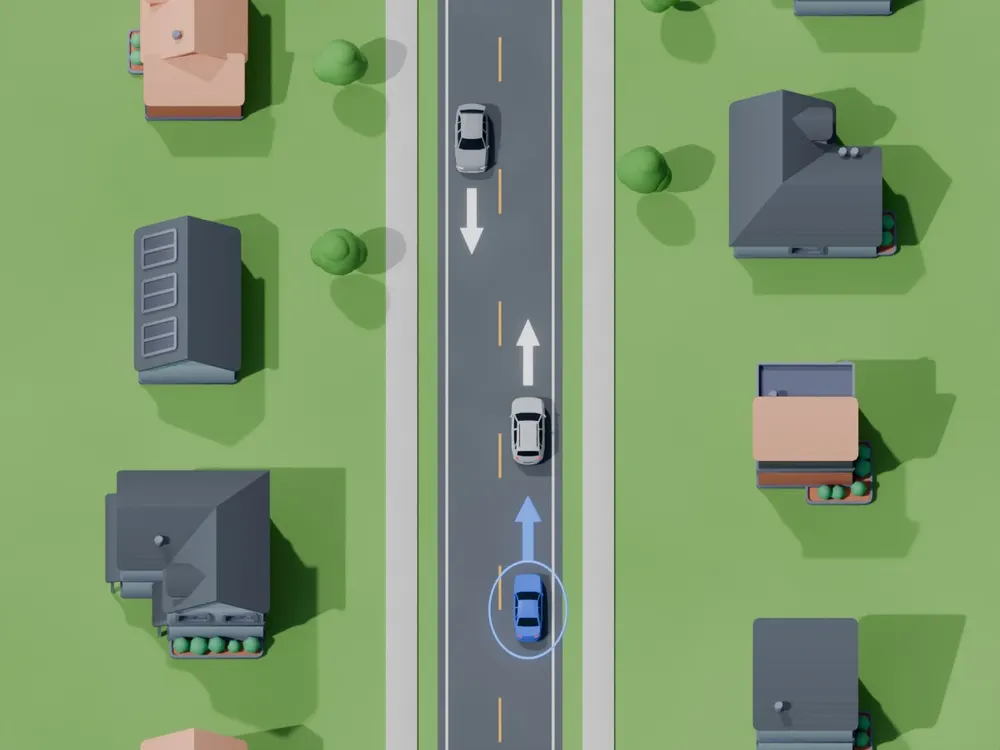
Correct answer: Wait to pass until the oncoming lane is clear far enough ahead
The broken line only means passing is not prohibited. You still need enough clear distance to pass and return before meeting oncoming traffic.
-
Why should you turn your head before changing lanes even if your mirrors are adjusted correctly?
Correct answer: Mirrors cannot show the blind spots beside and behind the car
Even well-set mirrors leave areas you cannot see. A vehicle there will not appear in the mirror.
-
Where is parking always illegal?
Correct answer: In a crosswalk or on a sidewalk
Crosswalks and sidewalks belong to pedestrians. Parking there forces people into the street.
-
You press the brake pedal and it sinks to the floor. What should you try first?
Correct answer: Pump the brake pedal quickly to build pressure
Pumping can restore some pressure in the brake system. If it does not work, move on to the parking brake and lower gears.
-
A person using a white cane is crossing the street in front of you. What should you do?
Correct answer: Stay stopped until the person has crossed, without honking
Pedestrians with white canes or guide dogs are blind or partly blind and always have the right-of-way. Honking can confuse them.
-
No one is hurt in a crash. What amount of damage to private property means it must be reported to police?
Correct answer: $1,000 or more
A crash must be reported to police when property damage reaches $1,000. Lower thresholds apply to government property.
Wisconsin Motorists' Handbook, p. 51 -
When turning left, which oncoming vehicles must you wait for?
Correct answer: Any that are close enough to be a hazard
The rule is to yield to oncoming traffic near enough to create a danger. If you are unsure, let it pass before turning.
-
Why should you keep your eyes moving and look well down the road instead of only at the car in front of you?
Correct answer: To spot hazards early and have time to react
Looking far ahead and around you lets you notice problems before you reach them, so you can avoid last-second moves.
-
At a railroad crossing, the red lights are flashing and the gate starts to rise, but the lights keep flashing. What should you do?
Correct answer: Stay stopped until the lights stop flashing
Flashing lights mean a train is coming or still near. Wait until the lights stop and the gates are fully up.
-
The center line is a broken yellow line on your side and a solid yellow line on the other side. What does that mean for you?
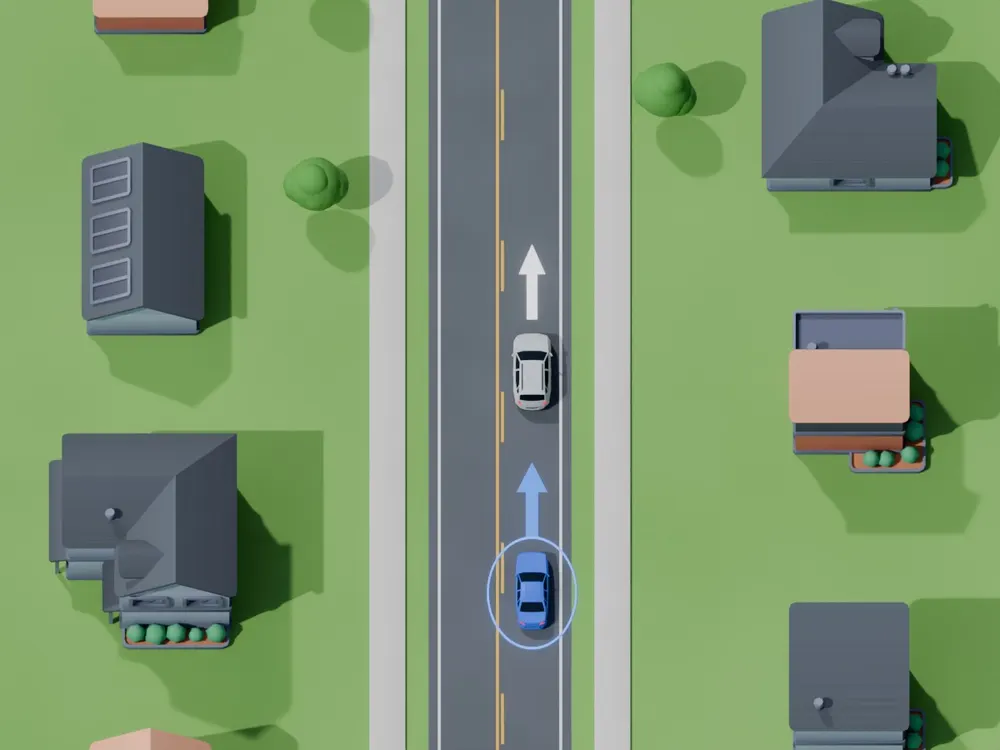
Correct answer: You may pass when it is safe; drivers on the other side may not
When the broken line is on your side, passing is allowed for you if it is safe. The solid line restricts only the opposite direction.
-
You hold a probationary license and are convicted of your second traffic violation. What happens to the points?
Correct answer: They are doubled
For probationary license holders, points are doubled starting with the second conviction and on every one after it.
Wisconsin Motorists' Handbook, p. 57 -
In good conditions, what minimum following distance does the Wisconsin handbook teach?
Correct answer: 4 seconds
Pick a fixed object ahead and count. If you reach it before you finish counting four seconds, you are following too closely.
Wisconsin Motorists' Handbook, p. 14 -
Because of poor visibility, when must you turn on your low-beam headlights in Wisconsin?
Correct answer: When you cannot see 500 feet ahead
Headlights are required whenever a person or vehicle 500 feet away (about one block) is not visible to you.
Wisconsin Motorists' Handbook, p. 25 -
You pull in ahead of a large truck after passing it. About how far in front of the truck is an area its driver cannot see?
Correct answer: About 20 feet
A large truck's No-Zone reaches roughly 20 feet ahead of its cab and about 200 feet behind it. Do not cut in close in front.
Wisconsin Motorists' Handbook, p. 56 -
When making a right turn, what should you watch for between your car and the curb?
Correct answer: Bicyclists, motorcyclists, and pedestrians
Smaller road users can be hidden on your right. Check your mirror and over your right shoulder before turning.
-
Your car pulls to one side when you brake. What does this most likely mean?
Correct answer: The brakes may be wet or need adjustment or repair
If drying the brakes does not fix the pull, have a mechanic check them right away.
-
What is the safest way to drive on a busy multi-lane road?
Correct answer: Stay in one lane as much as possible
Weaving in and out of traffic increases the chance of a collision. Pick a lane and keep to it.
-
Where are a large truck's blind spots, or no-zones?
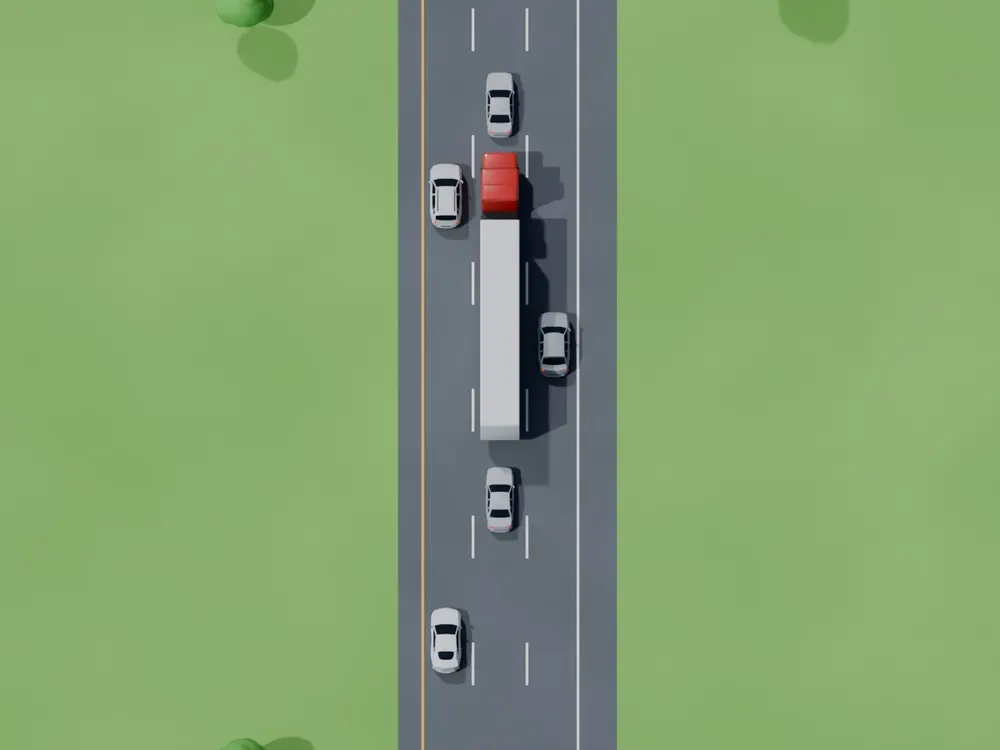
Correct answer: Along both sides, directly behind, and close in front
Big mirrors still leave large areas the driver cannot see. Do not linger beside, right behind, or just ahead of a truck.
-
Children are present in a Wisconsin school zone, and no different limit is posted. What is the normal speed limit?
Correct answer: 15 mph
When children are present, the usual school zone limit in Wisconsin is 15 mph unless a sign shows otherwise.
Wisconsin Motorists' Handbook, p. 14 -
What happens to traffic fines in Wisconsin work zones marked with orange signs and cones?
Correct answer: They are doubled
Orange signs, cones and flags signal a work area. Slow down, because traffic fines double there.
Wisconsin Motorists' Handbook, p. 30 -
Your car starts to skid on an icy road. What should you do with your feet?
Correct answer: Slowly take your foot off the gas and avoid slamming the brakes
Hard braking makes a skid worse. Easing off the gas lets the tires regain grip while you steer.
-
How far ahead of your vehicle should you be able to see to keep good control, according to the Wisconsin handbook?
Correct answer: 10 to 15 seconds
Scan the road 10 to 15 seconds ahead. If something blocks your view that far, reduce your speed so you keep control.
Wisconsin Motorists' Handbook, p. 15 -
You are leaving a parking lot onto a street. A pedestrian is walking along the sidewalk across the exit, and cars are coming. What should you do?
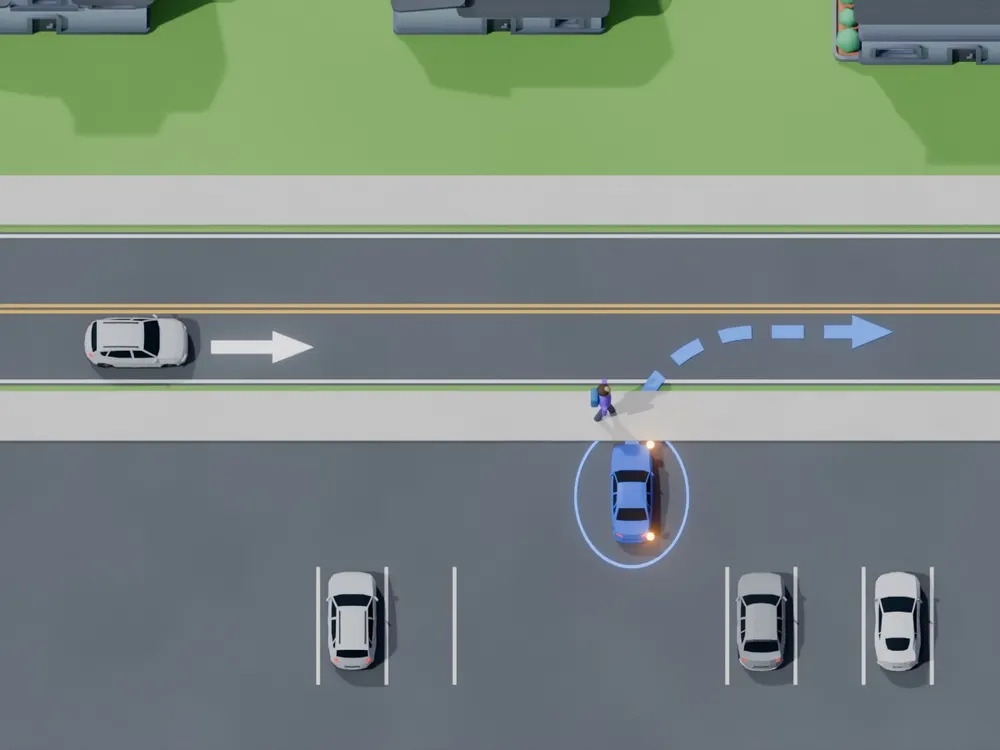
Correct answer: Stop, let the pedestrian pass, then wait for a safe gap in traffic
A driver coming out of a driveway or parking lot must stop and yield both to people on the sidewalk and to traffic already on the street.
-
Your light is green, but traffic is backed up on the far side so you could not get all the way through. What should you do?
Correct answer: Wait before the intersection until there is room to clear it
Do not enter an intersection unless you can get completely across. Blocking it causes gridlock and can get you a ticket.
-
What should you do as you merge into freeway traffic?
Correct answer: Signal, look over your shoulder, and merge into a gap big enough for your car
Use your signal and mirrors, glance over your shoulder for your blind spot, and choose a space large enough to join safely.
-
You are on a one-way street and want to turn left. Which lane should you start from?
Correct answer: The far-left lane
On a one-way street, the left-most lane is the one closest to a left turn, so the turn starts there.
-
A GDL driver is convicted of a moving traffic violation. What happens to the GDL restrictions?
Correct answer: They are extended six months
A moving violation, breaking any restriction, or a suspension or revocation adds six months to the GDL restrictions.
Wisconsin Motorists' Handbook, p. 11 -
A lane is marked for buses only. When may you drive in it?
Correct answer: To turn within the next half block
Reserved lanes are only for the listed vehicles, but you may enter one to turn across it within the next half block. Yield to any bicyclist in the lane.
Wisconsin Motorists' Handbook, p. 41 -
You start feeling very sleepy on a long drive. What is the best thing to do?
Correct answer: Stop in a safe place and rest or take a short nap
Only rest cures drowsiness. Tricks like loud music or cold air do not keep you safely awake.
-
Where does the Wisconsin handbook say a U-turn is allowed, as long as it is safe and does not interfere with traffic?
Correct answer: On any rural two-lane highway
A U-turn is permitted on a rural two-lane highway if it can be made safely without interfering with other traffic. Always check for signs that prohibit it.
Wisconsin Motorists' Handbook, p. 19 -
After passing a large truck, when is it safe to move back into its lane?
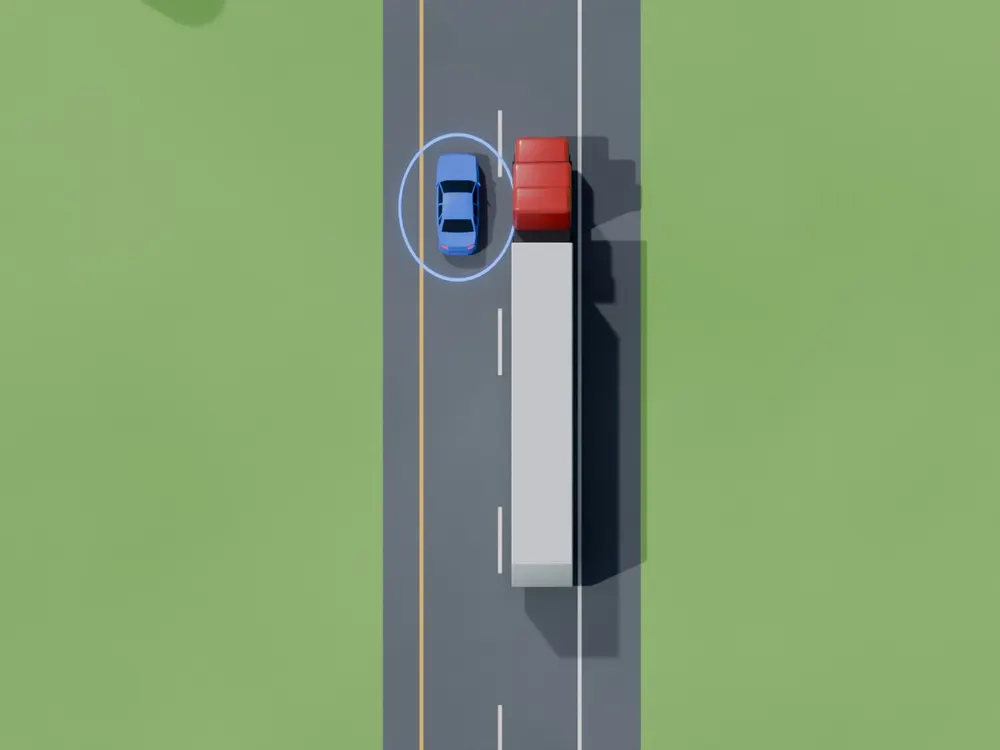
Correct answer: When you can see the whole front of the truck in your rearview mirror
Pulling in too soon leaves the truck no room to stop. Wait until its whole front is visible in your mirror, and keep your speed.
-
Your car does not have antilock brakes and the wheels lock up on a slippery road. What should you do?
Correct answer: Ease off the brake, then pump it so the wheels can turn again
Locked wheels cannot steer. Letting up and pumping lets them roll so you regain steering control.
-
A truck ahead of you is signaling a right turn but first swings to the left. What should you do?
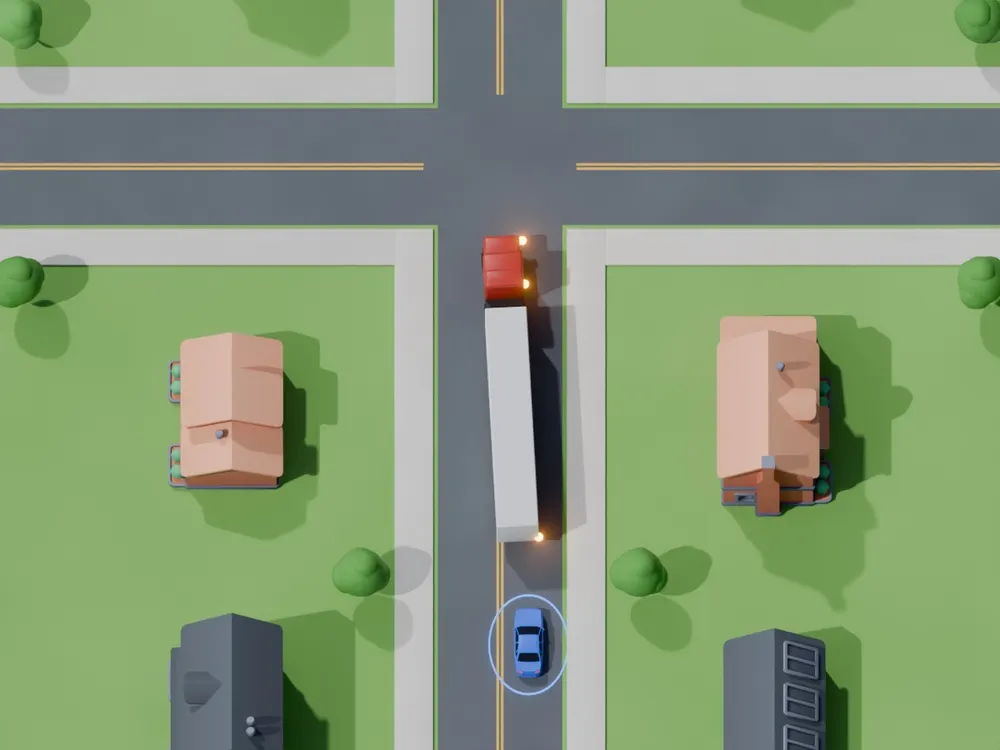
Correct answer: Stay back and do not pass it on the right
Long vehicles swing wide to make right turns. The gap on the right closes as the truck turns.
-
You are 17 and in your GDL period. Between midnight and 5 a.m., when may you drive alone?
Correct answer: Only between home, school or work
From 12 a.m. to 5 a.m., a GDL driver may drive alone only when going between home, school and work.
Wisconsin Motorists' Handbook, p. 11 -
On a two-way street, how should you park at the curb?
Correct answer: On the right side, facing the same direction as traffic
On a two-way road, park on the right with the car pointing the way traffic moves. Parking on the wrong side is illegal.
-
Before a Wisconsin teen can get a probationary license, how much supervised driving must the sponsor verify?
Correct answer: 50 hours, 10 of them at night
The minimum is 50 hours of practice with a qualified adult: 40 in daylight and 10 during darkness.
Wisconsin Motorists' Handbook, p. 10
Your result
Finish the test to see your score. You need 52 of 65 correct.
Review your mistakes
About the Wisconsin DMV written test
Facts from the Wisconsin Department of Transportation, Division of Motor Vehicles, with links to the official pages.
- Questions
- 65 questions: 50 knowledge + 15 highway signs (two tests) source ↗
- To pass
- 40 of 50 on knowledge and 12 of 15 on signs (80%) source ↗
- Road signs part
- Separate Highway Signs Test: 15 questions, 12 correct to pass
- Time limit
- No time limit; takes about 45 minutes
- Permit age
- 15 years (enrolled in driver education) source ↗
- Fee
- Tests free at DMV ($10 online); $35 instruction permit source ↗
- If you fail
- No sooner than the next day; 5 tries per test per year
- Test in Spanish
- Yes, knowledge and signs tests are offered in Spanish source ↗
- Online test
- Yes, ages 15–17 with a parent watching ($10 per try) source ↗
Our practice test: 65 questions, 52 correct to pass.
Official sources
What the Wisconsin test covers
Topics in our 431 Wisconsin practice questions, written from the Wisconsin Motorists' Handbook. 58 of them cover rules specific to Wisconsin.
- Intersections and turns38
- Regulatory signs34
- Weather and night driving31
- Sharing the road31
- Right of way27
- Pavement markings27
- Traffic signals26
- Lanes and passing24
- Parking20
- Emergencies20
Wisconsin numbers to know
The figures test writers love, from the Wisconsin Motorists' Handbook. Open the handbook ↗
Speed limits
| Residential area, no sign | 25 mph |
| School zone, children present | 15 mph |
| Outlying parts of cities and villages | 35 mph |
| Passing another vehicle | No extra speed over the limit |
Alcohol
| Drivers under 21 | 0.00% |
| Refusing a PAC test | Arrest; privileges lost at least 1 year |
Permit and teen drivers
| Instruction permit from age | 15 (enrolled in driver education) |
| Supervised driving log | 50 h, 10 at night |
| GDL restrictions last | First 9 months (or until 18) |
| GDL, 12 a.m. – 5 a.m. alone | Only home, school or work |
Phones
| Permit or probationary license | Phone only to report an emergency |
| Construction zone, any driver | Phone only to report an emergency |
Seat belts and child seats
| Seat belts | Everyone, any age |
| Child safety seat / booster seat | Until age 4 / until age 8 |
School buses
| Stopped school bus, red lights flashing | Stop at least 20 ft away, either side |
| Divided highway with barrier, bus on far side | No need to stop |
Points and penalties
| Demerit points in 12 months | 12+ → suspension or revocation |
| Probationary license, 2nd conviction on | Points doubled |
| Habitual traffic offender | 4 major or 12 minor in 5 years → revoked 5 years |
Distances
| Following distance | 4 seconds (+1 per bad condition) |
| Passing a bicyclist | At least 3 ft |
| Behind a snowplow with lights flashing | At least 200 ft |
| Pedestrian with white cane or guide dog | Stop at least 10 ft away |
Questions and answers
How many questions are on the Wisconsin permit test?
65 questions: 50 knowledge + 15 highway signs (two tests). To pass: 40 of 50 on knowledge and 12 of 15 on signs (80%).
How many questions can you miss on the Wisconsin permit test?
You can miss up to 13 of 65 questions: you need 52 correct answers.
Can you take the Wisconsin permit test in Spanish?
Yes, knowledge and signs tests are offered in Spanish.
Can you take the Wisconsin permit test online?
Yes, ages 15–17 with a parent watching ($10 per try).
What age can you get your permit in Wisconsin?
You can apply for a learner's permit at 15 years (enrolled in driver education).
How long is the Wisconsin permit test?
No time limit; takes about 45 minutes.
What happens if you fail the Wisconsin permit test?
No sooner than the next day; 5 tries per test per year.
How much does the Wisconsin permit test cost?
Tests free at DMV ($10 online); $35 instruction permit.
How do I study for the Wisconsin permit test?
Read the Wisconsin Motorists' Handbook, then take practice tests in the real exam format until you pass them with room to spare. Learn the numbers by heart: speed limits, following distances, alcohol limits and permit rules. The dmvly app has 431 Wisconsin questions with an explanation for each one.